Weighted blankets apply gentle pressure that some people find comforting. Research suggests possible benefits for anxiety in certain groups, but results vary, and a blanket is not a proven replacement for anxiety treatment. If you are contemplating the benefits of an anxiety blanket for yourself or someone you love, here’s all you need to know.
The Benefits of Anxiety Blankets
Deep Pressure Stimulation
Weighted blankets provide pressure across the body, sometimes called deep pressure. Some people like the sensation, while others find it hot or restrictive. The biological mechanism is not established for every user.
– Comfort: Pressure may feel soothing to some people; it can feel uncomfortable or restrictive to others.
– Biological claims: Do not assume a blanket reliably raises serotonin or changes the nervous system in a specific way.
– Sleep: Some studies report improvements, but no blanket guarantees faster sleep or more deep sleep.
Research-Backed Results
Several studies have shown promising results regarding the calming effects of anxiety blankets. For instance:
– A 2024 review found improvements in anxiety measures among some people with psychiatric conditions, but studies were small and varied in design.
– A separate 2024 review of eight trials found a small reduction in anxiety measures, with important limitations including risk of bias and mixed sleep findings.
A blanket may be a comfortable addition to an existing routine, but it does not replace treatment or guarantee relief. Discuss persistent anxiety or sleep problems with a qualified clinician.
Weighted Blankets to Compare
The products below are examples to compare by weight, size, cover and care. This article does not claim a standardized head-to-head test or proven anxiety relief for any product.
1. Threshold Microplush Weighted Blanket — Plush Cover
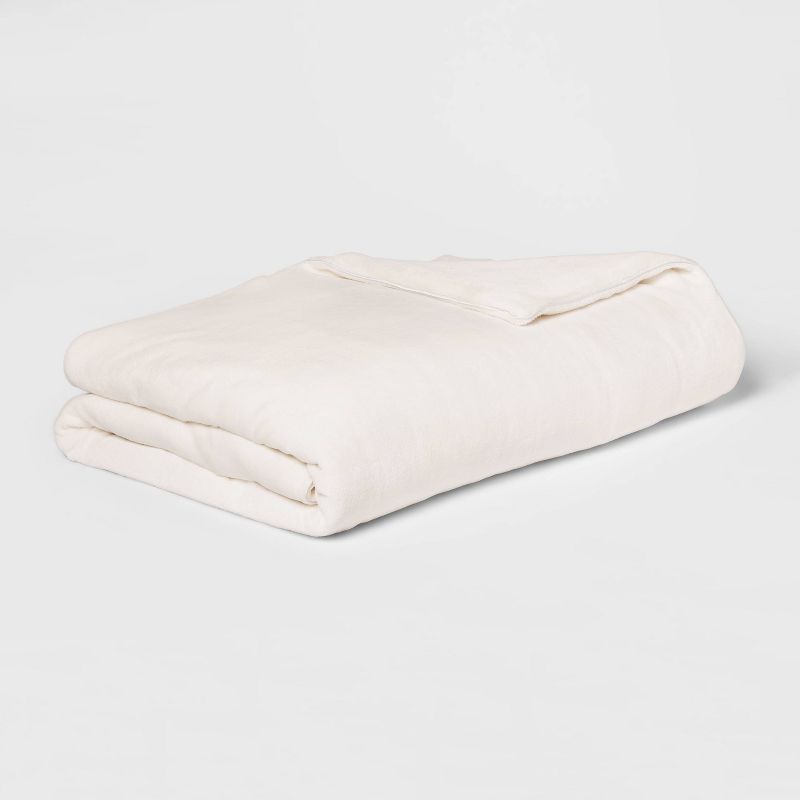
Target lists the Threshold Microplush with a removable cover and glass-bead fill. Its plush surface may feel warmer than a lighter fabric. The current listing describes the cover as washable; check the insert label separately.
– Size: 55 x 80 inches
– Weight options: Target lists 15 and 18 pounds; confirm the chosen listing.
– Cover Material: Microplush
– Care: Check cover and insert instructions separately.
2. Sleep Number True Temp Weighted Blanket – Temperature-Regulating Cover
If temperature regulation is your priority, the Sleep Number True Temp Weighted Blanket stands out. Its cover uses temperature-regulating materials, but individual comfort varies. Sleep Number says to machine-wash the removable cover and spot-clean the weighted insert; check the exact care label.
– Size: 48 x 70 inches
– Weight Options: 12, 20 pounds
– Cover Material: Polyester
– Care: Check cover and insert instructions separately.
3. Waowoo Weighted Blanket – Budget-Friendly Option
Waowoo is a lower-price product name to investigate. Specifications, weight distribution and care vary by listing; verify the exact item and seller terms before buying.
– Size: 60 x 80 inches
– Weight Options: 4 to 25 pounds
– Cover material: Varies by model; check the exact listing.
– Care: Check cover and insert instructions separately.
4. Quility Weighted Blanket with Soft Cover – Cozy Warmth for Cold Sleepers
Quility offers weighted blankets with removable covers. Check the exact cover and insert care instructions and do not assume the fabric is liquid-repellent without a specific product claim.
– Size: 60 x 80 inches
– Weight Options: 5 to 30 pounds
– Cover material: Varies by model; check the exact listing.
– Care: Check cover and insert instructions separately.
5. Degrees of Comfort Coolmax Weighted Blanket – Different Cover Options
Degrees of Comfort sells weighted blanket configurations with different cover options. A lighter or cooler-feeling cover may suit some warm sleepers, but no cover guarantees a constant sleeping temperature.
– Size: 60 x 80 inches
– Weight Options: Various
– Cover Material: Cooling fabric
– Care: Check cover and insert instructions separately.
How to Choose the Right Anxiety Blanket
Try the blanket while awake before sleeping under it: you should be able to reposition and remove it without help. Keep the blanket away from your face. Stop using it if you feel trapped, overheated, uncomfortable or short of breath. If you have a breathing or mobility condition, check with your clinician first.
For a warmer sleeper, compare fabric weight and open-knit versus filled designs, then check laundering and storage requirements. A removable cover may be easier to wash than a heavy insert. Confirm the retailer’s return policy before ordering; Yawnder bedding is final sale.
Picking the ideal anxiety blanket can enhance your relaxation and sleep quality. Here are some factors to consider:
Body Weight Percentage
Some sellers suggest roughly 10% of body weight as a starting point. It is a shopping rule of thumb, not a validated safety threshold or a guarantee of comfort; the user must be able to move and remove the blanket independently.
– Adults: Choose a manageable weight. Start lighter when unsure and stop if you overheat, feel trapped, have breathing discomfort or cannot reposition easily.
– Children: Do not use weighted blankets or weighted sleepwear on or near a sleeping infant. For an older child, ask the pediatrician about individual safety rather than applying a percentage formula.
Filling Materials
Weighted blankets come with various fillings, affecting both texture and noise:
– Glass beads: Often sewn into pockets to distribute weight; noise, feel and care depend on the construction.
– Plastic Pellets: More economical, though bulkier and potentially noisier.
– Steel Shot Beads: Dense feel but may create noise.
– Other fills: Check the specific fill and care label. No material alone guarantees a lower environmental impact or suitability for every user.
Size Considerations
You should also keep in mind how and where you plan to use your blanket:
– Personal Use: Choose a standard size (around 42 x 72 inches) for individual use.
– Bed Sizes: Consider blankets that fit standard bed sizes to avoid confusion regarding weight distribution.
– Portability: If you expect to move it frequently, opt for a manageable size.
Frequently Asked Questions about Anxiety Blankets
Do anxiety blankets really work?
Some people find the pressure soothing. Research suggests possible anxiety benefits in certain groups, but it is not conclusive for everyone and does not prove a particular blanket treats anxiety.
What weight blanket should I get for anxiety?
A 10% rule is only a starting point suggested by some sellers. Choose a weight you can easily move and remove, and consult a clinician if mobility, breathing or another condition makes weight a concern.
Who should not use a weighted blanket?
Safety depends on the individual’s age, mobility, breathing and ability to remove the blanket without help:
– Breathing or sleep apnea: Ask your clinician before use if added weight might affect breathing. Continue prescribed sleep-apnea treatment.
– Claustrophobia: Those who feel confined may find it uncomfortable.
– Infants and children: Never use weighted blankets or weighted sleepwear on or near a sleeping infant. Consult a pediatrician for older children. See AAP guidance.
Conclusion
A weighted blanket is a comfort choice, and its usefulness depends on the person, the weight and the setting.
The examples above are a starting point for comparing product specifications; we have not verified a standardized test of every blanket’s comfort, durability or effectiveness.
For more safety considerations, see Weighted Blanket Safety and Side Effects and compare current products in our weighted blanket guide.