Yawnder Reviews · Updated July 2026
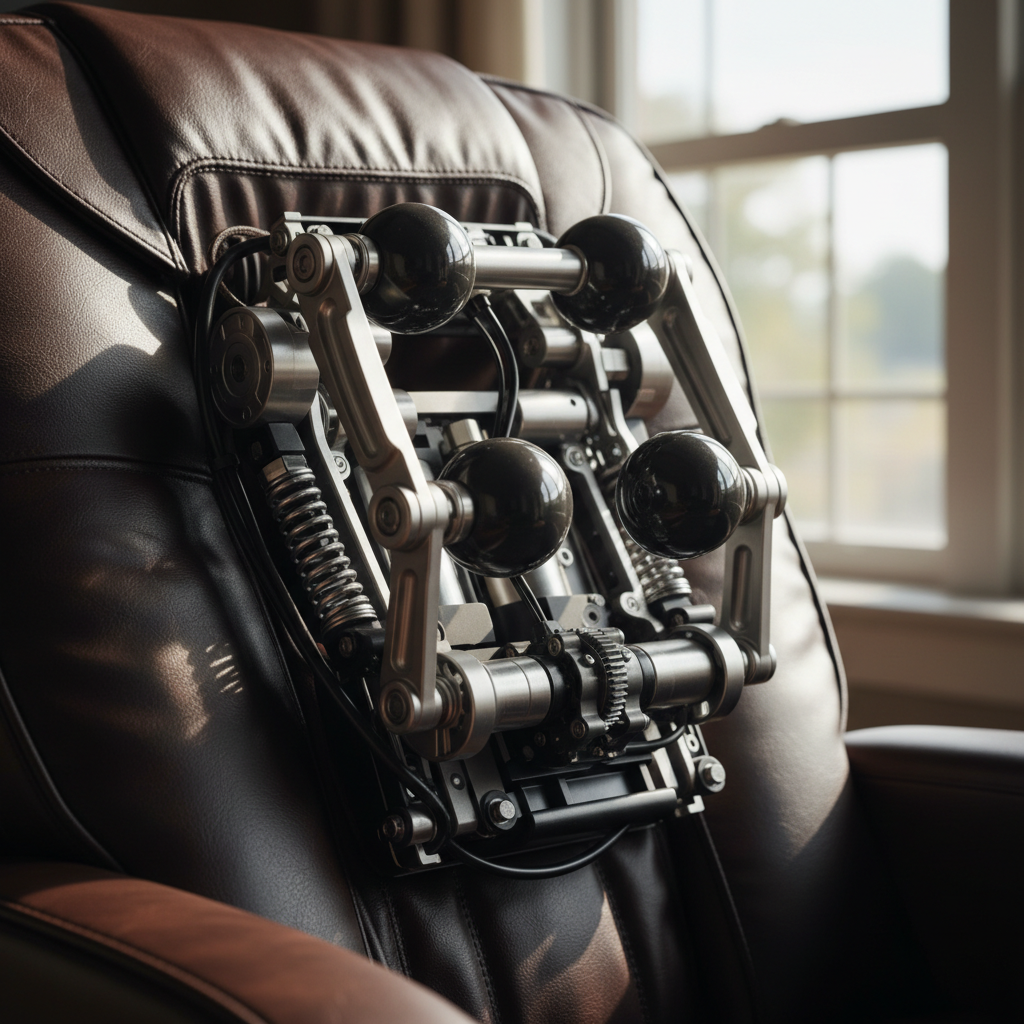
Every sub-$3,000 massage chair claims “3D rollers.” Every $8,000+ chair claims “4D.” What actually changes, and when should you pay for it? Here is what the terminology usually means. For concrete models and price tiers, use our best massage chairs of 2026 guide.
The spec ladder, in one sentence each
- 2D rollers: Move up/down and side/side. Fixed depth, fixed speed. (Sub-$1,500 chairs, Amazon-tier.)
- 3D rollers: Add variable protrusion depth — the roller can stick out more or less from the backrest. Fixed speed. (Most $2,500–$6,000 chairs.)
- 4D rollers: Add variable speed within a stroke — the roller can slow down and speed up in the same pass. ($6,000+ flagships.)
- “5D” / “6D”: Marketing terms. Not standardized. Usually 4D with an extra motion axis or head-only 4D. Ignore.
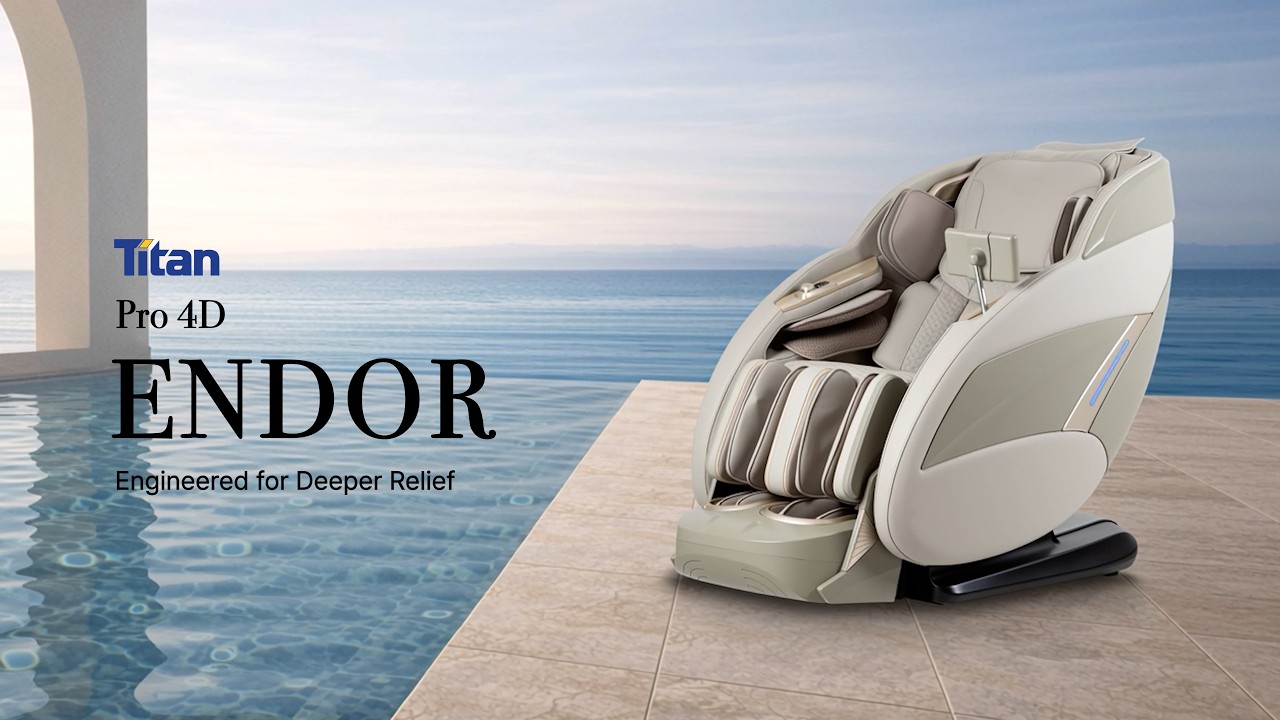
What 4D actually feels like vs 3D
A 3D roller is like a talented massage therapist who only knows one speed of stroke. They can press harder or lighter, but they always move at the same tempo up and down your spine.
A 4D roller is a therapist who slows down at your lumbar (where it hurts) and speeds up between your shoulder blades (where you’re already looser). Same stroke, different tempo across it.
Is that worth $2,000–$4,000 more? Depends on how sensitive you are to massage nuance. Some people can’t tell the difference on a blind sit-test. Others feel it immediately. Test both in person if you can — this is one spec where in-store comparison matters.
When 4D is worth the upgrade
- You use the chair 5+ times per week. Nuance matters when it’s your daily ritual.
- You have specific problem zones (lumbar, upper traps) where you want the chair to spend more time.
- You’re already at the $6K+ tier — at that point the price gap to 4D is often only $1,500.
- You’ve felt both in person and preferred the 4D.
When 3D is the smart buy
- Budget is $3K–$5K — 3D is the top spec in that range. Don’t stretch to a bad 4D chair just for the label.
- You use the chair 1–3 times per week. The nuance is wasted at that frequency.
- You want longevity over spec — 3D roller mechanisms are simpler and statistically last longer.
Best chairs at each spec tier
- Best 4D flagship: Osaki Platinum Sapphire 4D+ or Ogawa Master Drive AI 2.0 ($11,999–$12,999)
- Best 4D mid-tier: Osaki Solo Flex 4D ($4,999)
- Best 3D mid-tier: Ogawa Active XL 3D ($5,999)
- Best 3D entry: Osaki Oasis ($2,999)
The trap to avoid: 4D at the wrong price
There are Amazon-listed chairs claiming “4D” at $2,000. They are lying — or they’ve technically added a second motor to justify the label while the actual roller behavior is worse than a well-tuned 3D from a real brand. If you see 4D under $4,000 from an unknown brand, assume the label is marketing. A quality 3D from Osaki or Ogawa will out-perform a “4D” from a random Amazon seller every time.
Bottom line
4D is a real spec upgrade worth paying for if (a) you use the chair daily and (b) you’ve felt both. Below either bar, spend the money on a longer warranty, an extended-length track, or heated rollers — all of which will affect your daily experience more than the 4D badge.
Yawnder Reviews: Roller spec confusion is one of the biggest sources of overspending in the massage chair market. Here’s the plain-language breakdown.
What to know before you buy
In massage chairs, “3D” and “4D” describe how the rollers move. A 3D mechanism moves up and down, side to side, and in and out — the in-and-out dimension is what lets the chair control how deeply the rollers press into your back. “4D” builds on 3D by adding variable speed and rhythm control to those same movements, so the rollers can speed up or slow down mid-stroke in a way that mimics a human massage more closely.
In practice: a good 3D chair already covers depth, width, and height adjustment. 4D adds nuance — tempo changes within a stroke — rather than a whole new dimension of movement. Whether that difference is worth the price premium depends on how sensitive you are to massage rhythm; many people are happy with a well-built 3D mechanism.
Frequently asked questions
Is a 4D massage chair worth the extra cost?
If you enjoy massage and notice tempo differences, possibly. If you mainly want adjustable pressure and coverage, a quality 3D chair usually delivers that for less. Try both in person if you can.
What about 2D chairs?
2D rollers move up/down and side to side but don’t press in and out, so depth control is limited. They’re fine for light relaxation but less adjustable for deep-tissue preference.