Quick answer: when wall-hugging is worth it
A wall-hugger adjustable base is designed to keep you closer to the head end of the bed as you raise the backrest. That can make a bedside lamp, phone or glass of water easier to reach. It is worth considering if you spend time sitting up in bed and your nightstand becomes awkward to reach on a conventional base.
Buy for the result, not the label. Wall-hugging, wall-saver and wall-glide describe a movement feature; they do not guarantee that every person can reach every nightstand. Test the exact base with a mattress, pillow and furniture height similar to yours.
This is a feature guide, not a hands-on ranking. Manufacturer documentation was checked October 9, 2026. We have not measured the travel distance of the models discussed.
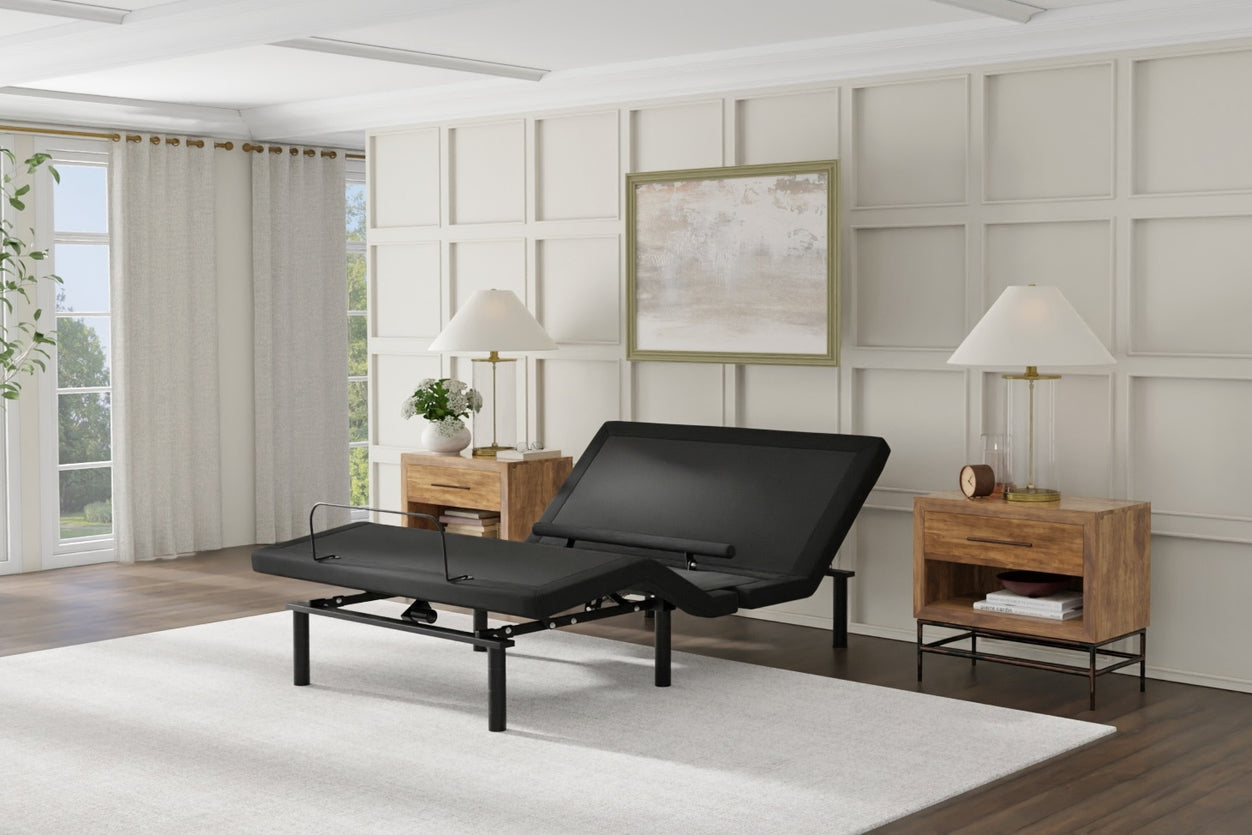
What actually moves when the head rises?
On a basic adjustable base, raising the back section changes where your upper body sits relative to stationary furniture. A wall-saving design adds movement in the supporting deck or chassis to help compensate. Ergomotion describes its RIO 5.0 and RIO 6.0 Wall Saver feature as a rolling chassis that helps keep the bedside table within reach.
The base does not need to press against the wall to work. Leave the clearance required in its installation manual, and check the full range of movement before positioning a headboard, cords or furniture.
Your reach still depends on mattress thickness, pillow placement, recline angle and where the table sits. A useful feature on one bedroom setup may make little difference in another.
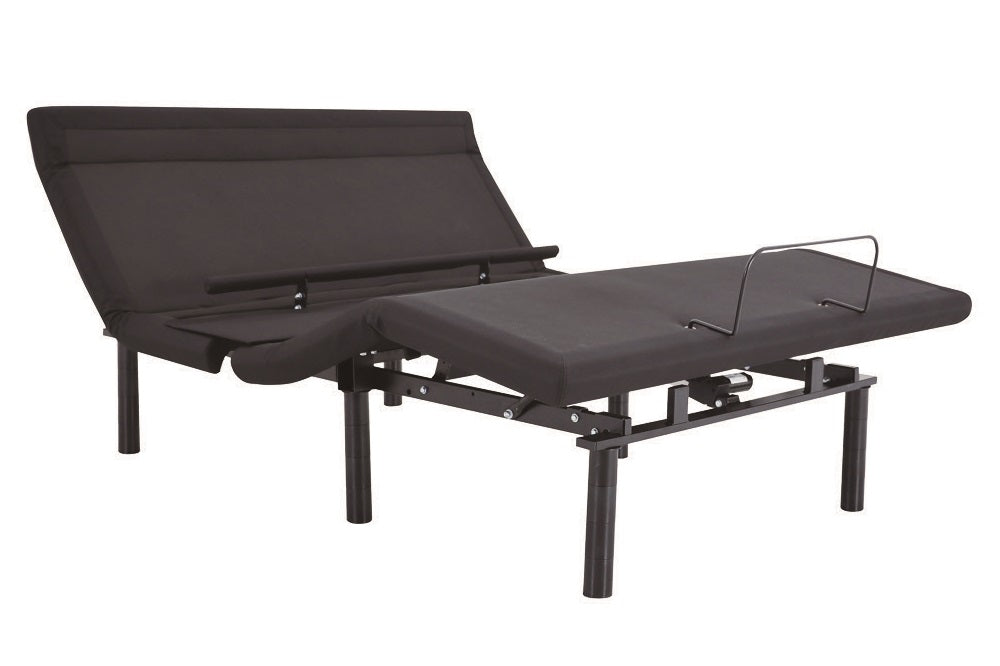
Wall-hugger vs zero-clearance vs zero-gravity
| Feature | What it describes | What to verify |
|---|---|---|
| Wall-hugger / wall-saver | Movement intended to keep you nearer the head end while reclining | Can you reach the nightstand at your preferred angle? |
| Zero-clearance | A design that can operate on an approved supporting surface without space beneath the mechanism | Does the manual permit your platform, slats and installation without legs? |
| Zero-gravity preset | A programmed head-and-foot position | Is the position comfortable, and can you adjust or save a different setting? |
A base can offer one of these features without the others. Do not use a zero-gravity button or a premium price as evidence that the base has wall-hugging motion. Likewise, wall-hugging does not establish compatibility with a storage bed.
For headboard attachment, see our separate headboard guide. That guide covers mounting; this article focuses on reach and movement.
A five-minute nightstand reach test
- Match the setup. Note your mattress height, pillow thickness, nightstand height and the distance between the table and mattress. Bring those measurements to the store.
- Start flat. Sit or lie in your normal spot. Check how comfortably you can reach a safe object, such as your phone. Avoid using a drink near moving parts.
- Raise the head to your real reading position. Do not judge the base only at its maximum angle or a preset you will rarely use.
- Repeat the reach. Notice whether you have to lean backward, twist or shift down the mattress. Compare with a base that lacks the feature, if available.
- Check both sides. On a split setup, test independent movement and verify each person’s access to their own table.
Ask the salesperson to explain what moves and demonstrate the flat-to-raised travel. Keep hands, pets, children and loose bedding away from moving mechanisms. Follow the manufacturer’s instructions for operation and clearance.
Who should pay extra—and who can skip it?
Prioritize a reach test if you regularly read or watch television sitting up, keep essential items on a fixed nightstand, or dislike shifting your body to reach behind you. This is a convenience decision; it is not evidence of a medical benefit.
It may be lower priority if you usually sleep flat, rarely use the raised head position, or your bedside furniture already sits comfortably within reach. Spend first on the mattress feel, base compatibility and the functions you will actually use.
There is no universal premium worth paying. Compare two quotes for the same size and installation: separate the wall-saving feature from massage, lumbar adjustment, lighting and app controls. A model with more features is not automatically a better fit.
Confirmed examples—and a specification trap to avoid
Ergomotion RIO 5.0 and RIO 6.0: the manufacturer explicitly lists Wall Saver on both product pages. These are examples of documented terminology, not a claim that they are currently stocked at Yawnder or the best choice for every shopper. Check the selected size, current manual and seller’s terms.
BedTech BT6500: Yawnder sells this base, but BedTech’s current product page lists it as not zero-clearance compatible. Its listed head, foot, pillow-tilt and lumbar adjustments do not, by themselves, prove wall-hugging capability. Confirm any wall-hugging claim for the exact model and revision before ordering.
Do not transfer a feature from another model in the same brand family. If a retailer description and manufacturer manual disagree, get written clarification from the seller before buying.
See Yawnder’s BT6500 product page for available configurations. Ask for compatibility confirmation rather than assuming an existing frame will fit.
Measure your bedroom before ordering
- Interior frame dimensions: measure between the rails, not just the mattress size printed on the frame.
- Support surface: record whether you have a solid platform, slats, drawers or cross supports. Get approval for that installation from the base manufacturer.
- Working clearance: check the manual’s wall, headboard and moving-part requirements. No single gap applies to every base.
- Finished bed height: combine the installed base height with mattress thickness, then compare with the nightstand and your preferred sitting height.
- Power and cords: plan an outlet location that avoids pinching or stretching cords during articulation.
- Delivery route: measure doors, hallways and turns; confirm what setup and removal services the quote includes.
Also confirm that your mattress is approved for an adjustable base. A mattress can be the right size yet unsuitable for repeated bending or the base’s retaining system.
Questions to ask the seller
- Does this exact size and model have wall-saving movement, and where is it documented?
- What part moves, and how does that affect my headboard and nightstand?
- Is it approved for my existing platform or frame?
- Are legs, brackets, delivery and setup included?
- What happens if it fits the room but I dislike the position or reach?
- What does the warranty cover for parts, labor and transport?
Yawnder purchase terms: adjustable bases are not eligible for a mattress comfort trial or comfort return. Manufacturer warranty coverage is separate. Read the return policy before ordering and get any installation commitments in writing.
Want to compare in person? Plan a visit to Yawnder in Encinitas or call (858) 232-5760 to confirm which bases are available to demonstrate.
Frequently asked questions
Does wall-hugging mean the bed touches the wall?
No. The term describes the base’s movement. Use the clearance specified by the manufacturer rather than pushing the base against the wall.
Can a wall-hugger base sit on a platform bed?
Only if that exact base and installation are approved. Wall-saving and zero-clearance are separate features.
Will it stop the mattress from sliding?
Do not assume so. Check the model’s mattress-retention system, mattress compatibility and installation instructions separately.
Do both sides of a split king need the feature?
If both sleepers want the same movement behavior, confirm it on both units. Also verify independent controls and the manufacturer’s pairing instructions.
Is a wall-saver base worth it for reading?
It can be, if it makes your real reading position and bedside reach more comfortable. The showroom reach test is more useful than choosing from the feature name alone.
Sources and verification
Checked October 9, 2026. Feature descriptions can change by model and revision; use the manual supplied with your purchase.