

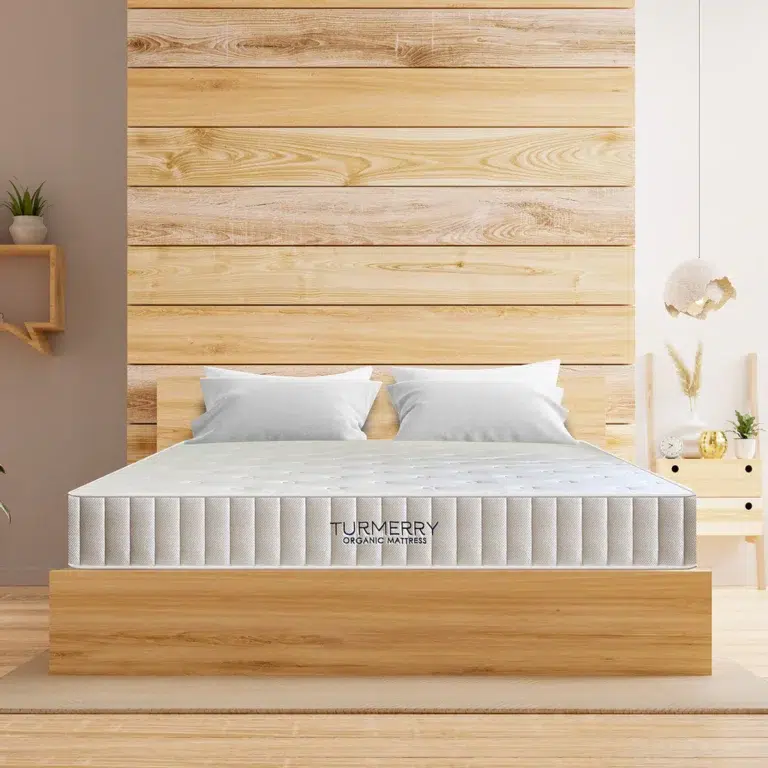
Turmerry organic latex mattress review
Turmerry Latex Mattress Review
Turmerry builds its mattresses around organic latex, wool, and cotton. This is a very different experience from the usual memory foam bed in a box. You get a springy, buoyant feel, more natural materials, and the ability to tune firmness by swapping layers. The trade off is a higher price and a bit more work on setup.
Overall rating 8.9 out of 10. Strong support and pressure relief, clear eco story, and true adjustability through stackable latex layers. Best suited for shoppers who want natural materials and do not mind a mattress with a more involved setup.
Bottom line
Turmerry feels like a mattress built for people who are done with synthetic foam and want natural materials, real support, and the option to dial in firmness later. If you want a deep, slow sink or a one piece mattress that you never touch after setup, this is not it. If you want bounce, spinal alignment, and an organic story, it belongs on your short list.
Check price at TurmerryUse the link for live pricing, height, and firmness options. Turmerry runs promotions, so the current page will give the most accurate numbers.
Test results
Scores are editor estimates based on Turmerry specs, latex performance in store and at home, and comparisons to other organic and natural latex brands in a similar price band.
Construction, firmness options, and sizes
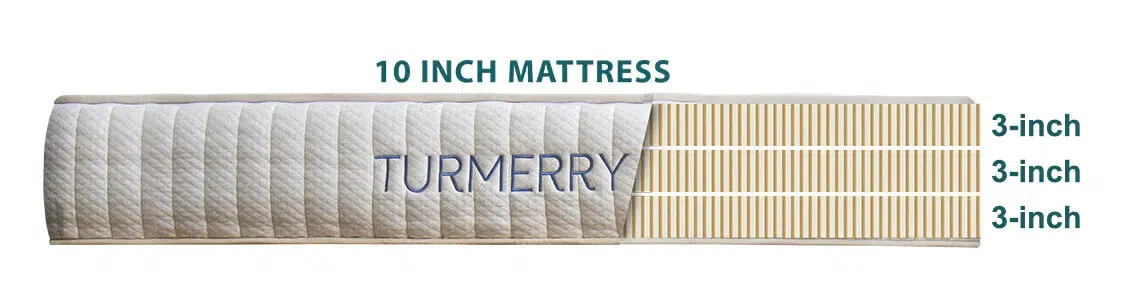
Turmerry builds its latex mattresses with stacked layers of organic latex, wool, and cotton. The main idea is simple. Instead of one slab of foam in a glued cover, you get separate layers that you can rearrange to change firmness. That adds flexibility and also gives you a better idea of what you are actually sleeping on.
Here is a simplified view of how the line looks across sizes.
| Size | Typical layers | Firmness choices | Height choices | Approximate price range |
|---|---|---|---|---|
| Twin | Three latex layers | Soft, medium, firm | Eight and ten inches | Seven hundred fifty to one thousand two hundred dollars |
| Twin XL | Three latex layers | Soft, medium, firm | Eight and ten inches | Eight hundred to one thousand three hundred dollars |
| Full | Three latex layers | Soft, medium, firm | Eight and ten inches | Nine hundred fifty to one thousand five hundred dollars |
| Queen | Three or four latex layers | Soft, medium, firm, extra firm | Eight, ten, or twelve inches | One thousand one hundred to one thousand eight hundred dollars |
| King | Three or four latex layers | Soft, medium, firm, extra firm | Eight, ten, or twelve inches | One thousand four hundred to two thousand three hundred dollars |
| California King | Three or four latex layers | Soft, medium, firm, extra firm | Eight, ten, or twelve inches | One thousand five hundred to two thousand four hundred dollars |
| Split Queen | Individual stacks per side | Soft, medium, firm per side | Eight, ten, or twelve inches | One thousand three hundred to two thousand dollars |
| Split King | Individual stacks per side | Soft, medium, firm per side | Eight, ten, or twelve inches | One thousand six hundred to two thousand five hundred dollars |
Exact specs will vary slightly by model. The main pattern is the same. Latex layers in a zip cover with wool and cotton up top for comfort and temperature regulation.
Feel and firmness on Turmerry
Latex has a very distinct feel. It pushes back and lifts you instead of letting you sink and stay there. On Turmerry, that means buoyant support, quick response when you change position, and less of the stuck sensation that can show up on memory foam.
The soft setups contour more at the shoulder and hip for side sleepers. Medium works well for many side and back sleepers who want support without a board like surface. Firm and extra firm builds land closer to what heavier back and stomach sleepers often need to keep the spine in line.
Because the mattress comes in layers, you can move a firmer layer up or down in the stack to change feel. You are not locked into one firmness the way you are with a single slab build.
Cooling and breathability
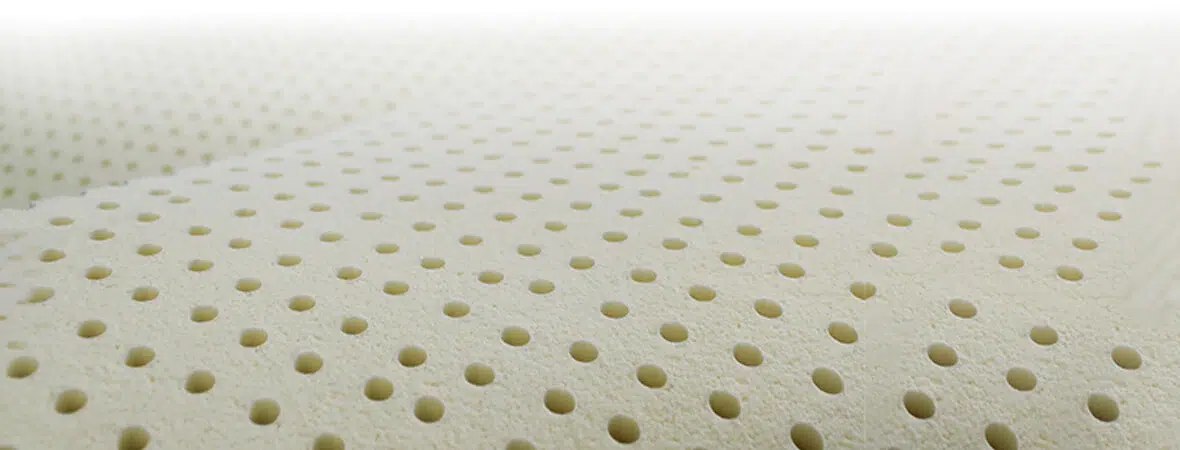
Turmerry cuts the latex with pinholes that run through the layers. That increases airflow and gives heat somewhere to go. Latex in general sleeps cooler than dense memory foam of the same thickness, and the wool and cotton in the cover help buffer temperature and moisture.
In practice this lands in the comfortable range for most warm sleepers. You get less heat build up around the torso and fewer wake ups from feeling sweaty compared to dense synthetic foam stacks.
Pros and cons of an all latex build
Turmerry leans into an all latex design for many models, so it is worth being clear about what that brings to the table compared to hybrid or memory foam beds.
Upsides
- Strong pressure relief with real lift, not slow sink. Latex spreads weight and keeps the spine closer to a neutral curve.
- Very good durability. Quality latex can last many years, which spreads the higher purchase price over a longer window.
- More natural story. Natural latex, wool, and organic cotton are all materials that eco minded shoppers tend to look for.
- Good motion control without dead feel. You get less partner disturbance and still have enough bounce to move easily.
- Low odor and fewer harsh chemicals than many mass market foam beds.
Trade offs
- Higher price than many foam beds that use synthetic materials.
- Feel skews toward medium and firm. Ultra plush cloud like builds are better handled by tall pillow tops or softer foams.
- Mattress weight. Solid latex is heavy and can be harder to move, even though layers arrive separate in the box.
- Setup is more involved. You will unzip the cover, position layers, and sometimes adjust them a couple of times to get the right mix.
Price, trial, and warranty
Turmerry sits in the middle of the organic latex category on price. It is not the cheapest way to get latex, and it is not at the very top of the range either.
Price by size
- Twin around seven hundred fifty to one thousand two hundred dollars
- Twin XL around eight hundred to one thousand three hundred dollars
- Full around nine hundred fifty to one thousand five hundred dollars
- Queen around one thousand one hundred to one thousand eight hundred dollars
- King around one thousand four hundred to two thousand three hundred dollars
- California King around one thousand five hundred to two thousand four hundred dollars
- Split Queen around one thousand three hundred to two thousand dollars
- Split King around one thousand six hundred to two thousand five hundred dollars
Promotions and coupons move these numbers up and down, so treat them as bands, not fixed tags.
Trial period
Turmerry offers a one hundred twenty night trial. You can sleep on the mattress for up to that window and return it if it is not working. There is a modest return fee if you send it back very early in the trial, which is their way of encouraging you to give your body time to adjust.
Warranty
- Twenty year warranty on latex mattresses
- Five year warranty on latex toppers
- Covers defects like cracks, splits, and deep body impressions
As usual, normal wear and tear, abuse, and use on an improper base are excluded. Keep the receipt if you want to make a claim later.
Turmerry vs Saatva latex hybrid
Saatva’s latex hybrid uses latex over a coil system. Turmerry uses latex from top to bottom on the all latex builds. Both target shoppers who want a more natural mattress with stronger support than the usual foam stack. They just approach it differently.
| Feature | Turmerry latex mattress | Saatva latex hybrid mattress |
|---|---|---|
| Core build | Stacks of natural latex in a zip cover with wool and cotton | Talalay latex comfort layer over an innerspring support unit |
| Firmness | Soft, medium, firm, extra firm with layer swaps | Plush or firm choices |
| Pressure relief | Excellent contour with solid lift from full latex core | Good relief from latex over coils, a touch less full body hug |
| Cooling | Very good from pinhole latex and breathable cover | Good, with airflow from coils and latex surface |
| Edge support | Moderate to good, better in taller and firmer builds | Very strong from coil perimeter |
| Motion control | Very good for couples, especially on solid latex stacks | Good, but coils bring a bit more transfer than full latex |
| Adjustability | High, you can move layers to change feel | Low, feel is fixed once you choose model |
| Price band for queen | About one thousand one hundred to one thousand eight hundred dollars | About one thousand three hundred ninety five to one thousand nine hundred ninety five dollars |
Turmerry makes more sense if you want an all latex feel, the ability to fine tune firmness, and do not mind a heavier mattress. Saatva suits people who want a coil base, stronger edge support, and a more familiar spring style feel.
Mattresses similar to Turmerry
Turmerry lives in a crowded corner of the market that includes other latex and natural builds. Here are a few names that tend to come up when people compare options.
- Sleep On Latex Pure Green uses organic latex and wool in several thickness and firmness choices. Feel is similar for people who like supportive, responsive latex with strong pressure relief.
- Saatva latex hybrid pairs Talalay latex with coils for more traditional bounce and edge strength.
- Awara natural hybrid uses organic latex, wool, and coils for a tall, buoyant feel with a strong natural story.
- Nest Bedding natural hybrids mix latex and coils and are a fit for people who want a bouncy but cushioned surface.
- Latex forward organic brands such as Latex Bliss and similar lines serve the same shopper who wants natural materials and strong spinal support.
Turmerry usually wins on adjustability and the clarity of its layer based build. The others may win on edge strength, pillow top feel, or specific brand perks.
FAQ
Is Turmerry good for side sleepers
Yes, as long as you pick an appropriate firmness. Soft and medium latex stacks give plenty of pressure relief at the shoulder and hip while still lifting the spine. Many side sleepers end up in that zone.
Is Turmerry too firm
Latex feels firmer than the same build in memory foam because it pushes back instead of letting you sink and stay down. If you are used to very soft memory foam, a medium latex build can feel more firm at first. The trade off is better alignment and easier movement.
Does Turmerry sleep cool
Latex has an open structure and Turmerry uses pinholes, wool, and cotton to move heat and moisture away from the body. That places it in the cooler group of mattresses, especially compared to dense memory foam.
Can I adjust the firmness after setup
Yes. One of the main reasons to buy Turmerry is the ability to rearrange the latex layers. You can move a firmer layer up to create a more supportive feel or move softer layers toward the top for more contour.
How long does a Turmerry latex mattress last
Quality latex can last well beyond a decade when used on a proper base and protected from damage. The twenty year warranty gives a sense of how long the company expects the core materials to hold up against major defects.
Is Turmerry hard to set up
It takes more steps than a single piece foam bed. You will move separate latex layers into the cover and zip everything closed. The upside is a more modular build and the option to make changes later.
Is Turmerry worth the price
If you care about natural materials, real spinal support, and long term durability, then yes. You pay more up front than many foam beds, but you get a mattress that can outlast them and stay more consistent over time.
How we look at Turmerry and other latex beds
At Yawnder we have handled and tested a lot of latex, both in store and at home. For Turmerry and mattresses like it, that means:
- Breaking down construction layer by layer so you know what you are actually buying.
- Looking at firmness across weights and sleep positions, not just a single number on a chart.
- Comparing pressure relief, alignment, and ease of movement directly to memory foam, hybrids, and other latex lines.
- Factoring in trial terms, warranty length, and price bands so you can see the bigger value picture.
- Listening to real world feedback from shoppers who chose latex because of chemicals, heat, or back pain issues.
That mix of lab style breakdown and real sleeper feedback is what shapes the scores and recommendations above.
