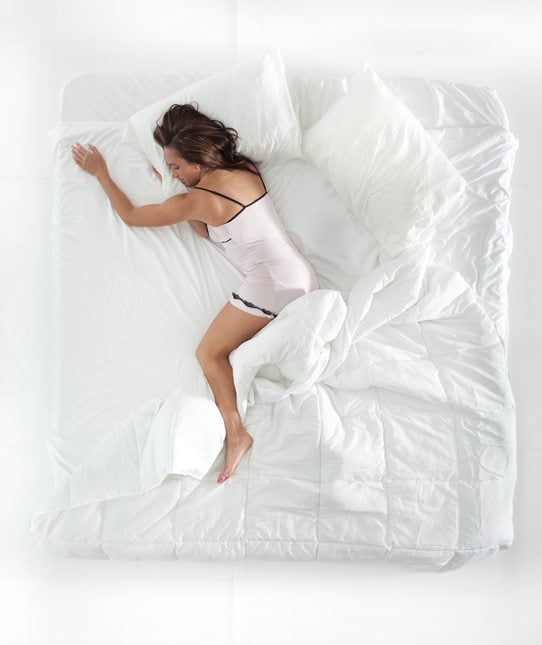

Frequently Asked Questions About Sleep Infographic On How We Sleep
Is the Eight Sleep mattress pad worth the investment for better sleep tracking?
Yes, the Eight Sleep mattress pad is designed to be a worthwhile investment for comprehensive sleep tracking. It automatically monitors sleep patterns, breathing, and temperature, recording the data online for easy access and analysis, offering a detailed look into your sleep health.
Who is the Eight Sleep system best for, considering its features?
The Eight Sleep system is best for individuals who are serious about understanding and optimizing their sleep with advanced technology. Its automatic tracking of various sleep metrics, as mentioned in the article excerpt, provides valuable insights for those looking to improve their rest.
How does the Eight Sleep mattress in a box compare to traditional mattresses available at Yawnder?
The Eight Sleep mattress in a box offers a convenient, complete package that includes advanced sleep tracking capabilities, differentiating it from traditional mattresses. While Yawnder's San Diego showroom offers a variety of premium mattresses, the Eight Sleep system's integrated smart technology is its unique selling point.
What are the potential downsides of relying on a sleep tracker like the Eight Sleep pad?
A potential downside could be an over-reliance on data, potentially leading to anxiety about sleep performance if numbers aren't always ideal. However, the Eight Sleep pad's automatic tracking aims to provide objective data to inform better sleep habits, rather than cause undue stress.
Is the Eight Sleep system good for hot sleepers, given its temperature tracking feature?
Yes, the Eight Sleep system is good for hot sleepers because it includes temperature tracking, which can be a key factor in managing sleep comfort. This feature allows users to monitor and potentially adjust their sleep environment for optimal temperature regulation, as stated in the article.
Where can I try the Eight Sleep system in person before purchasing?
Yawnder's Encinitas, CA showroom allows customers to experience various mattresses firsthand, though not specifically the Eight Sleep brand mentioned in the excerpt.
Want to test this in person? Visit our Encinitas showroom or call 858-232-5760.
Browse Yawnder’s sleep education, research explainers, and practical guides.
Explore sleep guidesHow the numbers in the infographic break down
Sleep statistics get repeated without context, so here is how to read the common figures. Adult sleep need is usually stated as seven to nine hours, which is a population range rather than a personal target — some adults function well at seven, few genuinely do well on less. Recommended ranges are longer for children and teens, with teenagers generally needing eight to ten hours despite school start times that make that difficult.
What a normal night looks like
- Cycles, not blocks. Sleep runs in cycles of roughly 90 minutes, moving through light stages, deep sleep and REM.
- Deep sleep loads the front of the night. That is why an early bedtime cut short costs more deep sleep than a late wake-up does.
- REM loads the back of the night. Cutting the last two hours disproportionately cuts REM, which is one reason short nights affect mood and memory.
- Brief awakenings are normal. Waking several times without remembering it is part of ordinary sleep.
The habits that move the numbers
- Keep the same wake time seven days a week — the strongest single anchor for the body clock.
- Get bright light within an hour of waking, ideally outdoors.
- Dim household light in the last hour and keep screens off the pillow.
- Keep the bedroom cool, dark and quiet.
- Reserve the bed for sleep so the association stays strong.
What sleep trackers can and cannot tell you
Consumer wearables estimate sleep stages from movement and heart rate. They are reasonably good at total sleep time and bedtime consistency, and much weaker at stage-by-stage breakdowns. Use the trends, not any single night's score, and if a tracker is making you anxious about sleep, stop looking at it. Diagnosis of any sleep disorder requires a clinician, not an app.
How much sleep do adults actually need?
Seven to nine hours for most adults. Genuine short sleepers are rare.
Is deep sleep more important than REM?
Both matter and serve different functions. Chasing one stage is less useful than protecting total sleep time.
Are sleep tracker stage graphs accurate?
Only roughly. Treat total time and consistency as the useful outputs.