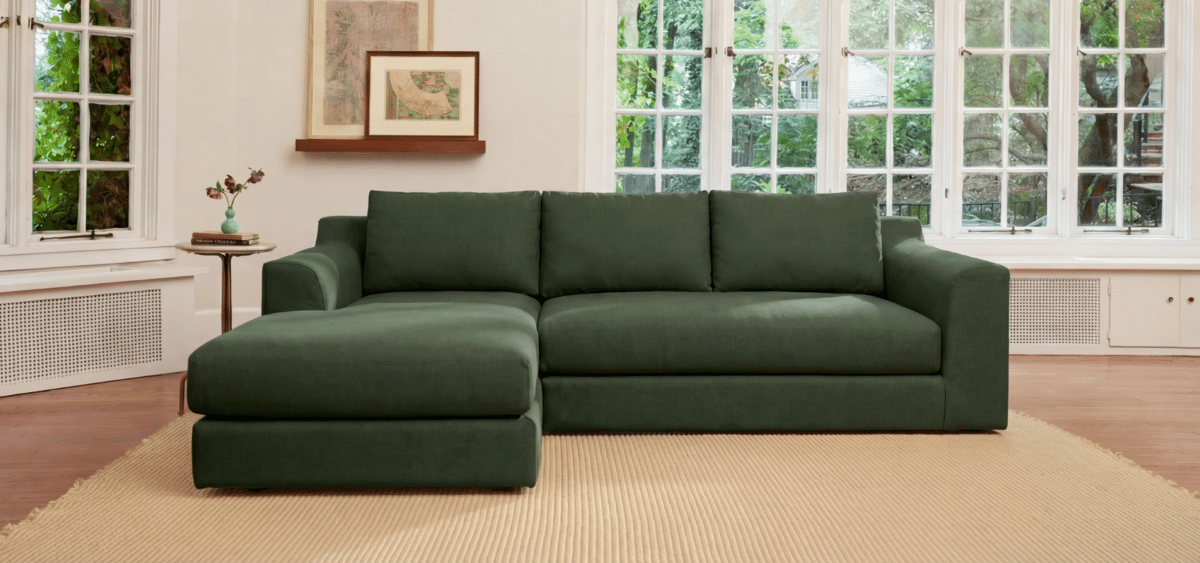
Sabai vs Anabei (2026): Eco Modular Sectionals Under $2,500 Compared
Both are direct-to-consumer modular sofas pitching themselves as the eco-friendly Lovesac alternative. Sabai has the deeper sustainability story; Anabei has faster shipping and a slightly lower price. We compared them piece by piece.
Pick Sabai Essential if sustainability is your #1 driver — it’s the most legitimately eco-friendly modular sofa on the market (FSC frame, recycled fabric, plastic-free packaging, full repairability). Pick Anabei if you want a softer, deeper seat, faster shipping (1-3 weeks), and a slightly lower price for a comparable 3-seat config.
The Two Sofas At a Glance
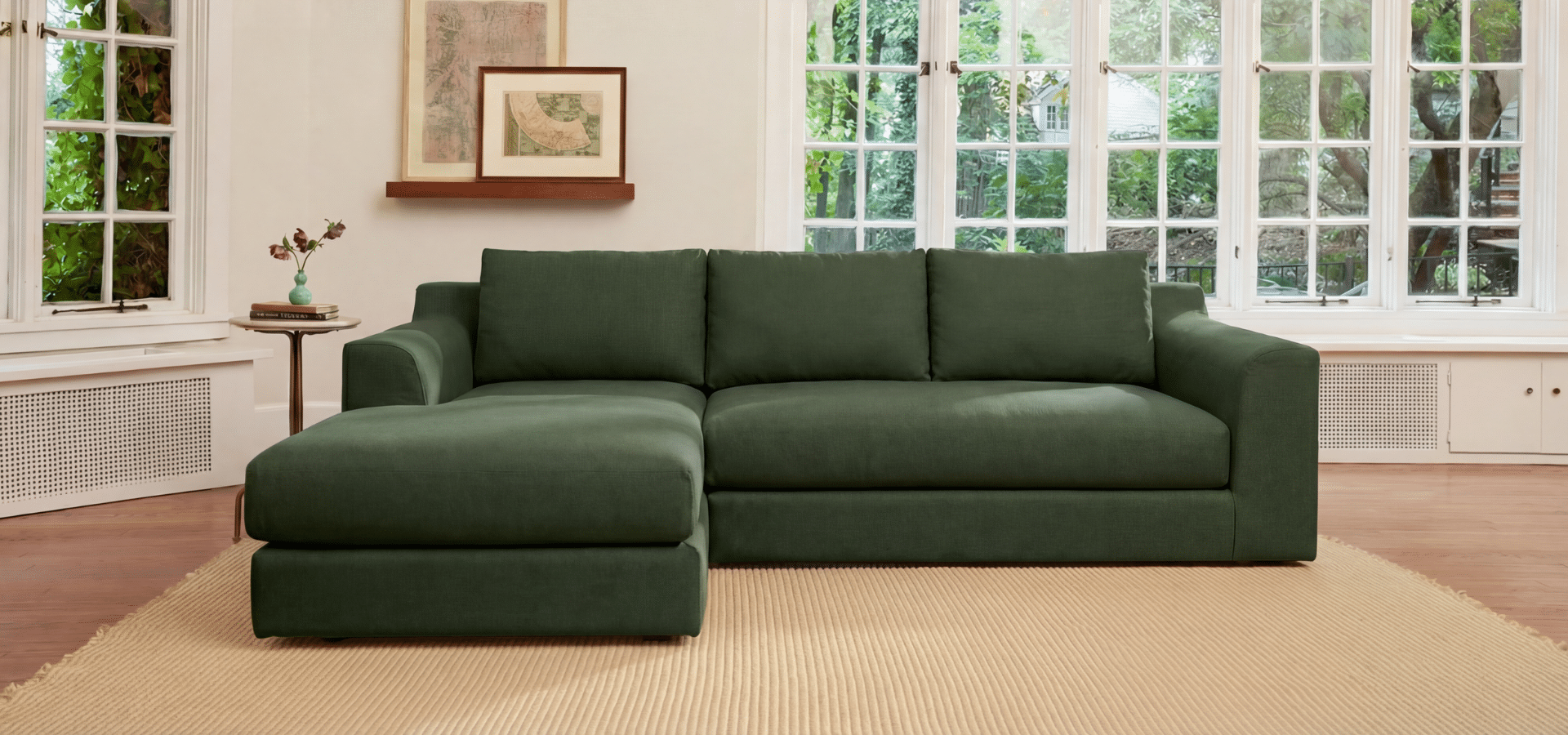
Sabai Essential Sectional From $1,895
The most genuinely sustainable modular sofa on the market.
- FSC-certified hardwood frame
- Recycled poly + hemp fabric options
- Plastic-free packaging
- Fully repairable — replace any part
- Sabai Revive buyback program
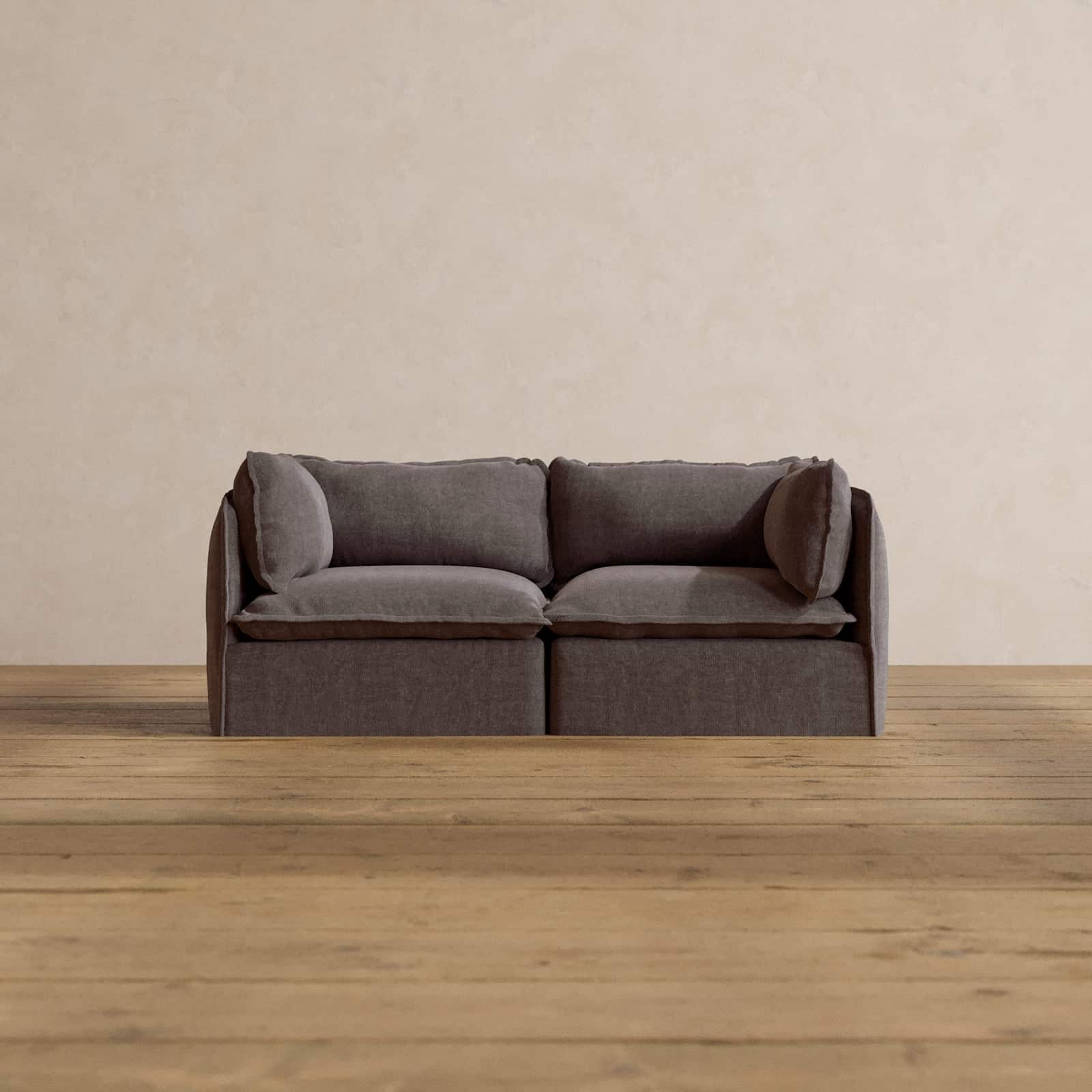
Anabei Modular Sectional From $1,799
Tool-free modular with washable covers and 1-week shipping.
- Machine-washable covers (rare at this price)
- Tool-free assembly in 15 min
- Ships in 1-3 weeks from US warehouse
- Modular — add pieces any time
- Deeper, plusher seat than Sabai
Spec Sheet — Side by Side
| Feature | Sabai | Anabei |
|---|---|---|
| Starting Price | $1,895 | $1,799 |
| Frame | FSC-certified hardwood | Kiln-dried hardwood |
| Fabric | Recycled poly / hemp | Performance polyester |
| Cover Cleaning | Spot clean | Machine washable |
| Assembly | Tool-free, ~25 min | Tool-free, ~15 min |
| Shipping | 4-8 weeks (made to order) | 1-3 weeks (in stock) |
| Sustainability Story | Best in class | Standard DTC |
| Best For | Eco-first buyers | Value + speed buyers |
Round-by-Round Breakdown
Sustainability Better Fit: Sabai
Sabai is the only modular sofa we’ve reviewed with FSC frame certs, third-party-verified recycled fabric, and an actually-functional buyback program. It’s not close on this axis.
Cleanability Better Fit: Anabei
Anabei covers are machine washable. Sabai’s are spot-clean only — a real drawback for kids and pets.
Comfort Better Fit: Anabei
Anabei has a deeper, plusher seat. Sabai is firmer and shallower. Most testers prefer Anabei for movie-watching.
Shipping Speed Better Fit: Anabei
1-3 weeks vs 4-8 weeks. If you need a sofa fast, Anabei wins clearly.
5-Year Cost of Ownership
Frequently Asked Questions
Is Anabei actually eco-friendly?
Anabei has FSC wood and uses recycled materials in some components, but they don’t have third-party certs across the board. Sabai is more rigorously sustainable.
Which has the longer warranty?
Anabei: 10-year frame, 1-year fabric. Sabai: 1-year limited. Anabei wins decisively here.
Can I rearrange either later?
Both are fully modular and you can buy add-on pieces years later. Both maintain backward compatibility.
Which is better with kids and pets?
Anabei, by a wide margin — washable covers and the longer warranty matter more than Sabai’s eco story when juice gets spilled.
Visit Yawnder Encinitas
We test sofas in our San Diego showroom (1441 Encinitas Blvd) so we can match you with the right brand for your room, your body, and your budget. Stop in or call us before you order online.
How Sabai and Anabei differ in practice
Both sofas end up in the same shortlists, but they are solving different problems. Sabai leans on a genuinely repairable, lower-impact build, while Anabei leans on machine-washable covers over a deeper, softer seat. That difference shows up less on a spec sheet than in the first year of living with either one.
Sabai: where it wins and where it does not
Sabai is the option to pick when sustainability has to be more than a marketing line: certified wood, recycled and natural fabric options, minimal plastic in the packaging, and replacement parts sold individually so a worn cover or a damaged leg does not condemn the whole sofa.
The catalogue is smaller and the aesthetic is deliberately simple. Fewer configurations, fewer fabric novelties, and shorter warranty coverage than the big modular systems. Best for buyers who plan to keep and repair one sofa for a decade rather than replace it at the next move.
Anabei: where it wins and where it does not
Anabei is the practical pick for households that actually clean their furniture. Covers come off and go through a home washing machine, which handles the category of mess that wipe-clean fabrics cannot: pet accidents, milk, sickness. The seat is also plusher than most modular competitors.
A softer seat needs more fluffing to look sharp, and washable covers loosen slightly over time, so expect to re-tuck. Colour range is narrower than the showroom brands. Best for young families and pet owners who want a soft sofa without babysitting it.
Which one fits your household
- Eco credentials first? Sabai.
- Cleanability first? Anabei.
- Softest seat? Anabei.
- Want repairable parts? Sabai.
- Young kids? Anabei — washable covers do the heavy lifting.
Sizing and layout notes
Take three measurements before deciding: the wall run available, the clear floor left in front, and the tightest turn between the delivery truck and the room. Then check the seat depth against how your household sits — roughly 21 to 23 inches suits upright sitting and conversation, while 24 inches and deeper is built for lying down and needs cushions to sit comfortably upright.
If the room does double duty as a guest space, plan the layout around where a spare mattress or fold-out would land, and keep one side of the sectional free of walls.
Fabric strategy for real households
Choose the fabric for the messiest person who lives there. Mid-tone patterns and textured weaves hide wear far better than solid pale or solid dark fabrics, which show lint and paw prints respectively. Removable covers are worth the premium if anyone in the house is under six or has four legs, and a second set of covers turns a spill into a laundry day instead of a service call.
Order swatches and leave them on the sofa’s future spot for a week before deciding.
Delivery, assembly and ownership costs
Ask four questions before you pay: how it arrives (parcel boxes versus scheduled freight), who brings it in and removes packaging, how long production takes if the fabric is made to order, and what happens if you change your mind. Boxed modular sofas are usually the easiest to get into an upper-floor unit and the easiest to return; made-to-order upholstery ships heavier, arrives later, and often carries restocking terms once the fabric is cut.
Then look past the sticker. Replacement covers, extra modules, fabric protection plans and haul-away of your old sofa are the costs that make two similar prices diverge over five years.
Frequently asked questions
Can I have both eco and washable?
Partly. Check which of Sabai’s current fabrics are machine washable; if none suits, a washable slip layer over an eco frame is a reasonable compromise.
Which lasts longer?
Longevity here is decided by repairability and use, not brand. Whichever sofa lets you replace a single cover or cushion will stay in service longer.
Which suits a small space?
Both are modular and can start small; compare seat depth, since the softer, deeper seat consumes more of a compact room.
Are covers included or extra?
Cover pricing and spare-set availability change; confirm at checkout, because a second set is the difference between a laundry day and a service call.
Prices, warranty terms and configuration availability change often. Check the current listing on the brand’s own site before ordering, and confirm the return policy for the exact configuration you want.