
Quick answer: A quilt is usually made of a fabric top and backing with batting between them, stitched together. A coverlet is a decorative bed covering, often lighter and shorter than a floor-length bedspread. The terms overlap: some coverlets are quilted and contain batting, so check the actual product rather than relying on its name.
Quilt vs. coverlet at a glance
| Feature | Quilt | Coverlet |
|---|---|---|
| Typical construction | Top, batting and backing stitched together | May be woven or quilted; some have batting |
| Warmth | Depends on batting, fabric and thickness | Often a lighter layer, but construction varies |
| Appearance | Stitching, patchwork or wholecloth design | Decorative top layer in many textures and patterns |
| Best use | As a cover or extra layer | As a cover or decorative layer |
For example, Pottery Barn describes quilts with a light batting layer, while one of its coverlets also lists batting. Product descriptions are more useful than a blanket rule.
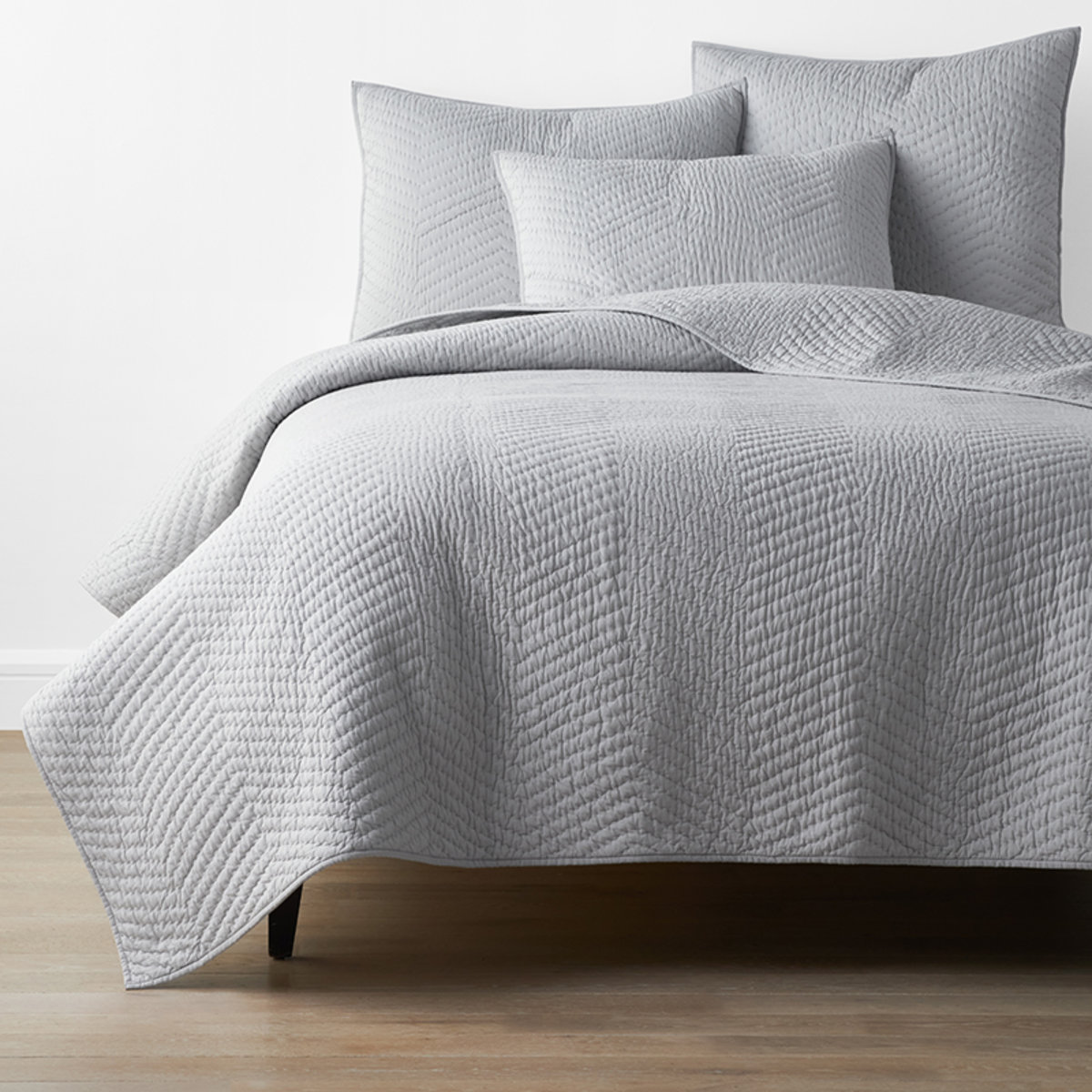
What is a quilt?
A traditional quilt has three layers secured with stitching. The filling can be cotton, wool, polyester or another material, and its thickness varies. A patchwork quilt uses pieces of fabric joined into a design; a wholecloth quilt uses a single top fabric and often emphasizes the stitching. Neither style guarantees a particular warmth or weight.
Quilts can be used on their own in a mild room, folded at the foot of the bed or layered over a blanket. Handmade and heirloom examples may need special care.
What is a coverlet?
A coverlet is a bed covering used for decoration, comfort or both. Some are woven in one layer, while others are stitched with a thin filling. A matelassé coverlet can have a raised, quilt-like texture created by weaving rather than thick fill.
Compared with a traditional floor-length bedspread, a coverlet often leaves more of the bed frame visible, but dimensions differ. Check the measurements and desired drape before ordering.
Which one should you choose?
- For a lighter layer: Look at fabric weight, fill and customer specifications. A lightweight quilt can be as practical as a coverlet.
- For more warmth: Compare fill type and thickness, and consider adding a blanket or duvet. A name alone cannot predict insulation.
- For texture: Compare patchwork, quilted stitching and woven matelassé in person when possible.
- For easy washing: Read the care label before buying and check whether the item fits your washer and dryer.
Sizing, layering and care
Measure the mattress width, length and height, including a topper. Compare the bedding’s actual dimensions with the amount of overhang you want on each side and at the foot. Queen and king labels are not a guarantee of the same dimensions across brands.
Follow the sewn-in care label. Some cotton or synthetic products can be machine washed, while delicate, wool-filled or handmade pieces may require specialist care. Avoid assumptions about heat, bleach or drying time. Store bedding clean and fully dry.
For more seasonal ideas, see Yawnder’s holiday bedding guide.
Frequently asked questions
Can a coverlet have batting?
Yes. Some coverlets are quilted and filled, while others are woven without a separate batting layer.
Is a quilt always warmer?
No. Weight, fill, fabric and construction matter more than the label.
Can I use either without a comforter?
Yes, if it provides the amount of coverage and warmth you prefer. Add or remove layers as needed.
Is a coverlet the same size as a bedspread?
Not necessarily. Bedspreads are often intended for more coverage, but check each item’s actual measurements.
What is the difference between a quilt and a duvet?
A quilt is generally a stitched covering with batting; a duvet insert is a separate filled layer typically used inside a removable cover.
Final take: Choose by feel, warmth, dimensions and care instructions. Quilts and coverlets can overlap in construction and use.