

Review context: This is our original review of a Pacific Coast Hotel Down Comforter. Construction, dimensions and seller policies may have changed since the sample was tested.
Our verdict
Our reviewer found the Hotel Down Comforter warm without the overwhelming loft of another Pacific Coast comforter previously tried. In her New York home, she found it comfortable for cooler seasons. The box-stitch appearance was not her favorite, but its moderate fill was a better fit for her than the thicker alternative.
Consider it if: you like the feel of down but do not want an especially puffy comforter. Compare alternatives if: you prefer down-free bedding or want a very lightweight summer layer.
Explore Pacific Coast bedding. Yawnder may earn a commission from qualifying purchases.
Our original experience
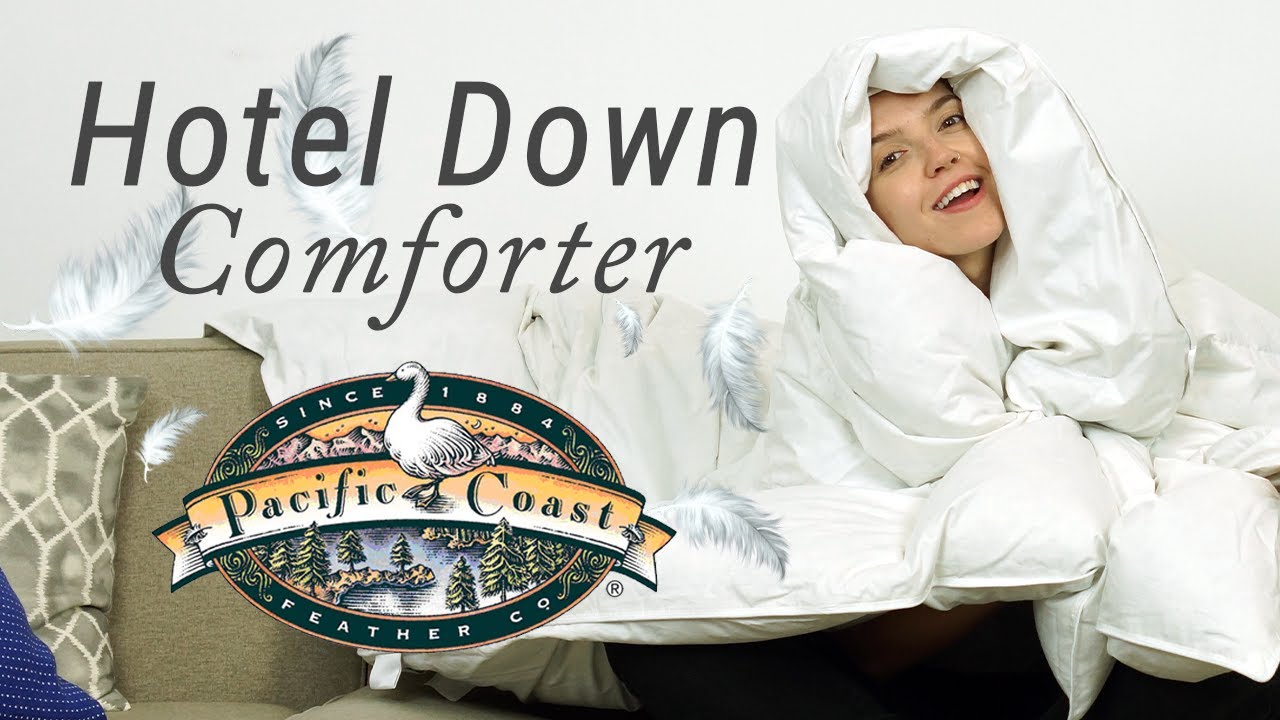
Our reviewer had previously tried a much loftier Pacific Coast comforter that felt too warm for her. On opening the Hotel Down Comforter, she noticed less fill than expected and preferred the lighter coverage. When she lay under it, she felt warm and comfortable without feeling engulfed.
She thought the comforter would work well for spring, fall and winter in her home, but not its hot summer. Her preference for a bordered stitch pattern was aesthetic rather than a fault she measured. The original video is embedded here.

Our original Pacific Coast Hotel Down Comforter video
This video shows the product from our original review. Current models and availability may differ.
Original construction
The original review described 550-fill-power down, a cotton shell, sewn-through box stitching and loops for a duvet cover. Fill power measures lofting ability, not a direct temperature rating or the total quantity of down. Product names can recur across generations, so verify the label and exact current listing.
In a sewn-through design, the top and bottom fabrics meet at the stitching; baffle-box construction uses fabric walls between layers. Both hold fill in sections, but their appearance and loft can differ. A later Hotel listing describes baffle-box construction, so it should not be assumed identical to our older sample.
Choosing warmth and size
Our reviewer preferred this model in cooler months, but the right warmth depends on room temperature, bedding and the sleeper. A low fill power alone does not make a comforter light: total fill weight and construction also matter.
Compare the actual comforter dimensions with your mattress and duvet cover. Allow for the amount of overhang you want, and check that the cover ties align with the insert’s loops.
Down vs. down alternative
| Fill | Why consider it | Tradeoff |
|---|---|---|
| Down | Lofty natural insulation | Price, sourcing and care differ by product |
| Down alternative | No animal down; many options | Weight and warmth vary with synthetic fill |
| Wool | Often flatter and drapier | Care instructions vary by insert |
Care, availability and returns
Follow the label on the exact comforter. Large comforters may need a high-capacity washer and dryer, and down must be dried thoroughly. A removable duvet cover can reduce the frequency of cleaning the insert.
The prior article’s prices and trial terms were historical. Confirm the model, fill, dimensions, warranty and return conditions with the current seller before ordering.
How to choose a down comforter for your bed
Start with warmth, not a single specification. Think about your bedroom temperature, whether you share the comforter and the weight of your other bedding. The reviewer preferred the older Hotel sample to a loftier comforter in her New York home, but a different sleeper or a colder room may call for more insulation. Compare the manufacturer's warmth descriptions for the exact models you are considering, and check the return terms if you are unsure.
Read fill power alongside fill weight. Fill power describes the space a standard amount of down can occupy under test conditions. The amount of fill and the comforter's construction also matter. Two comforters with the same fill power can feel different if they contain different quantities of down. Compare the full product description rather than treating a higher number as a promise of a cooler or warmer night.
Check the shape and coverage. Measure the insert's width and length against your duvet cover and the drop you want at the sides and foot of the bed. A shared comforter may need more fabric than the mattress width alone suggests. If you use a cover, compare the position and number of ties with the insert's loops; the loop detail in our original photograph shows one feature of the tested sample, not a guarantee for a later version.
Consider the whole setup. A top sheet, cover material and extra blanket all affect how the bed feels. If your current duvet is too warm, first try removing a layer or replacing a heavy cover. Couples who prefer different amounts of warmth can also experiment with separate covers; our two-duvet guide explains how to try it with bedding you already own.
Plan for care and storage. Read the current care label before ordering and check whether your washer and dryer can handle the size. A duvet cover can be washed separately between insert cleanings. Store the insert fully dry and follow its specific label, since cleaning instructions can differ between products. Compare the final price, shipping and any return charges at the seller you choose.
Frequently asked questions
Was the comforter tested?
Yes. Our original reviewer described using it and compared its warmth with another Pacific Coast comforter.
Is 550 fill power a warmth rating?
No. It describes lofting ability; fill quantity and construction also influence warmth.
Is it suitable for summer?
Our reviewer found it better suited to cooler seasons in her home. Your preference and climate may differ.
Is today’s Hotel comforter identical?
Not necessarily. Check the current listing because construction and specifications may have changed.