Nitetronic Pillow Review (2026)

In-Depth Guide to Nitetronic Pillow Features
Revolutionizing Sleep with the Nitetronic Pillow
Nitetronic’s active smart pillows use sensors and moving air chambers intended to respond to snoring. Comfort and results vary, and a reduction in snoring does not establish that sleep apnea is treated.
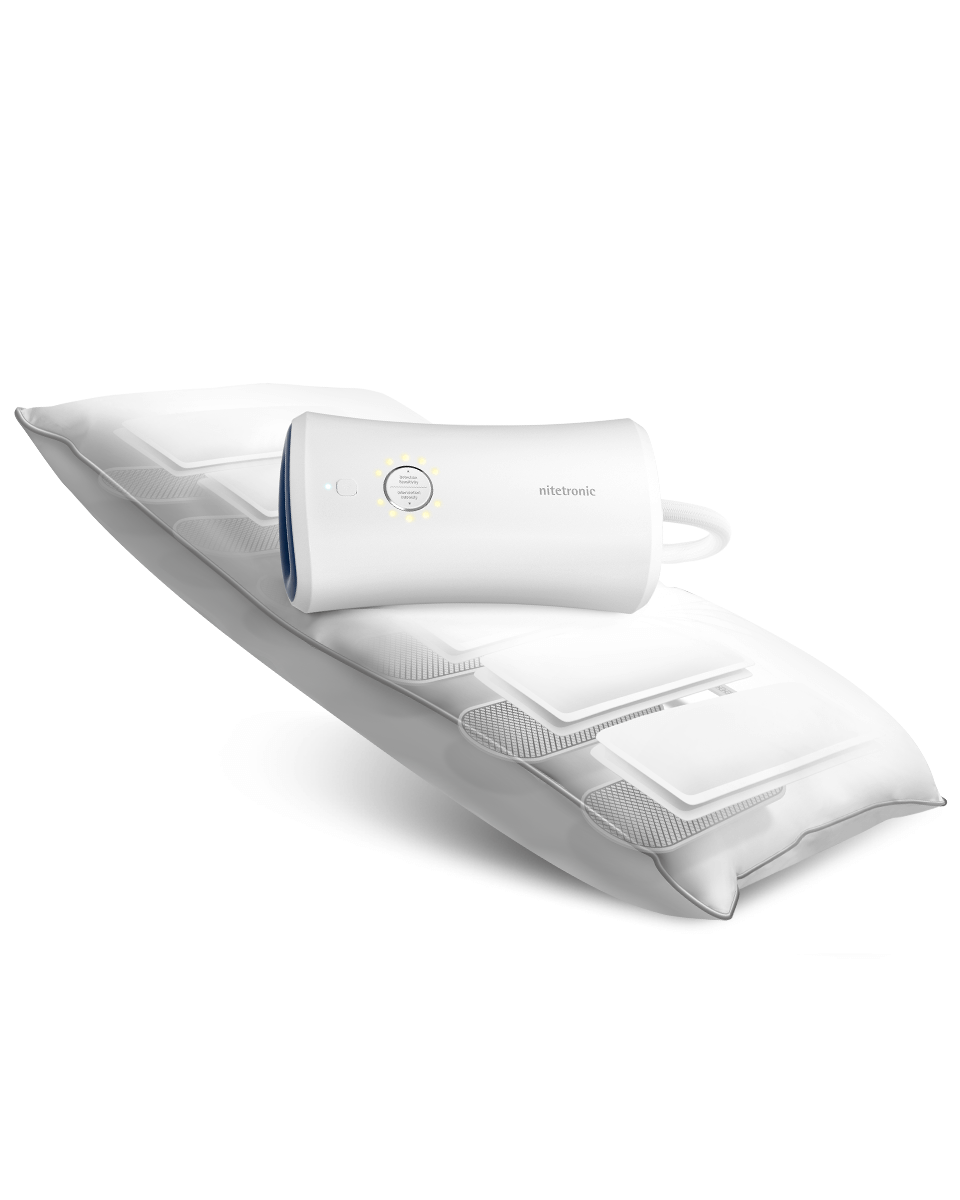
Which Nitetronic model are you buying?
Nitetronic lists the Z6 and Z1 as active smart pillows; the brand says Z6 adds control-box buttons. Its Z10 is a passive side-sleeping pillow with no electronic air chambers. Compare the exact model’s dimensions, controls, current price and return terms rather than assuming the entire range works alike.
Before purchase: the manufacturer’s Z1 listing says it is not intended for people under 18 or people with a heart pacemaker or intracranial electrode, and says people with obstructive sleep apnea should consult a doctor. Check restrictions and instructions for your exact model with the manufacturer and your clinician.
Consider whether changes in head position or pump noise would wake you or a partner, whether the shape suits your usual sleep position, and whether you can return the pillow if it is uncomfortable. The manufacturer’s FAQ describes app use and cleaning; connectivity details vary by model.
Key Features of the Nitetronic Pillow
1. Advanced Anti-Snoring Technology
A 2017 randomized crossover study enrolled 22 snorers, with two dropping out; sleep apnea was ruled out before participation. The researchers reported a lower snoring index with the pillow activated. One author was affiliated with Nitetronic. This small study does not support a guaranteed 70–90% reduction for every buyer or establish effectiveness for sleep apnea.
2. Smart Sensors for Real-Time Detection
Nitetronic says its active smart pillows detect snoring and use air chambers to move the head. The response may vary with sleep position and the cause of snoring; it cannot guarantee an unobstructed airway.
3. Comprehensive Sleep Analysis App
The optional app can display snoring information and, depending on the model, adjust settings. App estimates are not a sleep study and cannot diagnose sleep apnea or confirm effective treatment.
4. Customizable Height Options
The manufacturer describes removable height inserts for the Z1 and Z6. The active air chambers move during operation; verify the height adjustment and included pieces for the exact model.
5. Non-Invasive and Comfortable Design
The pillow is a consumer positioning product. Comfort is individual, and the pillow is not a substitute for prescribed CPAP or another clinician-directed sleep-apnea treatment.
How Does the Nitetronic Pillow Work?
The Nitetronic Pillow employs a combination of smart sensors and anti-snoring technology in a seamless manner:
– Snoring detection: Sensors are designed to recognize snoring; background noise and partner sounds may affect performance.
– Position adjustment: Air chambers move the head in response to detected snoring; the result depends on the user.
– Air chambers: Movement can be noticeable and may disturb light sleepers. The device cannot guarantee snoring prevention.
The Benefits of the Nitetronic Pillow
Clinical Performance and Efficacy
The Mannheim trial is a useful early signal for primary snoring in a small group, not proof of a specific result for every sleeper. It excluded sleep apnea and included a Nitetronic-affiliated author; larger independent studies would help clarify who benefits.
User Experiences and Testimonials
The following testimonials appeared in the earlier article; we have not independently verified them. Insanniee shares, “I got the anti-snoring pillow for my husband, and it works wonders. He sleeps so much better!” Meanwhile, Mark J., a Kickstarter backer, enthuses, “The pillow is comfortable, and my wife seems happy too!” Testimonials describe individual experiences and cannot establish clinical effectiveness.
Comparing the Nitetronic Pillow With Other Anti-Snoring Solutions
When investigating anti-snoring solutions, it’s helpful to compare the Nitetronic Pillow with other options available on the market:
Nitetronic Pillow vs. Traditional Pillows
A standard pillow does not make automated movements. An active pillow adds sensors and moving parts, which some sleepers may find useful and others may find disruptive; neither option establishes that an airway remains open.
Nitetronic Pillow vs. Other Anti-Snoring Devices
– Wedge pillows: A wedge raises the upper body but does not respond automatically to snoring; comfort and effect vary.
– Oral appliances: Dentist-fitted mandibular advancement devices may be prescribed for selected patients, including some with sleep apnea. Discuss fit and treatment options with a qualified clinician.
– Nasal dilators: These address nasal airflow and may help some forms of nasal obstruction, but are not interchangeable with treatment for sleep apnea.
– Other smart devices: Compare the sensing method, movement, noise, power and returns rather than assuming all snoring has the same cause.
Setting Up and Using the Nitetronic Pillow
Setting up your Nitetronic Pillow is simple:
1. Identify the model: Follow its included manual for the correct power adapter and setup.
2. App: Nitetronic says its active pillow can operate without downloading the app; the app provides additional data and settings. Confirm features for your model.
3. Connectivity: Instructions differ across models and the manufacturer’s FAQ contains differing descriptions of setup and offline operation. Follow the manual for your exact model; contact support if it is unclear.
4. Adjust fit: Use only the supplied height inserts and settings supported by your model. Do not assume an app is needed to change physical pillow height.
Ensuring Optimal Use and Maintenance
To maximize the Nitetronic Pillow’s effectiveness:
– Cleaning: The manufacturer says not to wash the electronic pillow itself. Remove and clean the outer pillowcase according to its label; follow the exact model’s instructions.
– Sensor reset: Use a reset only when the model’s troubleshooting instructions call for it; routine recalibration is not established as necessary.
– Settings: If supported, adjust intervention sensitivity according to the manual. Stop use if the movement or noise disturbs sleep.
Frequently Asked Questions about Nitetronic Pillow
Does the Nitetronic Pillow Really Work?
A small study found reduced snoring in a selected group without sleep apnea, but results vary and the study does not prove that every person or current model will benefit.
How Do I Adjust the Height?
Nitetronic says Z1 and Z6 height can be adjusted using supplied inserts. Check the instructions for the exact model and do not place unapproved items inside the pillow.
Is it Suitable for Sleep Apnea Patients?
It is not a proven treatment for sleep apnea and must not replace prescribed PAP or other treatment. Ask your clinician if you have sleep apnea, witnessed breathing pauses, gasping or daytime sleepiness; a sleep evaluation may be appropriate.
Conclusion
The Nitetronic Pillow uses sensors and positional adjustments intended to respond to snoring sounds. Consumer testing and testimonials do not establish it as a treatment for snoring or sleep apnea. Evaluate it for comfort, noise, responsiveness, app usability, return terms, and whether positional adjustment works for you.