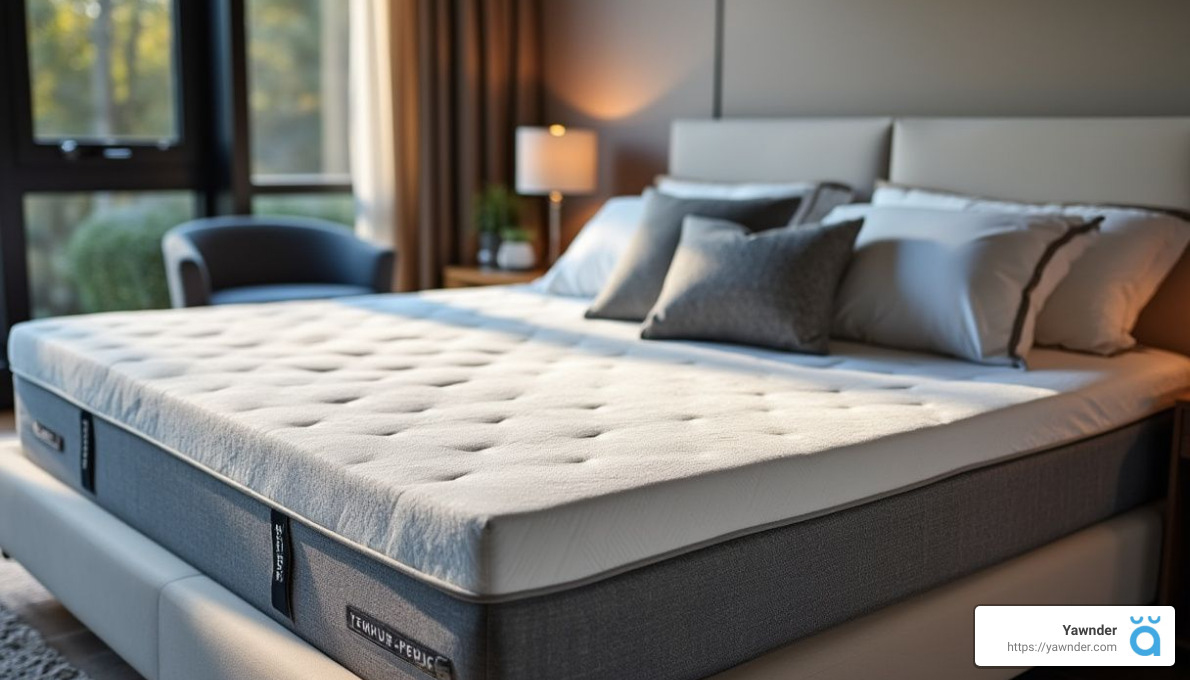
Tempur-Pedic is known for conforming foam and motion absorption. If you like that feel but want to compare other prices or constructions, start by deciding how closely you want to match the slow, body-contouring sensation.
Alternatives to compare
These are shopping comparisons based on construction and advertised features, not a claim of identical feel or a long-term head-to-head test. Prices and configurations change. Yawnder may earn a commission through qualifying links.
| Mattress | Why consider it | Difference to expect |
|---|---|---|
| Nectar Classic Memory Foam | All-foam construction for shoppers prioritizing contouring and motion absorption. | Foam formulations, firmness and recovery feel differ from TEMPUR material. |
| Helix Midnight Luxe | Foam-and-coil hybrid marketed for side sleepers and combination sleepers. | Coils give it a different, generally more responsive construction than an all-foam model. |
| Brooklyn Bedding Aurora Luxe | Hybrid with cooling-oriented features and firmness choices. | A cool-to-touch cover is not a guarantee of a particular overnight temperature. |
| Leesa Sapira Chill Hybrid | Pillow-top hybrid with foam cushioning and multiple comfort options. | Its coils and pillow top create a different feel from dense, slow-response foam. |
| Saatva Classic | Dual-coil innerspring with multiple firmness choices for those open to a traditional feel. | It is a distinct alternative, not a close match for the classic Tempur foam feel. |
What makes the Tempur-Pedic feel different?
Tempur-Pedic describes its material as responsive to weight, shape and temperature. Its range includes different firmnesses and hybrid constructions, so the feel varies by model. Memory foams from other brands also vary in density, contouring and response.
Try changing positions on each mattress. A slower-recovering surface may feel pleasantly cradling to one person and harder to move on for another. Couples should also compare motion transfer and usable edge support.
How to choose an alternative
- Start with feel: All-foam models can offer a closer starting point for contouring; hybrid and innerspring models add different levels of response.
- Match firmness to your body: Side sleepers often prefer enough cushioning for shoulders and hips; back and stomach sleepers may want more resistance under the midsection. Individual preferences vary.
- Consider heat: Covers, bedding and room temperature all matter. Treat cooling features as design details rather than promises.
- Check your base: Confirm support, slat spacing and adjustable-base compatibility for the exact mattress.
For a direct comparison of different constructions, see Saatva vs. Tempur-Pedic. Manufacturer details are available for the Nectar Classic, Aurora Luxe and Sapira Chill.
Compare final prices and trial terms
Compare the same mattress size after discounts, delivery and any return fees. Check the minimum break-in period, trial length, warranty exclusions and whether the policy applies when buying through a retailer. A longer warranty does not guarantee a longer comfortable life.
Frequently asked questions
Which mattress is closest to Tempur-Pedic?
There is no universal match. Start with all-foam mattresses if you want contouring, then compare the exact Tempur-Pedic model and firmness you like.
Is a hybrid a good alternative?
It can be if you want cushioning with a more responsive coil system. It may feel noticeably different from an all-foam Tempur-Pedic.
Are alternatives always cheaper?
No. Compare current prices in the same size; premium hybrids and upgraded configurations can cost as much as or more than some Tempur-Pedic models.
Contact Yawnder’s Encinitas showroom to ask which models are available to try.