
Which mattress topper is best for pressure relief?
A topper can add cushioning to a mattress that feels too firm at the shoulders or hips, provided the mattress underneath still supports you. Start with a softer memory-foam topper if you like a contouring feel, or compare softer latex if you prefer a more responsive surface.
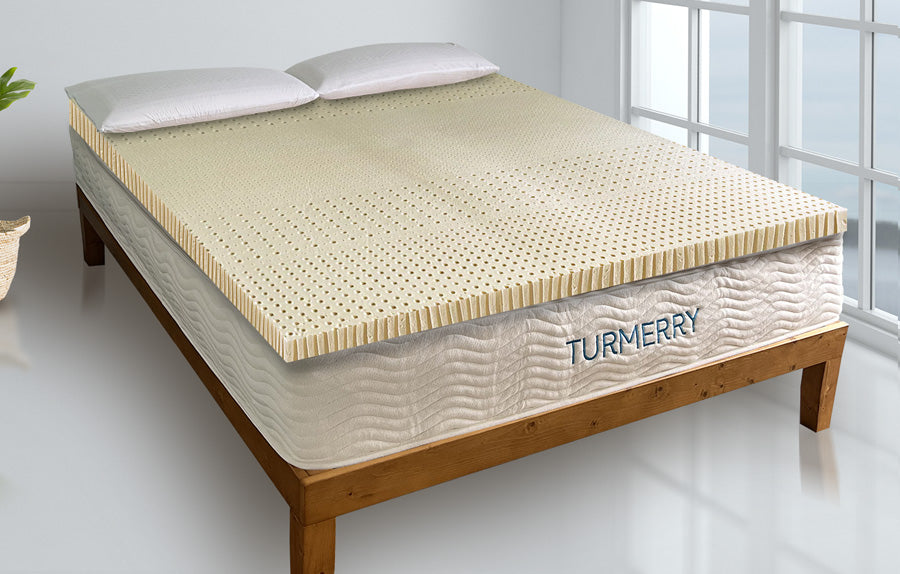
Our take: Consider TEMPUR-Adapt for memory-foam contouring, Turmerry latex for a choice of firmness, or Saatva graphite memory foam for another foam option. These are comparisons of published specifications, not a newly documented head-to-head test. Yawnder may earn a commission through these links.
Options to compare
| Topper | Design | Consider before ordering |
|---|---|---|
| Turmerry organic latex | Latex topper offered in multiple firmnesses and thicknesses. | Choose firmness carefully; verify the exact size, cover and return terms. |
| TEMPUR-Adapt | Three-inch TEMPUR material with an optional cooling-cover version. | Foam responds to pressure and temperature; check care and return terms. |
| Saatva graphite memory foam | Three-inch memory foam with graphite infusion. | Compare fitted height, price and any straps or cover details. |
Check current details with Turmerry, Tempur-Pedic and Saatva. A cooling cover or infusion does not guarantee a cool night.
Memory foam vs. latex vs. fiber
Memory foam tends to conform closely and recover more slowly; latex usually feels more responsive. Fiber or down-alternative pads can add a softer surface but often compress more. Feel varies by the product and your body, so these are general tendencies rather than promises.
For side sleepers, enough cushioning at the shoulder and hip may help comfort. Back and stomach sleepers may prefer a thinner or firmer layer if a thick, soft topper allows uncomfortable sink. Check known latex sensitivities before choosing latex.
Thickness, fit and the mattress underneath
A thinner topper generally makes a smaller change; a thicker one can have a more noticeable effect on feel and bed height. There is no universal best thickness. Compare your weight, preferred position and the firmness of the existing bed.
- Measure the mattress and choose the matching topper dimensions.
- Check whether fitted sheets and any protector can accommodate the added height.
- Review straps, covers and compatibility with an adjustable base.
- Inspect the foundation and mattress for sagging; a topper cannot repair a failed support system.
Care, price and return terms
Compare the same size and include any separate cover, shipping and return costs. Read the seller’s written policy: toppers and bedding may have different return rules from mattresses. Follow the care label; many foam cores must not be soaked or machine washed. See our topper cleaning guide.
For more options, browse Yawnder’s mattress topper guide or the guides to firmer latex toppers and eco-conscious toppers.
Comfort toppers vs. medical pressure care
Ordinary mattress toppers are comfort products, not a substitute for clinical prevention or treatment of pressure injuries. If someone has limited mobility, a pressure injury or a clinician-identified risk, consult their healthcare team about an appropriate support surface and care plan. An alternating-pressure medical pad is a different product category.
Frequently asked questions
Can a topper help a mattress feel less firm?
Often it can change the surface feel, but results depend on the topper, mattress and sleeper.
Will a topper fix a sagging mattress?
No. It cannot restore failed support in the mattress or foundation.
Is thicker always better?
No. Too much soft material may feel unstable to some sleepers. Compare the thickness with your support needs.
Want to compare current availability and pricing on Amazon?
Compare pressure-relief toppers on AmazonAs an Amazon Associate, Yawnder may earn from qualifying purchases.