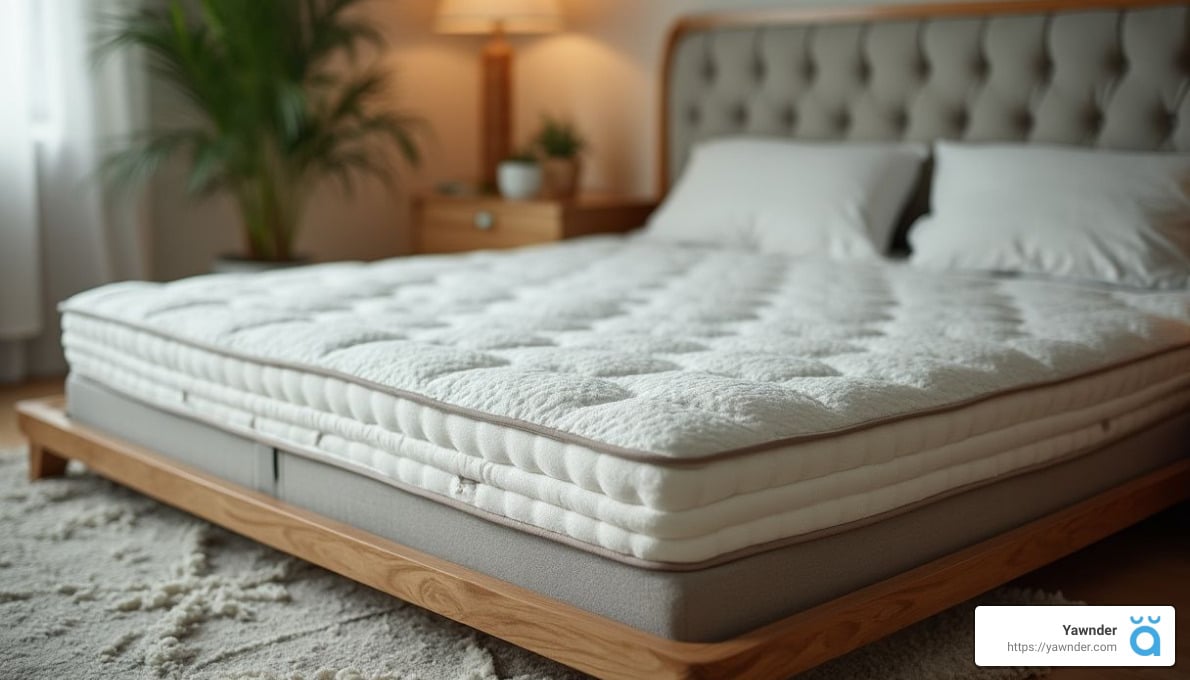
A durable mattress should remain comfortable and supportive for your needs over time. No material, price or warranty can promise a fixed lifespan for every sleeper.
Mattresses to compare for durability
These are models to investigate based on their construction and available choices; they are not ranked by measured years of use. Firmness, components and terms can change, so confirm the exact version before ordering. Yawnder may earn a commission through qualifying links.
| Mattress | Why compare it | Potential tradeoff |
|---|---|---|
| Saatva Classic | Dual-coil construction and multiple firmness choices. | Traditional responsive feel may not suit someone wanting deep memory-foam contouring. |
| Avocado Green | Latex-and-coil design with certified organic materials. | Latex has a buoyant feel; choose the configuration carefully if you prefer a plush surface. |
| Helix Dusk Luxe | Medium-feel hybrid designed by the brand for back and stomach sleepers. | Feel and options depend on the configuration; it may not be the best fit for every side sleeper. |
| WinkBed | Hybrid construction with several firmness options. | Pick firmness for your body and preferred position rather than assuming firmer always lasts longer. |
| Nolah Evolution | Hybrid option for shoppers who want a cushioned surface. | Compare firmness and overall height with your frame, sheets and comfort preferences. |
See Saatva’s Classic specifications, Avocado’s Green listing and Helix’s Dusk Luxe listing for current model details.
What affects mattress longevity?
- Comfort layers: The upper foam, latex or fiber layers can soften or compress before the support core fails. Thickness and material specifications matter, but a label alone does not predict lifespan.
- Support core: Coils, latex and foam cores vary in design and quality. Coil gauge or count alone cannot tell you how long a complete mattress will last.
- Fit and use: Body weight, sleeping position, concentrated edge use and whether the bed is shared all affect wear.
- Foundation: Use a frame or adjustable base approved for the mattress, with the required center support and slat spacing.
Latex is often chosen for resilience, while higher-density foams can be one useful durability indicator. Neither is a guarantee. A mattress can lose the comfort you need even when it looks intact or remains within warranty limits.
Ways to help a mattress last
- Use a properly fitted protector and deal with spills according to the care label.
- Inspect the foundation and maintain required support.
- Rotate head-to-foot only if the manufacturer recommends it. Do not flip a one-sided mattress.
- Keep the bed dry and ventilated, and follow instructions for cleaning and moving it.
A pronounced ridge or dip can have several causes. See our mattress-hump troubleshooting guide before replacing the entire bed.
Understand the trial and warranty
A sleep trial addresses whether the bed works for you; a warranty covers specified defects under stated conditions. A 10-, 25-year or lifetime warranty is not a prediction that the mattress will feel comfortable for that long. Compare impression thresholds, required support, transport fees, exclusions and any prorated costs. Terms may differ by seller.
Frequently asked questions
How long should a mattress last?
There is no single reliable lifespan. Materials, construction, support and use vary. Replace or assess a bed when it has persistent sagging, damage or no longer provides comfortable support.
Do latex mattresses always last longer than foam?
No. Latex can be resilient, but the quality and thickness of every layer and the conditions of use matter.
Does a long warranty guarantee durability?
No. It specifies coverage for certain defects; normal softening or a change in comfort may not qualify.
For help comparing feel and support in person, contact Yawnder’s Encinitas showroom.