
Quick answer
Quick answer: A topper changes the feel of your mattress, but it is not automatically an allergen barrier. If dust mites are the concern, consider a properly fitted, allergen-impermeable zippered encasement and washable bedding as part of a plan discussed with your clinician.
What does “hypoallergenic” mean?
The term does not guarantee that a product will prevent symptoms or be suitable for every allergy. Dust mites, animal dander, mold and contact sensitivities are different concerns. The American Academy of Allergy, Asthma & Immunology discusses mattress and pillow encasements and regular laundering for dust-mite exposure. Follow both medical guidance and your bedding’s care label; not every topper can tolerate hot washing.
Latex and wool are not automatically safe for everyone. Natural rubber latex can trigger reactions in people with latex allergy; wool can irritate some sensitive skin. Ask your clinician if you have a known sensitivity.
Compare topper materials and examples
| Option | What to consider | Care and allergy questions |
|---|---|---|
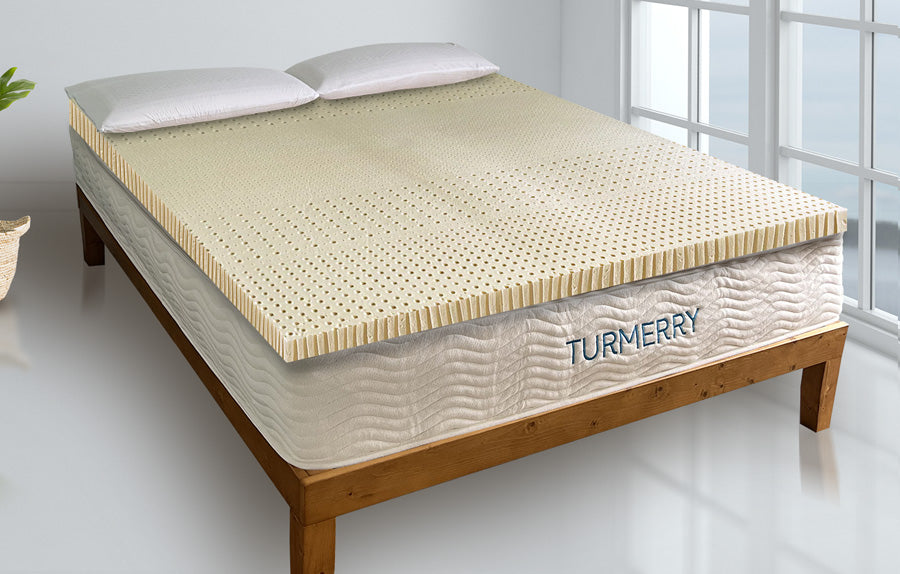
| Turmerry latex topper | Organic Dunlop latex in several options; responsive feel. | Avoid if latex is a concern; check whether the cover is sold separately and washable. |
| PlushBeds wool topper | Wool fill and cotton cover; different surface feel from foam. | Ask about wool sensitivity, cleaning and the complete materials. |
| Memory foam with removable cover | Often a slower, contouring feel; construction varies. | Check foam and cover care separately; foam is not automatically washable. |
| Washable fiber-filled pad | Often adds a lighter comfort layer than a thick topper. | Confirm machine capacity, care temperature and whether it fits over an encasement. |
Examples are based on Turmerry’s and PlushBeds’ published product information, not a new comparative allergy test. Sponsored links may support Yawnder.
Cleaning and moisture management
Choose bedding you can maintain according to its label. Wash the removable protector, sheets and pillowcases as directed; allow all layers to dry completely. A foam or latex insert often has different care instructions from its cover. Do not soak or machine-wash it unless the maker permits it.
Control excess moisture and investigate persistent dampness or mold rather than relying on a topper’s advertised resistance. An encasement can be placed around the mattress; ask the encasement maker how to accommodate a topper and whether it needs its own cover.
Before you buy
- Identify your concern with a clinician where appropriate; materials and treatments should match the trigger.
- Request the exact fill, cover and fire-barrier composition if relevant.
- Check size, thickness, firmness, cover removability and cleaning instructions.
- Read return and warranty terms for the specific seller, including opened bedding restrictions.
- Verify what any certification covers. Organic and foam emissions certifications do not prove a product is allergen-free.
See our protector vs. encasement guide and mattress topper guide. Call the Yawnder showroom to confirm a specific item is available to view.
Frequently asked questions
Does a topper prevent dust-mite allergies?
No topper guarantees prevention. An allergen-impermeable encasement and a broader cleaning plan may be more relevant to dust mites.
Is latex hypoallergenic?
Not for everyone. Natural latex can cause allergic reactions in susceptible people.
Is organic the same as allergen-free?
No. Organic certification addresses specific materials and production standards, not a guarantee of no allergens.
Can a topper be washed?
It depends on the product. Check the instructions separately for the insert and any removable cover.
Want to compare current availability and pricing on Amazon?
See hypoallergenic toppers on AmazonAs an Amazon Associate, Yawnder may earn from qualifying purchases.