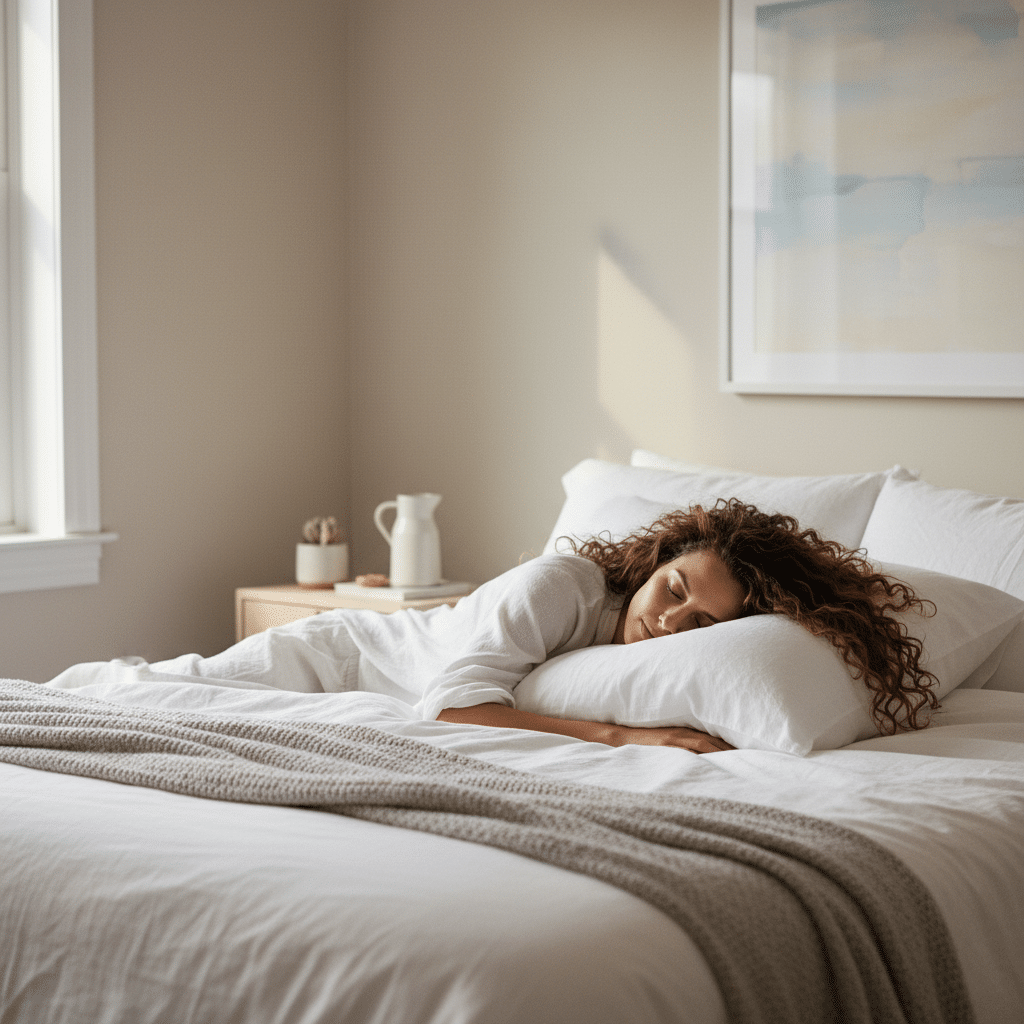
The goal is to reduce unnecessary rubbing and tangling while keeping your hair and scalp comfortable. Start with one or two simple changes and adjust based on the result.
Choose a smooth sleep surface
A satin or silk pillowcase, bonnet or scarf can reduce friction and help preserve a style. The American Academy of Dermatology’s curly-hair guidance includes loose overnight styling; its related advice also suggests silk or satin coverings as an option.
Silk is a fiber; satin is a weave that can be made from polyester or other fibers. Both can feel smooth, but prices and care requirements differ. Choose a bonnet or scarf that stays in place without a tight band or a knot that disturbs your sleep.
Try a loose pineapple, braid or twist
| Method | How to try it | Watch for |
|---|---|---|
| Loose pineapple | Gather longer hair loosely at the top of the head with a soft scrunchie | Pulling at the hairline or an uncomfortable tie |
| Loose braid or twists | Separate hair into comfortable sections before bed | Too much tension or a style that changes your curl pattern |
| Bonnet or scarf | Cover hair with a smooth, comfortably fitted fabric | A band that is too tight or slips off |
| Smooth pillowcase alone | Leave hair loose if that is most comfortable | Possible tangles depending on length and movement |
Keep any style loose. The AAD warns that repeated tension from tight hairstyles can contribute to hair loss. If a style hurts, pulls or causes headaches, loosen it or choose another method.
A simple evening routine
- Detangle gently when needed. For curly or coily hair, the AAD suggests working in sections with wet hair and conditioner, using fingers or an appropriate wide-toothed tool.
- Use products as directed. If you use a leave-in product, follow its label. Do not leave a rinse-out treatment on overnight unless the instructions say to do so.
- Choose a comfortable style. Try a loose pineapple, braid, twists or sleep bonnet according to your length and preference.
- Protect your sleep too. Avoid uncomfortable clips, tight ties or bulky wraps that wake you up.
Hair oils and overnight products are optional. They do not work the same way for everyone, and a pillowcase cannot guarantee moisture retention or prevent all breakage.
Refresh without starting over
Remove the wrap or tie gently. If needed, separate flattened sections with your fingers and use a small amount of water or a product suited to your hair. Avoid pulling through knots or brushing dry curls aggressively. Adjust the routine over a few nights rather than changing everything at once.
Common questions
Is silk better than satin?
Both can provide a smooth surface. Silk is a fiber and satin is a weave; compare the actual material, feel, price and care.
What if my hair is too short for a pineapple?
A comfortable bonnet, scarf or smooth pillowcase may be easier. Choose a method that does not pull on the hair.
Should I sleep in a tight braid?
Avoid tension. A loose braid may help with tangles; a tight style can pull at the scalp and damage hair over time.