Updated October 12, 2026. Yawnder is a mattress retailer and may receive commissions from qualifying shopping links.
Short answer: A passive cooling topper changes the materials and feel under you, while an active system uses powered air or circulating water to manage the sleep surface temperature. If your current mattress is comfortable but feels warm, start by checking bedding and room conditions before buying a costly system.


Check Chilipad options and current prices Affiliate link; availability and prices may change.
Four approaches compared
| Cooling approach | What it actually does | Main trade-off |
|---|---|---|
| Breathable sheets and protector | May reduce trapped moisture and insulation | Does not actively cool the bed |
| Passive cooling topper | Changes surface feel and heat transfer | Cooling sensation can fade as materials reach body temperature |
| Powered airflow system | Moves air through bedding or near the sleeper | Noise, bedding setup, and room-air temperature matter |
| Water-circulating system | Actively heats or cools a pad using a control unit | Higher cost, maintenance, electrical power and potential subscription features |
Choose by the problem you actually have
You feel warm only when first lying down
Try lighter bedding or a breathable protector. Our sheets for hot sleepers guide compares fabric choices. Some cool-touch fabrics feel cold initially without continuously extracting heat.
You wake up hot hours later
Passive fabrics may not be enough. Compare powered airflow and actively temperature-controlled pads while accounting for your bedroom temperature, humidity, noise tolerance and partner preferences.
You and your partner want different temperatures
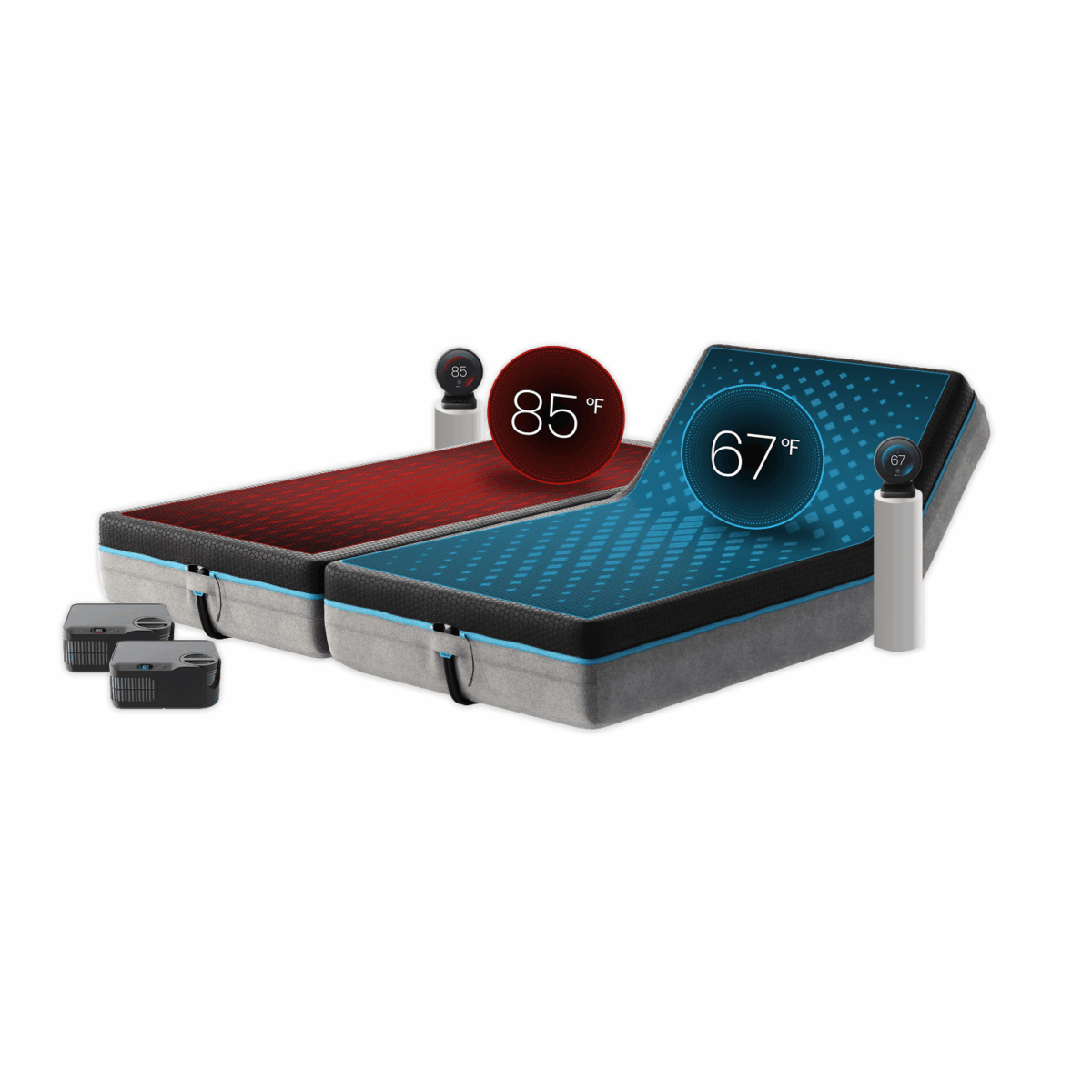
Look at independently adjustable zones, mattress size compatibility and whether the system controls each side separately. Verify the actual configuration for the product being sold.
Your mattress is already uncomfortable
Cooling technology won’t correct significant sagging or poor support. Read our guide on whether a topper can fix a bad mattress first.
How a topper changes the bed
A conventional passive topper adds a layer between you and the mattress. Thickness and material affect pressure relief and movement as well as temperature. A soft foam topper may help a firm surface feel gentler, but it can also add contouring or make it harder for some sleepers to change position. Measure the combined height before buying fitted sheets.
Some powered products are sold as “smart toppers” or pads, so check the mechanism rather than relying on the product name. A fan-powered topper, a water-circulating pad and a passive gel-foam topper solve the problem in different ways.
What to compare before buying
- True total cost: hardware, replacement pads, electricity, potential subscriptions, and out-of-warranty service.
- Noise and maintenance: pumps, fans, filters, cleaning requirements and water treatment if applicable.
- Fit and base compatibility: mattress thickness, split-king configurations and adjustable-base articulation.
- Return terms: hygiene restrictions, trial length and who pays return shipping.
- Cooling method: measured temperature control versus a temporary cool-to-the-touch sensation.
Airflow versus water: what changes?
Airflow: BedJet moves room air into the bedding to help carry heat and moisture away. Its cooling mode is not air conditioning: BedJet says it cannot be set below the surrounding room temperature. That matters if the bedroom itself gets very hot. Check where the hose and unit will fit, the sound at your preferred fan speed and whether an optional air-distribution sheet is needed for your setup.
Water circulation: a compatible pad and control unit circulate water to manage the sleep surface temperature. The setup sits on the mattress and may change its feel. Check hose routing, recommended water and cleaning routines, how much space the unit needs and whether a split or dual-zone configuration is sold separately. For example, Sleepme recommends distilled water and regular cleaner for its Chilipad systems; see its water and maintenance guidance for the model you own.
Before paying for either: compare the exact configuration and return terms. A dual-zone setup may need additional components; subscriptions, if offered, may unlock features rather than being required for every basic function. Ask the seller which features work without a subscription and what ongoing maintenance costs.
See BedJet’s product details for its room-air limitation and equipment requirements. Claims and features vary by model.
Research specific systems
See Yawnder’s bed cooling system comparisons, Perfectly Snug vs BedJet, and Chilipad review. Review current model and accessory details before purchase; this guide does not promise a particular temperature drop or a medical sleep benefit.
FAQ
Do gel-infused mattress toppers actively cool?
No. Gel and phase-change treatments may influence initial heat transfer but have no powered temperature-control mechanism.
Can I use cooling systems on an adjustable bed?
Sometimes, but compatibility varies. Check the exact pad, tubing or airflow system and the base’s range of motion.
Is active cooling always worth the price?
No. If a sheet or protector solves the problem, an active system adds unnecessary complexity. Consider one when passive changes haven’t addressed persistent heat discomfort.
Our verdict
Start with breathable bedding or a passive topper if you also want to change the mattress feel. Choose a powered system when persistent heat warrants the extra cost and upkeep: airflow suits people who prefer moving air, while a compatible water pad can offer controlled surface temperatures. Compare the exact configuration and return policy before ordering.