
Quick answer: Before buying anything, check your college’s housing page for the mattress dimensions, bed configuration and rules for your specific residence hall. Many dorms provide the bed and mattress. Twin XL bedding is common, but some rooms use another size or a narrower mattress.
Start with sheets, a pillow, a washable protector and bedding suited to your room. Add a topper only after confirming its size, the school’s rules and whether you need more cushioning. Campus examples below illustrate why details must be verified with your own housing office.
What usually comes with a dorm bed?
Many residence halls furnish a bed frame and mattress, with height or loft options that vary by building. Do not assume you can remove the supplied furniture, bring a replacement mattress, add your own hardware or use bed risers. Ask housing what is provided and which changes it permits.
For example, Gettysburg College lists provided bedroom furniture and a 39 × 80 × 6½-inch mattress. UC Davis lists extra-long mattresses measuring 36 × 80 × 8 inches and restricts bed modifications. These are examples, not a promise about another school.
Twin vs. Twin XL and other dorm sizes
| Size | Common dimensions | Shopping note |
|---|---|---|
| Twin | Approximately 38–39 × 75 inches | Five inches shorter than Twin XL. |
| Twin XL | Approximately 38–39 × 80 inches | Common in residence halls; check the actual supplied mattress. |
| Other dorm mattresses | Varies by building | Some extra-long beds are narrower or use different depths. |
| Full | Approximately 54 × 75 inches | Do not assume apartment or residence-hall beds match. |
North Dakota State University, for example, lists Twin XL in many halls but regular twin in others. Use your own school’s measurements, including depth, before buying fitted sheets or a topper.
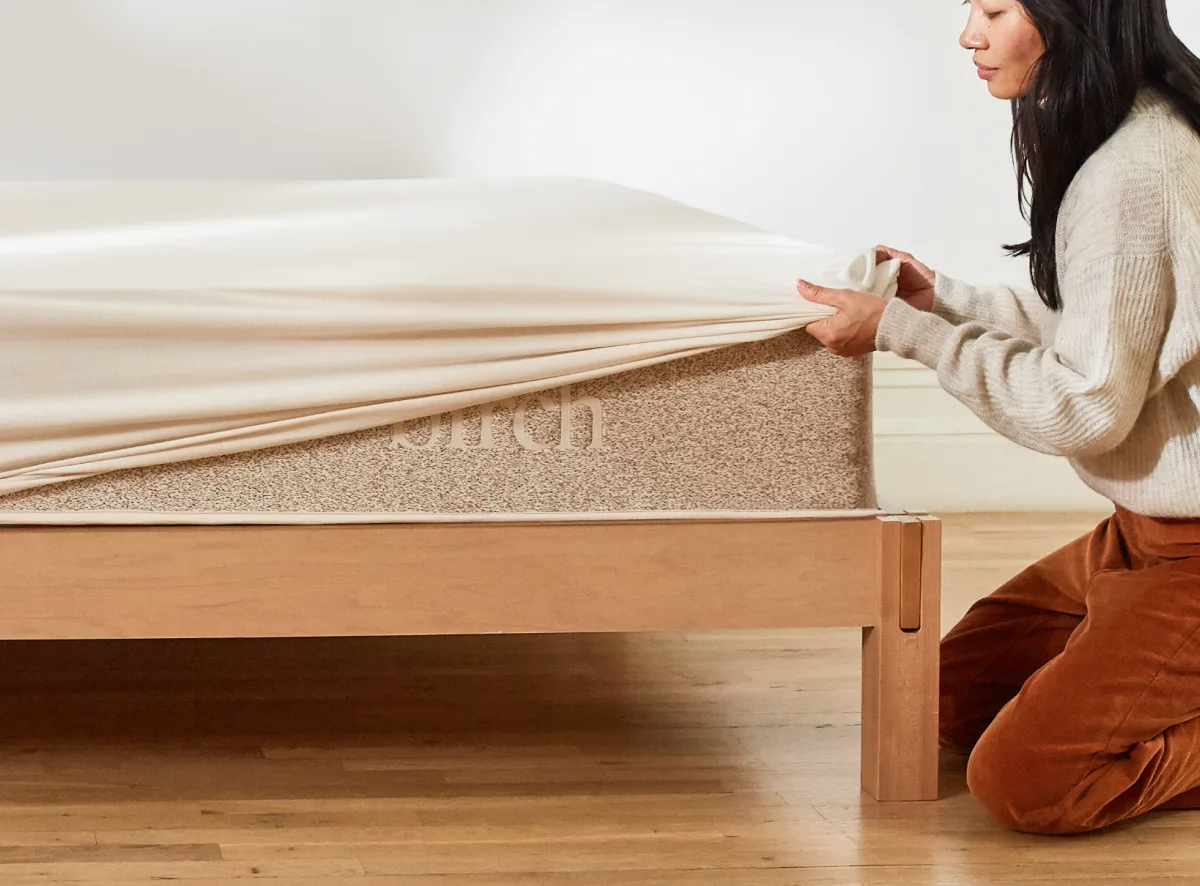
Dorm bedding checklist
- Fitted sheet: match mattress length, width and depth; allow extra pocket depth if adding a topper.
- Flat sheet or second fitted sheet: consider the student’s preference and laundry schedule.
- Pillow and pillowcases: pick a comfortable height for the sleeper and bring a spare case.
- Comforter, duvet or blanket: check the room’s temperature and available storage.
- Mattress protector: choose the correct dimensions and check whether a waterproof or zippered version is allowed or required.
- Optional topper: add cushioning if the supplied mattress feels too firm, subject to school rules.
- Laundry supplies: use the care labels and campus laundry rules when planning maintenance.
A second sheet set can be convenient, but it is not essential on day one. If you can shop after move-in, wait to see the actual mattress and room before spending on extras.
Should you buy a mattress topper?
A topper can change the feel of a firm dorm mattress. Compare thickness, material, weight and cover care. Memory foam often contours more slowly; other foams or latex may feel more responsive. No material is universally best, and a topper does not fix a broken or sagging supplied mattress—report that to housing.
On a loft or upper bunk, adding a thick topper raises the sleeping surface. Ask housing whether the topper is permitted and whether the existing guardrail remains suitable with the added height. Do not remove or alter a guardrail to make bedding fit.
Measure the combined mattress and topper height for fitted sheets. Yawnder’s topper guide is a starting point; verify size and the seller’s return policy because bedding and toppers can be final sale.
Lofted and bunk beds: follow the school’s rules
A loft can free space under a bed, but configurations and permissions differ. UC Davis requires guardrails on its bunked and lofted beds and prohibits students from adding their own hardware or risers. Gettysburg describes approved loft pieces and a facilities request process. Neither policy automatically applies to another campus.
Before move-in, ask who adjusts the frame, whether guardrails and ladders are included, what clearance is required and whether a fee or reservation applies. If the bed is unstable or a part is missing, report it to housing rather than attempting an unapproved repair.
Storage and a realistic budget
Measure the available space beneath the bed before ordering bins. Account for legs, rails, a roommate’s space and any limits on blocking doors or sprinklers. Soft-sided bags can be easier to fit around irregular clearances than rigid containers.
Prioritize a fitted sheet, pillow, bedding and a protector. A topper, bed risers and decorative accessories are optional and should follow the school’s rules. If the student is sensitive to heat, consider the entire setup—room temperature, sheets, protector and topper—rather than assuming a product labeled “cooling” guarantees a cooler night.
Frequently asked questions
Are all college dorm beds Twin XL?
No. Twin XL is common, but some schools list regular twin or narrower extra-long mattresses. Check your residence hall.
Will regular twin sheets fit Twin XL?
A standard twin fitted sheet is generally designed for a 75-inch mattress and may be too short for an 80-inch Twin XL. Check the sheet’s dimensions.
Can I bring my own mattress?
Only if your housing provider permits it. Ask about removing or storing the provided mattress and any fire or size rules.
Can I loft the bed myself?
Rules vary. Some schools provide approved parts or staff assistance, while others prohibit certain modifications. Ask housing first.
Do I need a topper?
Not necessarily. Try the supplied bed if you can; add a permitted topper if you want a change in surface feel.
Are heated blankets allowed?
Policies vary by campus and building. Check the school’s current electrical and fire-safety rules before bringing one.
Final take: Start with the specific hall’s measurements and rules. Buy the essentials first, then choose comfort and storage extras once you know what the room actually needs.