The short answer
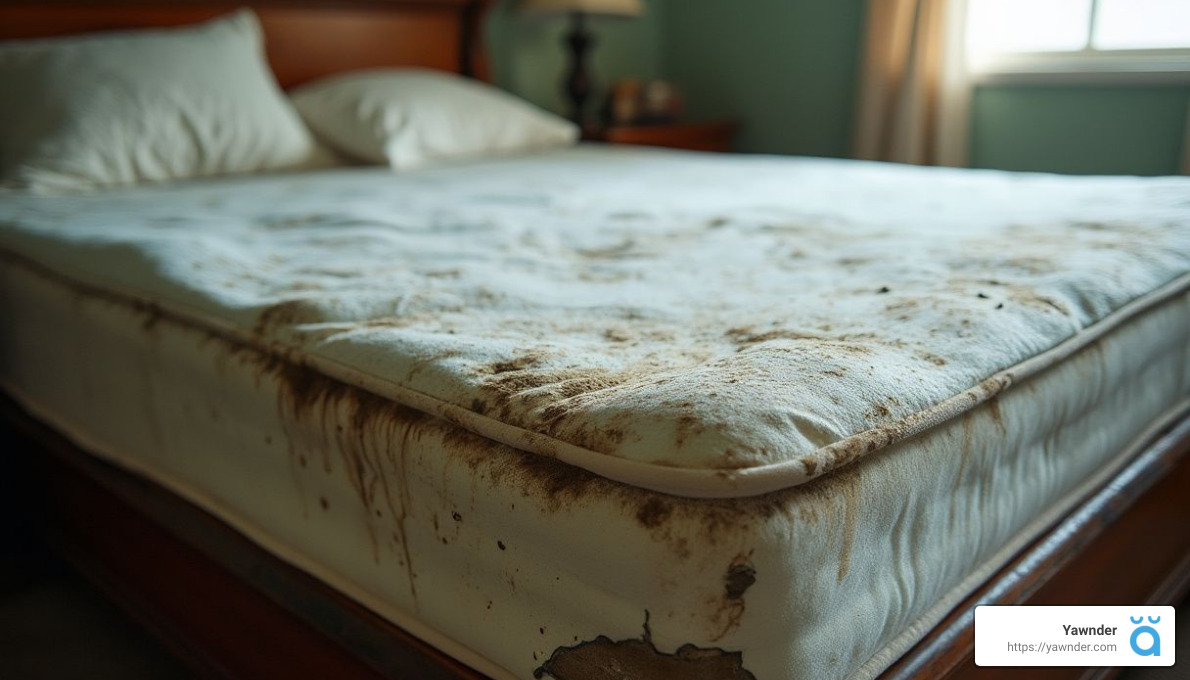
A small, promptly treated spill of clean water may be possible to dry. A mattress soaked by floodwater or sewage, one with visible mold or a musty odor, or one that cannot be dried thoroughly needs a different response: do not sleep on it; arrange safe disposal or seek appropriate professional guidance.
Mattresses are porous and moisture can remain inside even after the surface feels dry. The CDC advises healthcare facilities to discard mattresses that have been underwater or have mold growth or odor; the EPA advises discarding flood-damaged absorbent items that cannot be cleaned.
First assess the water and damage
- Small clean-water spill: If limited to a small area and treated immediately, try the steps below, subject to the manufacturer’s care instructions.
- Floodwater, sewage or unknown water: Treat as potentially contaminated. A household drying procedure does not reliably decontaminate the inside.
- Visible mold, a musty odor or prolonged dampness: Stop using the mattress. Mold in porous material can be difficult or impossible to remove completely, according to the EPA.
Rainwater passing through a roof, wall or floor can pick up contaminants; do not assume it is clean. If the room itself has extensive water damage, address the leak and seek a qualified remediation professional.
How to handle a small clean-water spill
- Remove bedding promptly. Wash or dry sheets and the protector according to their labels. Address the source of the spill.
- Blot, don’t soak. Press clean dry towels against the spot, changing them as they become damp. Avoid rubbing liquid deeper into the foam.
- Increase airflow. Follow the manufacturer’s instructions and position the mattress safely so air can circulate around both sides. Use fans and a dehumidifier if available; keep electrical equipment away from water.
- Check the base too. Dry or address any damp platform, slats or nearby flooring. Replace the bedding only after the mattress and base are thoroughly dry.
Do not use a household vacuum to extract water. A wet/dry vacuum must be rated for wet use, and manufacturer instructions should permit the method. Surface dryness does not prove the interior is dry; if you cannot be confident it dried throughout, stop using it and ask the manufacturer or a qualified professional.
What to avoid
Do not apply rubbing alcohol, bleach or a homemade disinfectant to the mattress. A surface application cannot be assumed to reach contamination inside, and products can damage materials or introduce other hazards. Avoid adding more liquid, heavy heat or relying on sunlight to sanitize the interior.
Baking soda may help with some surface odors but is not a reliable way to dry the mattress core or eliminate mold. An air purifier does not remove moisture or clean mold from a mattress.
How long does drying take?
There is no dependable drying time for every mattress. Thickness, foam layers, the volume of water, humidity and airflow all matter. CDC recommends drying or removing wet items promptly, ideally within 24–48 hours after a storm; that is a mold-prevention target, not a promise that a mattress is dry or safe after two days.
Use another sleeping surface while evaluating the mattress. Persistent dampness, odor or discoloration is a reason not to put bedding back on it.
When to replace and what to do next
For floodwater or sewage exposure, visible mold, musty odor or a deeply soaked mattress that cannot be thoroughly dried, replacement is generally the safer choice. If you are uncertain after a small clean-water spill, contact the manufacturer with the model and details of the exposure.
Check local waste guidance before disposal. In California, ask the facility about its condition and handling requirements before transporting a contaminated item. Our mattress recycling guide explains how to find a facility.
Frequently asked questions
Can a mattress be saved after a small spill?
Sometimes, if the liquid was clean, the wet area is limited and the mattress can be dried thoroughly. Follow the care label and stop using it if mold or an odor develops.
Can a professional guarantee a flood-damaged mattress is safe?
Do not assume so. Ask a qualified professional about the particular exposure and refer to public-health guidance; porous flood-damaged materials often cannot be fully cleaned.
Will a waterproof protector prevent future damage?
It can help protect against everyday spills, but check its coverage and care instructions. It cannot be relied on to protect a bed in a flood.