Best Seat Cushions for Piriformis-Area Discomfort (2026): Office, Car & Airplane Guide
Quick answer: If sitting aggravates discomfort deep in one buttock or around the piriformis area, look for a cushion that redistributes pressure without raising you so high that your feet lose stable contact with the floor. For many people, a medium-firm contoured foam cushion is the best starting point. A coccyx cutout can help if direct pressure near the tailbone is also uncomfortable, while a thinner, stable cushion is often easier to use in cars and airplanes.
Important: A seat cushion is a comfort and positioning tool, not a treatment for piriformis syndrome or sciatica. Buttock pain can have different causes. Persistent or worsening pain, significant numbness, weakness, or other concerning symptoms deserve evaluation by a qualified clinician.
Two Seat Cushions Worth Comparing
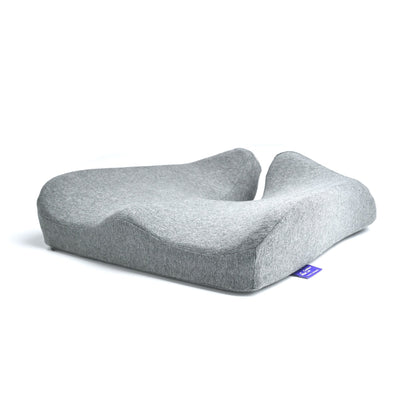
Cushion Lab Cloud Cradle — broad contoured support
A sculpted foam option without a large rear cutout. It makes sense when your goal is broader pressure distribution and stable support rather than unloading one exact tailbone spot.
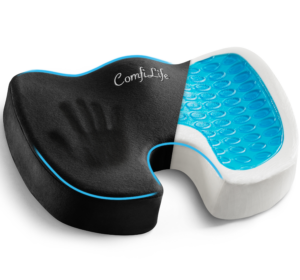
ComfiLife Gel Enhanced — rear U-cutout
A gel-topped memory-foam cushion with a rear cutout, nonslip bottom and washable cover. Consider the shape if direct rear-center pressure is part of the problem; the cutout is not automatically better for off-center buttock discomfort.
These are sitting-comfort products, not treatments for piriformis syndrome or sciatica. As an Amazon Associate, Yawnder earns from qualifying purchases.
Best Cushion Types at a Glance
| Type | Best for | Main tradeoff |
|---|---|---|
| Contoured high-density foam | Best overall starting point | Too much contour can feel restrictive |
| Coccyx/U-cutout foam | Tailbone pressure plus buttock discomfort | Cutout placement must match your body |
| Thin travel cushion | Airplanes and cars | Less cushioning than thick office models |
| Gel/grid cushion | Heat-sensitive users | Can feel less stable depending on design |
| Firm wedge | Changing hip angle | May increase pressure elsewhere |
What Matters Most for Piriformis-Area Sitting Comfort?
The goal is not simply to make the chair softer. A very soft cushion can bottom out and concentrate pressure. An excessively thick cushion can raise your hips enough to change knee position, foot contact, desk height and driving posture.
We would prioritize four things:
- Pressure distribution: enough surface area to spread load across the thighs and both sitting bones.
- Stable support: foam or another material that does not collapse completely after several minutes.
- Appropriate thickness: enough cushioning without dramatically changing your seating geometry.
- Placement: the cushion should support you without putting its edge or raised contour directly against the sensitive area.
1. Contoured High-Density Foam — Best Overall Starting Point
A medium-firm contoured foam cushion is the most versatile style for an office chair. It can spread pressure across a broader area while remaining stable enough for longer sitting sessions.
Look for a gradual contour rather than aggressive bolsters. The cushion should support the thighs and pelvis without forcing your hips into one exact position.
Best for: desk work, dining chairs and people who want one cushion that can move between several seats.
2. Coccyx Cutout Cushion — Best When Tailbone Pressure Is Also a Problem
A U-shaped rear cutout reduces direct contact beneath the coccyx. That can be useful when discomfort is not limited to the outer buttock and sitting directly on the tailbone area is also unpleasant.
The cutout should sit at the back of the chair. If the opening is too large or positioned incorrectly, it can shift pressure to the edges of the cushion instead of improving comfort.
3. Thin Travel Cushion — Best for Airplanes
Airplane seats create a different problem than office chairs: the seat height, recline and legroom are fixed. A very thick cushion can raise you several inches, reduce thigh support and put your knees in an awkward position.
For flying, we prefer a relatively thin cushion that reduces direct seat pressure without substantially changing your hip height. A compact cushion is also easier to reposition during a long flight.
Practical tip: you do not necessarily have to center the cushion perfectly under both buttocks. Small positioning adjustments can sometimes move an edge or pressure point away from the area that feels sensitive. The goal is comfort and stable support—not achieving one supposedly perfect position.
4. Stable, Non-Slip Cushion — Best for Driving
Cars add pedals, steering-wheel position and visibility to the equation. Raising your pelvis changes your relationship to all three.
Choose a cushion that stays put during braking and turning, and avoid adding so much height that you have to reach differently for the pedals. After adding a cushion, recheck seat distance, backrest angle and mirrors before driving.
5. Gel or Flexible Grid Cushion — Best for Heat
Some flexible-grid and gel-style cushions allow more airflow than a solid block of memory foam. They can be appealing if a conventional foam cushion feels hot during long sitting sessions.
The tradeoff is stability. Some grid designs flex substantially beneath the pelvis, so comfort depends heavily on the chair underneath and your body size.
Is Memory Foam Always Better?
No. Memory foam can distribute pressure well, but density and thickness matter. Very soft foam may compress until you effectively feel the chair underneath. Very dense foam can feel firm initially and may retain more heat.
Yawnder has also covered products from Cushion Lab, including seat-cushion designs intended to change sitting comfort. That review is useful if you are considering a sculpted foam design specifically.
How Thick Should a Seat Cushion Be?
There is no universally ideal thickness. In an office chair with adjustable height, a thicker cushion is easier to accommodate because you can lower the chair afterward. In an airplane or fixed dining chair, extra thickness can create more problems.
As a practical rule, use the least thickness that noticeably improves comfort. Then check that your feet remain supported and the front edge is not pressing hard into the backs of your thighs.
Should You Sit Directly on the Painful Area?
You do not need to deliberately load the most sensitive point. A cushion can be repositioned slightly if doing so spreads pressure more comfortably. But aggressively leaning to the opposite side for hours can create a new asymmetry and may simply move discomfort elsewhere.
Comfortable, frequently changing positions are generally more practical than trying to hold one rigid posture all day.
Seat Cushion vs. Lumbar Support
They solve different problems. A seat cushion changes pressure and pelvic height at the seat surface. Lumbar support changes contact between the chair and lower back. Some people prefer using both, but adding multiple ergonomic accessories at once makes it harder to tell which adjustment actually helped.
Make one change, evaluate it, and then adjust the rest of the chair around that change.
Office Setup Checklist
- Feet supported on the floor or a stable footrest.
- Knees comfortable rather than forced sharply upward or downward.
- No hard cushion edge pressing into the back of the thighs.
- Chair back supporting you without forcing an exaggerated posture.
- Keyboard and mouse reachable without leaning forward continuously.
- Regular opportunities to stand, walk and change position.
When a Cushion May Be Making Things Worse
Reconsider the cushion if discomfort consistently increases after using it, your feet no longer reach a stable surface, you feel concentrated pressure from a cutout or bolster, or the cushion forces you to sit asymmetrically.
A cushion should make sitting easier. If you find yourself constantly fighting its shape, try a simpler or thinner design.
Piriformis-Area Discomfort vs. Sciatica
Pain felt in the buttock is sometimes casually labeled “piriformis” or “sciatica,” but those terms are not interchangeable and symptoms alone do not establish the cause. Pain that radiates down the leg, numbness, tingling or weakness deserves particular attention because nerve-related symptoms can have multiple causes.
This guide is therefore about seat comfort, not diagnosing where pain originates.
Frequently Asked Questions
What type of cushion is best for piriformis-area discomfort?
A medium-firm contoured cushion is a reasonable starting point because it can redistribute sitting pressure without collapsing completely. Individual comfort varies, so shape and thickness matter as much as material.
Is a donut cushion a good choice?
Not automatically. A full ring can concentrate pressure around its perimeter. For ordinary sitting comfort, many people find a broad contoured surface or rear coccyx cutout easier to position.
What is best for an airplane?
Prioritize portability and modest thickness. Airplane seat geometry cannot be adjusted much, so a very thick cushion can raise your hips and knees more than intended.
Can I use the same cushion in my office and car?
Possibly, but check driving position carefully. A cushion that works well in an adjustable desk chair may add too much height or change pedal reach in a vehicle.
Can a seat cushion cure piriformis syndrome?
No. A cushion can change sitting pressure and comfort, but it should not be presented as a cure or treatment for an underlying condition.
Bottom Line
For piriformis-area sitting discomfort, start with a stable, medium-firm cushion that spreads pressure rather than simply adding softness. Keep thickness moderate, especially for travel, and pay attention to how the cushion changes your entire sitting position. For airplanes and cars, thinner and more stable is often better than thicker and softer.
If symptoms are persistent, worsening, or accompanied by meaningful numbness or weakness, a cushion is not a substitute for professional evaluation.