🏷️ Stop! Check the price first.

We track verified 2026 promo codes for Bear, Helix, Saatva, and 30+ other brands.

See All Coupons →

Best Travel Pillows Reviewed: What Actually Helps You Sleep While Traveling

Home - accessories - Best Travel Pillows Reviewed: What Actually Helps You Sleep While Traveling
Picture of Ben Trapskin
Ben Trapskin
I have carefully studied and evaluated many mattresses, sheets, pillows, duvet inserts, comforters, sleep gadgets, and adjustable beds for over a deca... Full Bio

When you buy with our links, we may earn a commission. Read our affiliate disclosure

Interior view of an airplane cabin showing rows of passengers seated. Each seat has an individual screen on the backrest and passengers are engaged with various activities. The aisle runs down the center of the plane. Light from the windows illuminates the space.
Bottom line

The best travel pillows for flying in 2026 are the Huzi Infinity, Cushion Lab, Trtl, Ostrich Pillow, and Cabeau, each offering unique approaches to airplane sleep. Your ideal choice depends on your preferred sleeping position and support needs. These selections represent tested options that provide real stability and comfort during flights.

Quick Facts · Best Travel Pillows Reviewed: What Actually Helps You Sleep While Traveling
PriceNot listed
FirmnessNot listed
TypeTravel Pillows (flexible wrap, ergonomic, neck ring, cocoon, side brace)
Best forTravelers seeking neck support and comfort during flights
Trial / WarrantyNot listed
Yawnder verdictTop picks for airplane sleep · 4.8/5
Best Travel Pillows for Flying 2026 | Huzi, <a href="https://yawnder.com/go/cushion-lab-2/" rel="sponsored nofollow noopener" target="_blank">Cushion Lab</a>, <a href="https://yawnder.com/go/trtl/" rel="sponsored nofollow noopener" target="_blank">Trtl</a>, Ostrich, <a href="https://yawnder.com/go/cabeau/" rel="sponsored nofollow noopener" target="_blank">Cabeau</a>

Best travel pillows for flying

Best Travel Pillows for Flying 2026

Trying to sleep in an economy seat without neck support is a good way to land sore, cranky, and wiped out. The right travel pillow does not turn coach into first, but it can keep your head stable and make real sleep possible instead of just dozing.

I am Ben Trapskin from Yawnder. I have tested a lot of travel pillows that looked clever and did nothing on a real plane. The five pillows on this page Huzi Infinity, Cushion Lab, Trtl, Ostrich Pillow, and Cabeau are the ones that kept showing up in actual flights, not just in marketing shots.

Huzi Infinity travel pillow wrapped around neck on an airplane

These picks cover five different approaches to airplane sleep flexible wrap, ergonomic support, classic neck ring, full cocoon, and compact side brace. The best one for you depends on how you already sit and sleep on planes.

Huzi Infinity Cushion Lab Trtl Ostrich Pillow Cabeau

Bottom line

If you want a flexible comfort wrap, start with Huzi. If you have a sensitive neck and need structure, look at Cushion Lab or Trtl. If you want a familiar neck pillow that simply works better, Cabeau is a safe choice. If bright cabins and noise keep you up, Ostrich Pillow is your little cocoon.

Jump to top picks

Links on this page may be affiliate links, which means Yawnder may earn a commission if you decide to buy. That support helps keep testing going and does not change what you pay.

Travel pillow scores

These scores reflect hands on use in real flights, long sitting sessions, and repeated pack and unpack cycles. Numbers are there to help you sort fit, not as lab grade measurements.

Neck support
Comfort against skin
Portability and pack size
Ease of use in an economy seat
Versatility beyond the plane

Range across models is biggest on pack size and support style. Comfort and materials are good on all five, but they feel different in practice, which is where the detailed notes below matter.

Top travel pillow picks for flying

If you just want the short list without the deep dive, these are the five pillows that kept getting used and reused on trips.

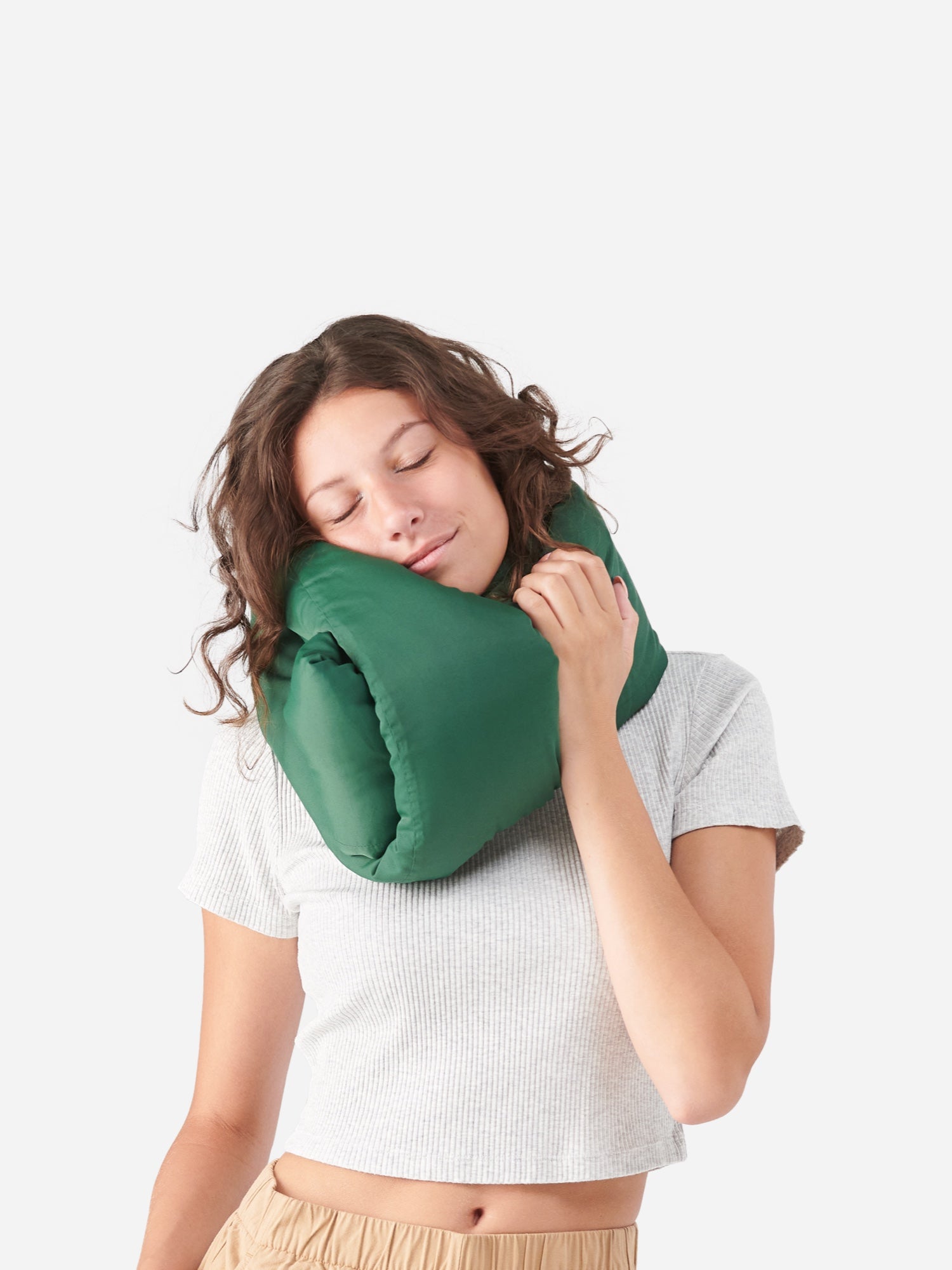
Huzi Infinity Pillow

A soft bamboo loop that you can twist, stack, and wrap around your neck, window, or arms. It behaves more like a small comfort system than a single position neck pillow.

Huzi Infinity Pillow twisted around neck and shoulder View Huzi Infinity Pillow

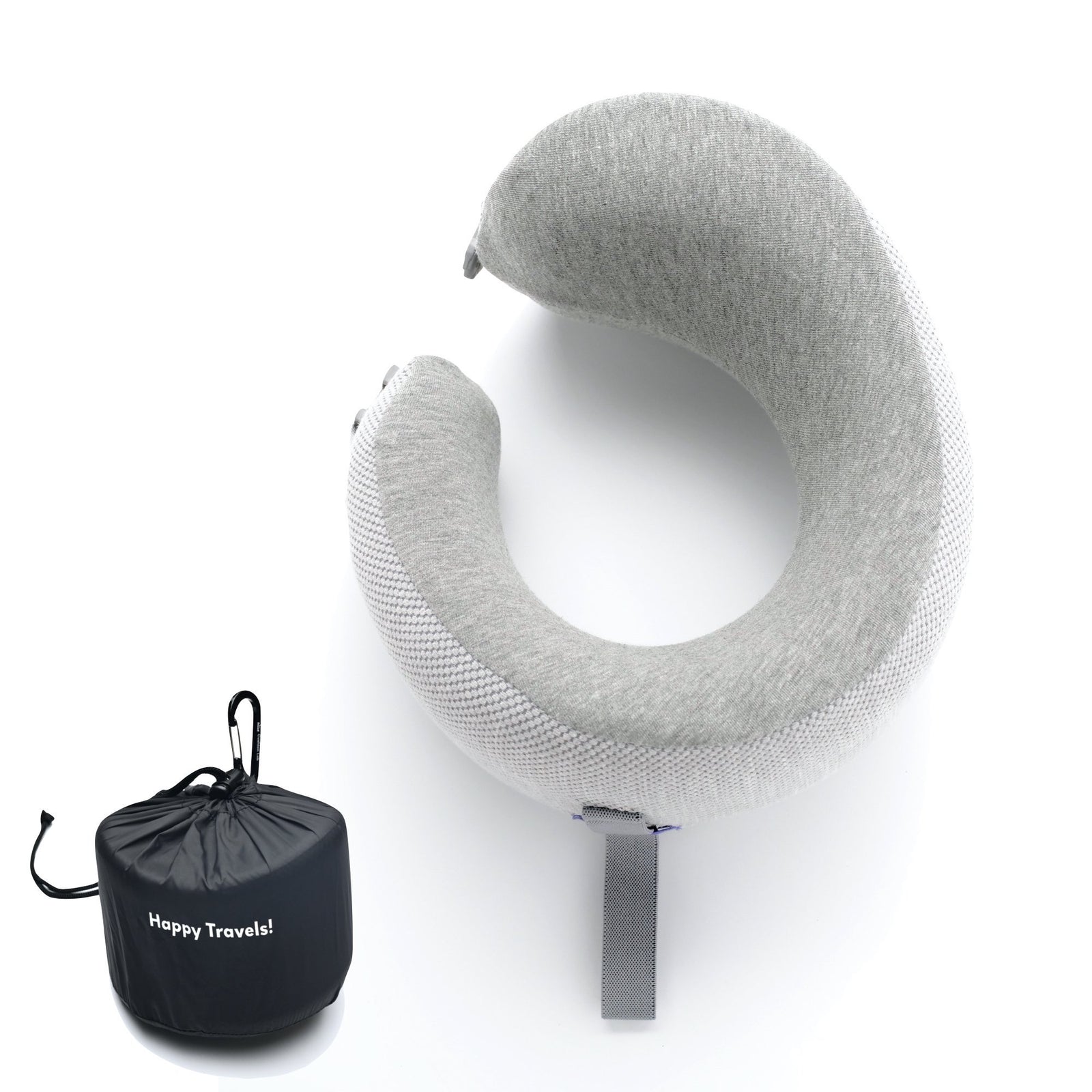
Cushion Lab Travel Pillow

Sculpted memory foam that cradles the side of the head and lifts under the chin. Built for people who want serious support in an upright seat.

Cushion Lab Travel Pillow with ergonomic side support View Cushion Lab Travel Pillow

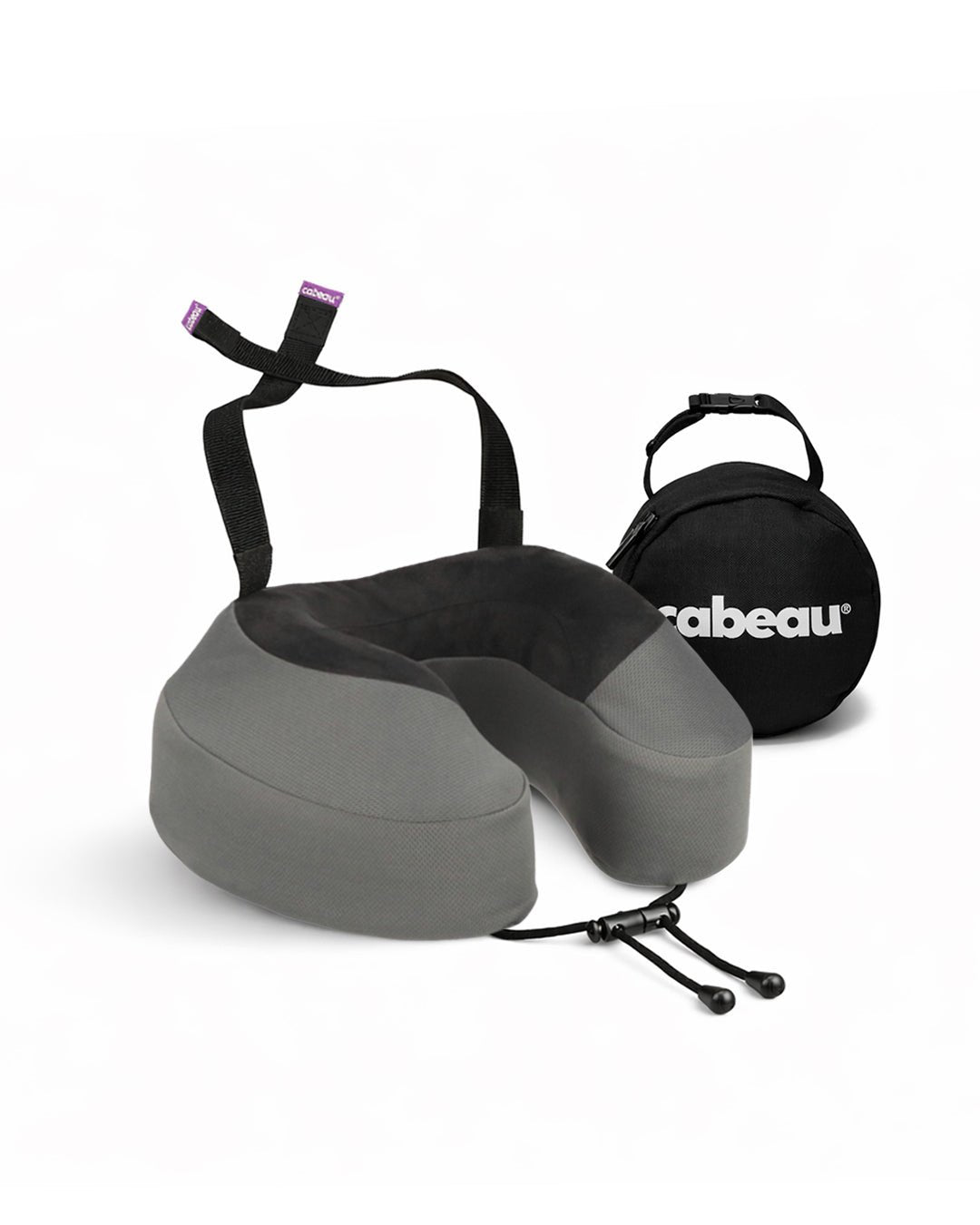
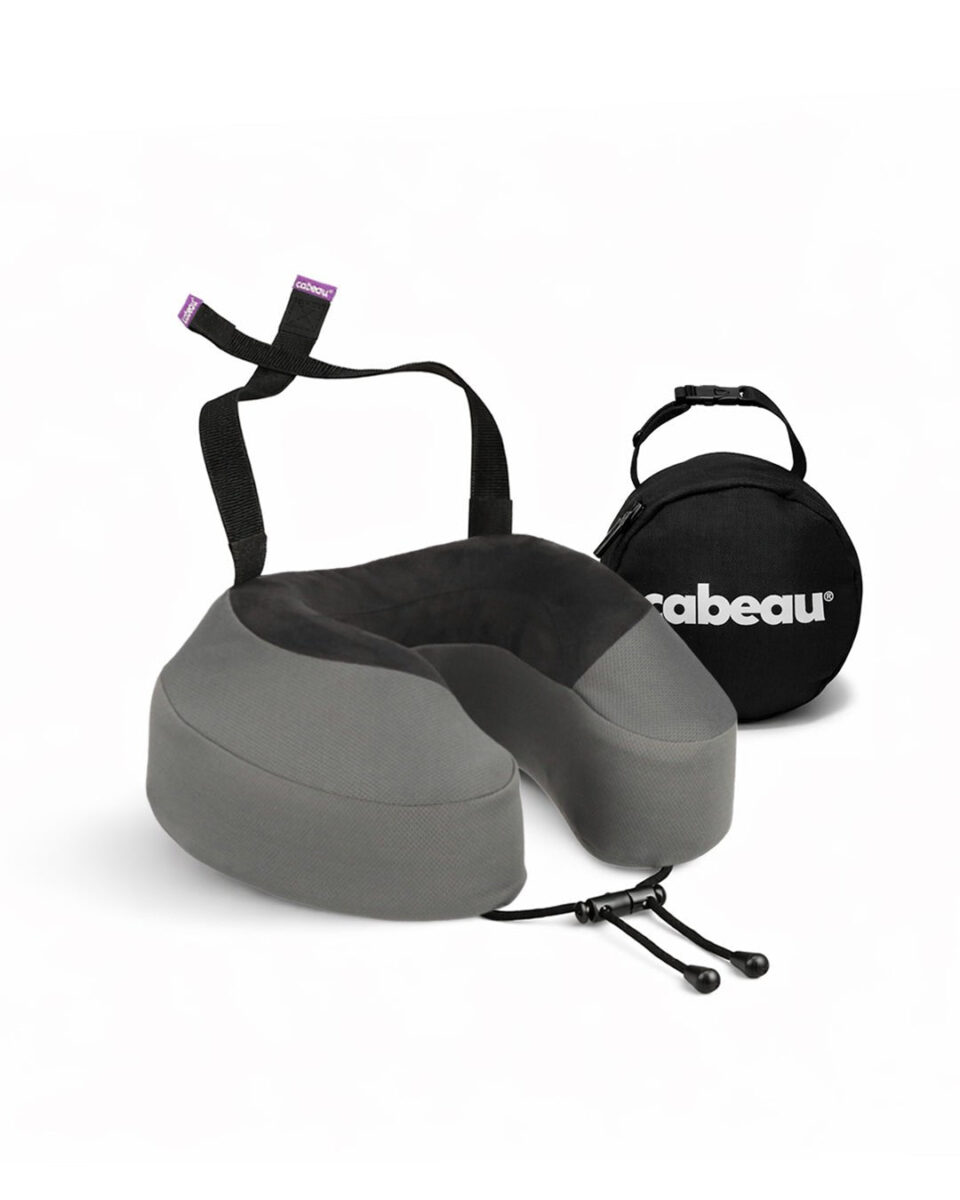
Cabeau Travel Pillow

A refined take on the classic neck ring. Taller walls, a flatter back, and a compact travel pouch make it a good default choice for many flyers.

Cabeau travel pillow around neck in airplane seat View Cabeau Travel Pillow

Ostrich Pillow

A padded cocoon that covers the head and blocks much of the light around you. Great for red eye flights and travelers who need a private feeling space to drift off.

Ostrich pillow worn over head blocking light View Ostrich Pillow

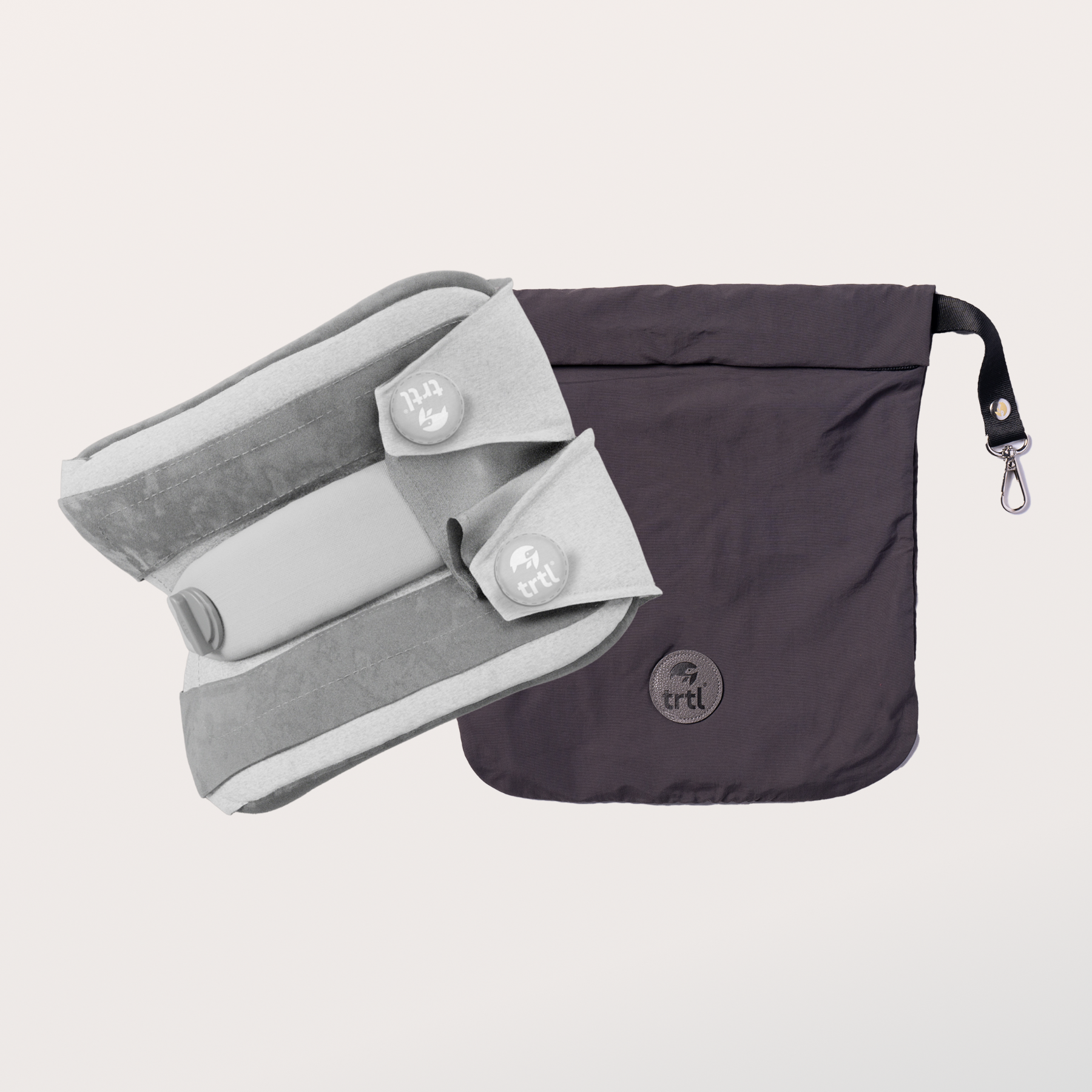
Trtl Travel Pillow

A slim wrap with a hidden internal brace along one side of the neck. Packs flatter than almost everything else while still holding your head in a stable position.

Trtl travel pillow wrapped like a scarf with side frame View Trtl Travel Pillow

Travel pillow comparison table

This table is the quick way to match your sleep habits to the pillow that is most likely to work on your next flight.

Pillow Best for Support style Pack size Feel Shop
Huzi Infinity Pillow Restless sleepers and people who change positions a lot Loop and wrap design that you can stack under chin, arms, or against the window Larger than a slim wrap but compressible in a bag Soft bamboo knit with plush cushion like support View
Cushion Lab Travel Pillow Neck sensitive travelers and window seat sleepers Sculpted foam with side and chin support that holds the neck in place Moderate, comes with a compression case Dense supportive memory foam with smooth cover View
Cabeau Travel Pillow Travelers who want a familiar neck pillow that just works Classic ring with taller sides and flatter back Compresses into a small pouch that clips to a bag Supportive foam with soft fabric and even feel View
Ostrich Pillow Light sensitive and sound sensitive travelers Full head and neck padding with eye coverage Bulky, better for people who do not mind extra volume Very plush surrounding cushion feel View
Trtl Travel Pillow Minimal packers and side leaners Internal brace on one side wrapped in soft fabric Very slim, clips to a backpack strap easily Soft outer wrap with firm inner frame View

How we test travel pillows

Travel pillows live or die in cramped seats, not in studio photos. To filter out gimmicks, here is what we pay attention to when we test.

  • Use on real flights in economy and premium economy style seats
  • Window and aisle positions to see how each pillow behaves with different lean angles
  • Neck comfort on landing rather than just first impressions at boarding
  • Heat build up around the jaw, ears, and neck over time
  • How annoying it is to carry through an entire travel day
  • Shape recovery after compression and repeated trips

If a pillow only feels good in a marketing video and does nothing when you are half asleep and cramped, it does not make this list.

What to look for in a travel pillow for flying

Before you add any pillow to your bag, it helps to know what actually matters in an airplane seat.

Comfort against skin

Cabin air is dry and your skin already works harder than usual. Favor bamboo, soft knits, and brushed fabrics over rough polyester. If you have sensitive skin, a smoother fabric like Huzi and Trtl is easier to live with on long flights.

Neck support instead of just bulk

A thick cushion that lets your head fall anyway is not helpful. Structured foam and internal frames, like the ones in Cushion Lab and Trtl, do a better job holding your head where it belongs.

Pack size and real world carry

A massive pillow you leave at home does not help you on the plane. If you travel with one small bag, pick a slim option like Trtl. If you are fine with more bulk in exchange for comfort, Huzi and Ostrich make sense.

Washability

The ability to remove a cover and run it through a normal wash cycle is worth more than any clever feature. Plan to clean your travel pillow like you would a favorite hoodie.

Headphones and glasses compatibility

Over ear headphones plus a thick pillow can mean pressure where you least want it. Look for designs that do not push directly on the ear cups and that do not trap frame arms against your temple if you wear glasses.

Who each travel pillow is for

Matching your own habits to the right pillow is more important than chasing one that claims to work for everyone.

Huzi Infinity Pillow

  • Good if you move a lot and like to change positions
  • Useful for window leaners, arm support, and even lower back support
  • Best for people who do not mind a little extra volume in their bag

Cushion Lab Travel Pillow

  • Right fit for neck sensitive travelers who want structure
  • Strong choice for window seats where you lean to one side
  • Better if you like a firm supportive feel rather than a soft cushion wrap

Cabeau Travel Pillow

  • For people who want a familiar neck pillow feel with better details
  • Good all around option for occasional flyers and families
  • Easier for first time travel pillow buyers to understand and use

Ostrich Pillow

  • Best for travelers who struggle with light and noise
  • Worth it if you take longer flights or red eye routes often
  • Right for people who value a private cocoon more than minimal pack size

Trtl Travel Pillow

  • Perfect if you travel light and only bring a small backpack
  • Strong choice for side leaners in a window seat
  • Good fit if you never liked thick ring style neck pillows

Common travel pillow mistakes

A lot of people decide travel pillows do not work because they tried the wrong pillow in the wrong way. These are the missteps I see most often.

  • Buying only on looks instead of thinking about how your head actually falls when you sleep
  • Choosing the biggest pillow because it feels luxurious in a store but then leaving it at home on real trips
  • Wearing a pillow too high or too low so the support sits in the wrong place on the neck
  • Forgetting to account for headphones and glasses, which can change how comfortable a pillow feels
  • Expecting a pillow to fix a seat that is badly reclined or positioned no pillow can fix a seat that is set too far forward or too far back

FAQ

Do airplane neck pillows really work

They can help a lot when you pick a pillow that fits how you sleep. A well fitted travel pillow reduces how far your head tilts or twists, which lowers strain on your neck muscles. The key is matching the pillow to your posture and seat choice.

Which travel pillow is best for side sleepers on a plane

For side sleepers and window leaners, Cushion Lab and Trtl are good starting points because they offer clear side support. Huzi also works well if you wedge it between your shoulder and the window and wrap part of it under your chin.

Can I bring a travel pillow on the plane

Most airlines allow travel pillows and do not count them as a separate carry on. In practice, people either clip them to a backpack strap or rest them on top of a personal item. If you keep your setup compact, you should not run into issues.

Are inflatable travel pillows worth it

Inflatable pillows save space but usually feel less supportive and less comfortable than good foam or plush options. They can also lose air through a flight. If comfort is the main goal, foam based and plush pillows like the ones on this page tend to win.

Do I need a travel pillow for short flights

For very short flights where you stay awake, probably not. Once you get into longer trips, early morning departures, or late returns, a travel pillow starts to make more sense, especially if you want to land ready for a full day.

Bottom line on travel pillows for flying

The right travel pillow does not need to be complicated. It just has to hold your head in a natural position, feel good against your skin, and fit into the way you pack.

If you want soft flexible comfort that works in many positions, Huzi Infinity is the starting point. If you want clear neck support with structure, Cushion Lab and Trtl are the strongest picks. If you prefer something familiar, Cabeau is easy to live with. If you need a darker quieter space to sleep at all, Ostrich Pillow will feel like a small win in a bright cabin.

Pick the one that matches how you already sit on planes, add it to your bag, and let your next trip count as recovery time instead of just hours in a seat.

Updated November 2026 • Notes and photos by Yawnder.
”’

The Bottom Line on the Best Travel Pillows

Best Travel Pillows Reviewed: What Actually Helps You Sleep While Traveling — Yawnder review hero image
Photo: Yawnder editorial

Finding the best travel pillow isn’t just about avoiding a stiff neck after a red-eye flight; it’s about reclaiming your personal space and arriving at your destination rested and ready to explore. For years, travelers were stuck with flimsy, crescent-shaped sacks of beads that offered minimal support. Today, the market has evolved dramatically, employing advanced materials like high-density memory foam, cooling fabrics, and innovative ergonomic shapes designed to support your head, neck, and even your chin. A quality travel pillow is a small investment in your well-being that can transform a grueling journey in a cramped economy seat into a genuine opportunity for restorative sleep. It’s the difference between starting your vacation with a painful crick in your neck and hitting the ground running from the moment you land.

The key to choosing the right pillow lies in understanding the trade-offs between portability, comfort, and support. An inflatable pillow might pack down to the size of a soda can, making it ideal for a minimalist backpacker, but it may lack the plush, contouring feel of a memory foam option. Conversely, a luxurious memory foam pillow might offer unparalleled support but require more precious space in your carry-on. This guide will walk you through the different types, materials, and designs, helping you identify the perfect travel companion for your specific needs, whether you’re a frequent business flyer, an adventurous globetrotter, or a family heading out on a summer road trip. We’ll explore how to maximize comfort, what to look for in terms of quality, and how a seemingly simple accessory can have an outsized impact on your travel experience.

Who This is Best For

Not every traveler needs a dedicated pillow, but for many, it’s an essential piece of gear. Understanding your own sleep habits and travel style is the first step in deciding if and which type of pillow is right for you. Here’s a breakdown to help you decide.

The Best Travel Pillow is a Must-Have For:

  • Frequent Flyers & Business Travelers: Anyone who spends significant time on planes knows that economy seats aren’t designed for sleep. A supportive pillow helps create a more ergonomic resting position, crucial for arriving sharp and ready for a meeting.
  • Nervous or Light Sleepers: For those who struggle to fall asleep in unfamiliar environments, a travel pillow provides a sense of comfort and personal space, signaling to your brain that it’s time to rest.
  • Travelers with Neck or Back Pain: If you’re already prone to stiffness or soreness, sleeping upright without proper support can be agonizing. A quality travel pillow is a non-negotiable tool for pain management on the go.
  • Road Trippers and Train Passengers: Long hours in a car or train present the same challenges as flying. A good pillow can make the difference between a scenic journey and a painful endurance test.

Skip a Dedicated Travel Pillow If:

  • You Are an “Anywhere” Sleeper: If you can comfortably doze off leaning against a window, using a bundled-up jacket, or with no support at all, the extra bulk of a pillow might not be worth it.
  • You Only Take Short-Haul Trips: For flights or drives under two or three hours, you may not have enough time for a deep sleep, making a pillow more of a hassle to carry than a help.
  • You Are a Strict Minimalist or Backpacker: When every ounce and cubic inch counts, a travel pillow might be one of the first luxuries to get cut from the packing list in favor of more essential gear.

On the Fence? Consider This:

  • The “Just-in-Case” Factor: Think about potential delays, long layovers, or unexpected travel disruptions. Having a pillow stashed in your bag can be a lifesaver when you’re stuck at the gate for hours.
  • The Chin-Dropper Dilemma: Does your head constantly fall forward when you doze off in a chair? If so, look for an “ergonomic” or “chin-support” style pillow. This specific design feature could completely change your ability to sleep upright.
  • Your Post-Trip Feeling: Reflect on your last big trip. Did you spend the first day feeling foggy and sore? Investing $30-$60 in a quality pillow could be worth it to reclaim that first precious day of your vacation.

A Deep Dive into Travel Pillow Types and Materials

The term “travel pillow” now covers a vast range of products, from simple inflatables to complex ergonomic devices. The material and design directly impact support, comfort, and portability. Understanding these differences is key to making an informed choice.

Memory Foam Travel Pillows

Memory foam is the gold standard for pressure relief and support. It contours to the unique shape of your head and neck, providing firm yet gentle support that prevents your head from slumping to the side. Most high-end travel pillows use this material.
Pros: Excellent support, superior comfort, durable, absorbs movement.
Cons: Can be bulky and heavy, retains heat (though many now have cooling gel or ventilation), slower to respond and pack away.

Inflatable Travel Pillows

The top choice for minimalists, inflatable pillows can be deflated and folded into a tiny pouch. You can customize the firmness by adjusting the amount of air you blow in. While early models felt like cheap pool floaties, modern versions often have a soft, velvety fabric cover for a more comfortable feel.
Pros: Extremely compact and lightweight, adjustable firmness, generally inexpensive.
Cons: Can be a hassle to inflate/deflate, risk of air leaks, less contouring support than foam, can feel “bouncy” or unstable.

Microbead and Fiber Fill Pillows

These are the classic, squishy U-shaped pillows you often see in airport shops. They are filled with tiny polystyrene beads or a synthetic polyester fiber, similar to a stuffed animal. While they feel soft and malleable, they offer the least amount of structured support.
Pros: Lightweight, soft and plush feel, often very affordable.
Cons: Offer poor neck support (head often pushes forward), beads compress over time losing volume, can be bulky without compressing well.

Innovative and Ergonomic Designs

A new generation of travel pillows has emerged to solve the “chin drop” problem. These come in various shapes:
Scarf-Style (e.g., Trtl): These feature an internal plastic support system wrapped in soft fleece. You wrap it around your neck like a scarf, providing strong lateral support to keep your head from falling to the side.
J-Shape or Chin-Supporting Pillows: These pillows have an extra arm that curves under the chin to prevent your head from falling forward, a common issue with traditional U-shaped pillows.
Twistable/Bendable Pillows: Often built with a flexible internal armature, these long, tube-like pillows can be twisted into any shape, offering support for your neck, lumbar, or anywhere else you need it.

The Travel Experience: Feel, Quality, and Portability

Best Travel Pillows Reviewed: What Actually Helps You Sleep While Traveling — construction cross-section
Layer breakdown of a typical luxury hybrid build

Beyond the core material, the overall user experience is defined by a pillow’s shape, fabric, and how easy it is to pack and clean—details that separate a good pillow from a great one.

Support, Shape, and Sleep Position

A U-shaped pillow is a classic for a reason: it prevents your head from dropping uncomfortably to the left or right. However, if the rear portion is too thick, it can push your head forward, creating strain on your neck. Look for models with a slimmer, flatter back. For those whose heads tend to fall forward, a pillow with dedicated chin support is a revelation. These designs effectively cradle your jaw, keeping your airway open and your posture more aligned. The goal is to mimic a natural sleeping position as much as possible while sitting upright.

Packability and Portability

How a pillow travels is almost as important as how it performs. Memory foam pillows typically come with a compression stuff sack that can shrink the pillow to a quarter of its size, often with a strap to attach it to your luggage. Inflatable pillows are the undisputed champions of portability, packing down a small, pocket-sized pouch. When choosing, be realistic about your packing style. If you know you won’t bother with a complicated roll-up procedure, a pillow with a simple carabiner clip that you can snap onto your backpack might be a better choice.

Fabric, Hygiene, and Maintenance

The pillow cover is your first point of contact, and it matters. High-end pillows often use moisture-wicking and breathable fabrics to prevent overheating. Some even feature cooling-gel technology. Most importantly, a removable and machine-washable cover is an absolute must. Airplanes, trains, and cars are breeding grounds for germs, and being able to easily clean your pillow after a trip is essential for good hygiene. A clean, soft surface to rest your face on can make the travel experience feel significantly more civilized and comfortable.

How Travel Pillows Compare to Standard Pillows

While you might be tempted to save space by bringing your bed pillow or just rolling up a jacket, these solutions are poorly suited for upright sleep. A purpose-built travel pillow is ergonomically designed for a completely different context, and the comparison makes the value clear.

A standard bed pillow is designed to support your head and neck when you are lying down flat, allowing your spine to remain in a neutral position. When used in a seat, its bulk and shape often push your head forward and away from the headrest, causing significant neck strain. A rolled-up jacket or sweater is even worse; it’s lumpy, provides no structured support, and quickly flattens, leaving you with no support at all. A travel pillow, by contrast, is engineered to fill the gap between the side of your head and your shoulder, or to support your chin, stabilizing your neck muscles while you are in a vertical position.

Feature Specialty Travel Pillow Standard Pillow or Jacket
Support Type Ergonomically designed for upright seated posture; supports neck laterally and/or provides chin support. Designed for horizontal sleep; pushes head forward in a seat. A jacket offers zero structural support.
Portability Excellent. Designed to be compact via compression sacks (foam) or deflation (inflatable). Poor. Bulky, awkward to carry, and does not pack down efficiently.
Hygiene Good to Excellent. Most have removable, machine-washable covers designed for travel cleanliness. Poor. Pillowcases are not enough to protect from travel grime, and washing a whole pillow is difficult. A jacket is exposed to everything.
Adjustability High. Inflatables offer adjustable firmness. Many foam models have adjustable clasps for a secure fit. None. What you bring is what you get.
Material Science Often uses advanced materials like high-density memory foam, cooling gels, and moisture-wicking fabrics. Generally filled with basic down, fiberfill, or foam not intended for travel stress or temperature regulation.

5-Year Total Cost of Ownership

When evaluating the best travel pillow, it’s tempting to grab the cheapest option at the airport. However, thinking about the long-term value and total cost of ownership can lead to a much better and more economical decision. A durable, well-made travel pillow isn’t an expense; it’s a long-term investment in your comfort and health during travel.

Consider a cheap, $15 inflatable pillow. It might work for one or two trips, but its seams are prone to leaking and the thin plastic valve can easily break, forcing you to buy a new one for your next vacation. Over five years of moderate travel, you might go through three or four of these, costing you $45-$60 with inconsistent results. Now consider a high-quality, $50 memory foam pillow with a 5-year warranty. The initial cost is higher, but the cost per trip is significantly lower. If you take just two big trips a year, that’s ten trips over five years, making the cost per trip only $5. For that price, you get reliable, superior comfort every single time you travel.

Furthermore, the “cost” isn’t just monetary. The hidden cost of a cheap pillow is a ruined first day of vacation due to a painful neck, or the fatigue that comes from an inability to sleep on a long flight. A quality pillow that enables even two or three hours of deep sleep is invaluable. It protects your time and enjoyment at your destination. When you factor in the reliability, superior support, and hygienic benefits of a pillow with a washable cover, the long-term value of a premium model far outweighs its initial sticker price.

Navigating Trials, Warranties, and Return Policies

Unlike mattresses, travel pillows rarely come with a “sleep trial.” The expectation is that you can determine the comfort and fit relatively quickly. Therefore, understanding the return policy before you buy is critical. If purchasing from an online retailer like Amazon, check the seller’s return window, which is typically 30 days. This gives you enough time to test it out in a chair at home to see if the shape and support level work for you.

Warranties on travel pillows usually cover manufacturing defects rather than comfort or normal wear and tear. A good warranty, which can range from one year to a lifetime guarantee, is a strong signal of a brand’s confidence in its product’s durability. Common issues covered by warranty include a seam splitting, an air valve failing on an inflatable pillow, or the zipper on the cover breaking. The memory foam itself is often covered against significant degradation or loss of shape. Keep your proof of purchase, and don’t hesitate to contact the manufacturer if you experience a defect. A company that stands behind its product with a solid warranty is generally a safer bet.

Frequently Asked Questions About Travel Pillows

What is the best type of pillow for long flights?

For long flights, memory foam pillows or ergonomic scarf-style pillows are generally best. Memory foam provides sustained, contouring support to prevent neck strain over many hours, while scarf-style pillows excel at preventing your head from dropping sideways or forwards, which is crucial for deep sleep.

Are travel pillows worth it?

For most people, yes. A good travel pillow dramatically increases the ability to sleep comfortably and avoid neck pain while traveling in a seated position. The small investment is often worth it to arrive at your destination feeling more rested and ready to go.

How do I choose a travel pillow?

Consider your main priority: portability or comfort. If you need it to be as small as possible, choose a high-quality inflatable. If you prioritize plushness and support, choose memory foam. Also, consider your sleeping style—if your head falls forward, look for a model with chin support.

Can I take a travel pillow in my carry-on?

Yes, absolutely. Travel pillows are a common carry-on item and are not restricted by airline security. Most are designed to be attached to the outside of your bag or compressed into a small pouch to save space inside your luggage.

How do you stop your head from falling forward when sleeping on a plane?

The best way is to use a travel pillow specifically designed for this purpose, such as a J-shaped pillow or a 360-degree pillow that offers chin support. Alternatively, you can rotate a traditional U-shaped pillow and place the bulk of it under your chin, though this can be less stable.

Verdict: Your First-Class Sleep Upgrade

Choosing the best travel pillow is a deeply personal decision, hinging on your unique needs for comfort, support, and portability. The flimsy, bead-filled pillows of the past have been replaced by a new class of sophisticated sleep tools that can genuinely transform your travel experience. Whether you opt for the dense, contouring support of memory foam, the ultralight packability of an inflatable, or the innovative stability of an ergonomic design, the right pillow is a worthy investment. It’s an acknowledgment that rest is not a luxury but an essential part of any successful journey.

While we source and review the best sleep accessories for travel, our core expertise lies in the foundation of all great sleep: your mattress. The principles of pressure relief and spinal alignment that make a travel pillow effective are the same principles we apply when curating our mattress collection. Understanding what true support feels like is the first step. We invite you to visit our showroom at 1441 Encinitas Blvd, Encinitas CA 92024 to experience our premium pillowtop and hybrid mattress lineup. A brief test session can provide a powerful reference point for what to look for in any sleep product, helping you find comfort whether you’re at home in bed or 30,000 feet in the air. Find out more about our San Diego mattress showroom and start your journey to better rest.

”’
Y

Yawnder

We typically reply in a few minutes

👋 Hi there!

Have a question about mattresses, deliveries, or your order? We're here to help.