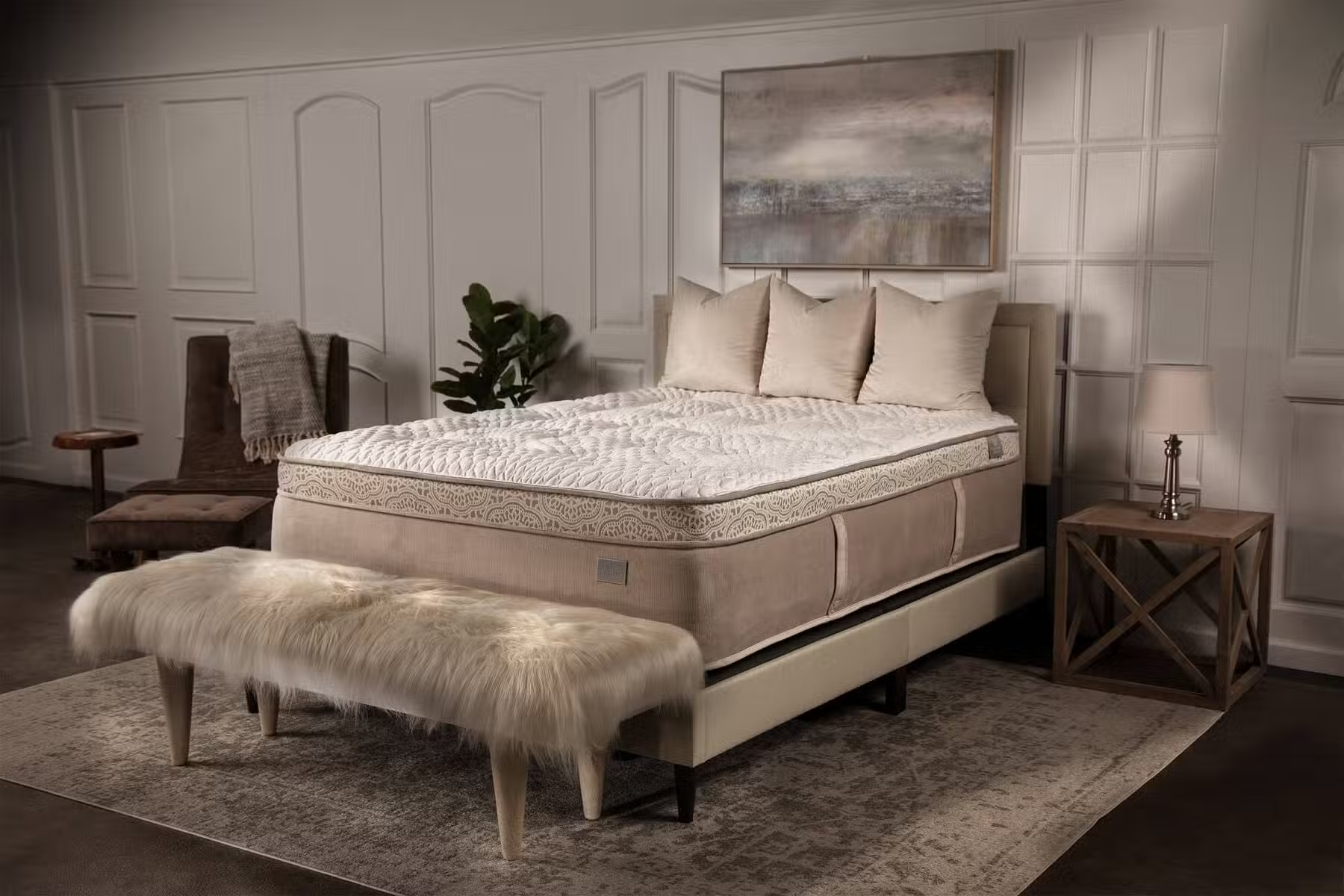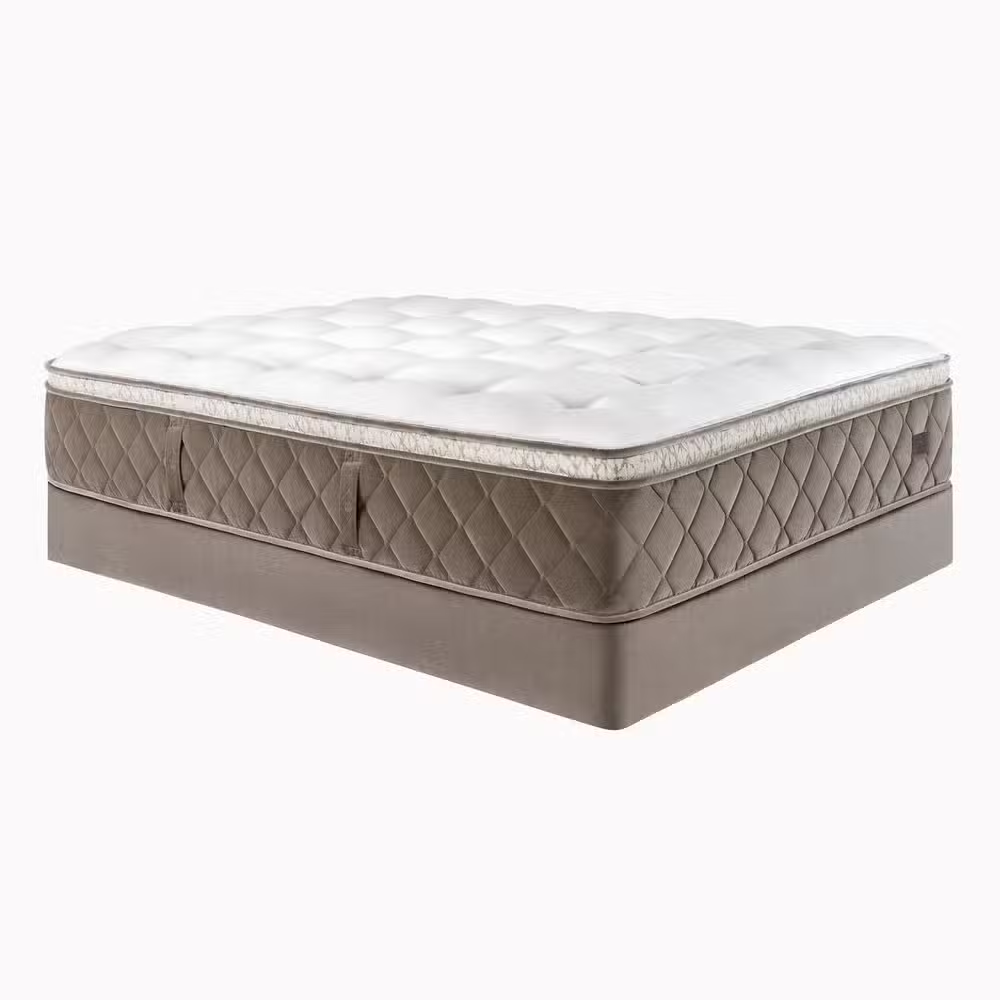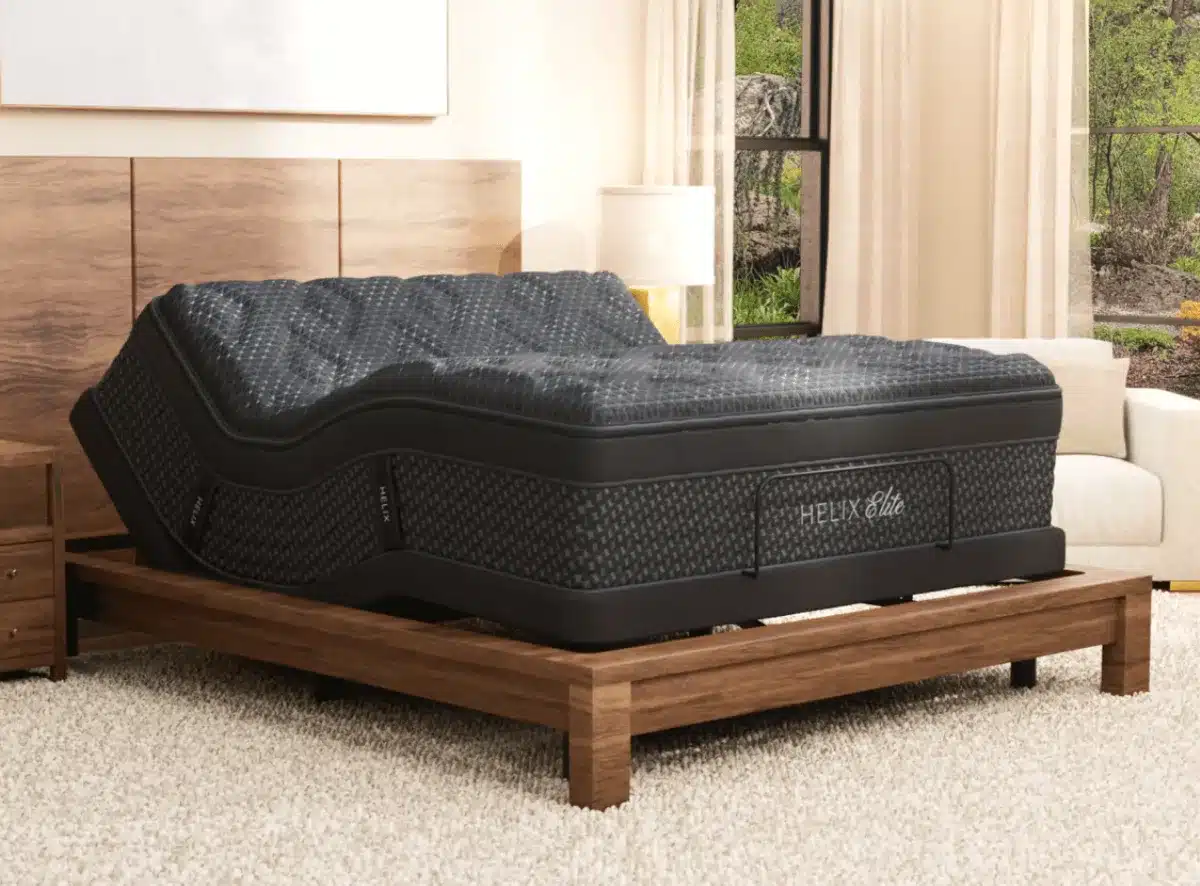
Helix Twilight Elite vs. Dawn Elite

Helix Elite

Helix Twilight Elite vs Helix Dawn Elite: A Comprehensive Comparison

Helix Sleep’s Elite collection represents the brand’s top-tier luxury hybrid mattresses. Within this line, the Helix Twilight Elite and Helix Dawn Elite are both firm models, but they are tailored to different sleeper preferences. Below, we provide a detailed comparison of the Twilight Elite and Dawn Elite across all major aspects, including firmness, support, pressure relief, cooling features, motion isolation, edge support, durability, ideal sleep positions, sleeper types, and pricing. We’ll highlight the core differences between these two mattresses and offer practical recommendations for various types of sleepers.

Firmness Level and Feel

Helix Twilight Elite – Firm (7.5/10): The Twilight Elite has a firm feel with a slight plush touch on the surface. It is rated around 7 to 7.5 out of 10 on the firmness scale (with 10 being the firmest). This means it’s very much in the firm category, but it’s marginally softer than the absolute firmest options. The Twilight Elite’s pillow-top and comfort layers provide a bit of conforming cushion on top of its sturdy core. As a result, the feel is “firm yet contouring” – you’ll notice the mattress is supportive and doesn’t sink excessively, but there is a gentle pressure-relieving cradle especially under the shoulders and hips. Many sleepers describe the Twilight Elite as having a balanced firm feel: the surface has minimal give (you won’t sink deeply), yet it isn’t board-hard thanks to the plush quilted top and memory foam layer. Overall, the Twilight Elite feels supportive and stable, with just enough softness at the very top to prevent it from feeling too rigid.

Helix Dawn Elite – Firm (8/10): The Dawn Elite provides an extra-firm, highly supportive feel, roughly 8 out of 10 on the firmness scale. It is one of the firmest mattresses Helix offers. Lying on the Dawn Elite, you’ll experience a very flat, “on-top-of-the-bed” sensation. The surface has minimal cushioning give, so your body remains lifted rather than enveloped. Even compared to the Twilight Elite, the Dawn Elite feels stiffer and more resilient. The comfort layers in the Dawn Elite are made entirely of high-density polyfoam (no memory foam), which means the mattress responds quickly to pressure and has a more uniform, responsive feel. There is a bit of initial quilting softness from the Euro-top, but it’s thinner in contour than the Twilight’s; within moments of lying down, you’ll primarily feel the strong support of the underlying coils and foams. Overall, the Dawn Elite’s feel is very firm, flat, and highly supportive – ideal for those who want very little sinkage and a mattress that pushes back against the body.

Comparing Feel: The key difference in feel is that Twilight Elite offers a touch more plushness and contouring at the surface, whereas Dawn Elite feels harder and more “unyielding.” For example, when pressing your hand into the Twilight Elite, you’ll detect a bit of conforming around your hand due to the memory foam layer; on the Dawn Elite, the surface doesn’t contour as much and springs back faster due to its all-polyfoam construction. Side-by-side, most people would say Twilight Elite feels firm but slightly cushioned, and Dawn Elite feels firm to extra-firm and very solid. If you prefer even a hint of softness or pressure relief in a firm bed, the Twilight Elite will feel more comfortable. If you want a truly firm mattress with a “no sink” feel, the Dawn Elite delivers exactly that. Both mattresses are significantly firmer than medium-firm beds – they are geared towards sleepers who know they want a firm sleeping surface.

Support and Spinal Alignment

Support Systems: Both the Twilight Elite and Dawn Elite are hybrid mattresses constructed with robust support systems. They each stand 16 inches tall and share a similar base design: an 8-inch pocketed coil core with zoned support and reinforced perimeter coils. This means both models have extra-strong coils under heavier parts of your body (like the lumbar area) and sturdier coils around the edges for edge support. Beneath the coils is a high-density polyfoam base layer that adds stability. This advanced coil system gives excellent push-back support in both mattresses, helping to keep your spine aligned in neutral position.

Spinal Alignment: Thanks to their firm designs and zoned coil cores, both mattresses excel at maintaining spinal alignment, especially for back and stomach sleepers. When you lie on either the Twilight Elite or Dawn Elite, the mid-section (hips and abdomen) is well-supported to prevent sagging, and the mattress’s firmness keeps your spine from bowing. The differences come into play with different sleep positions:

  • Back Sleeping: Both models provide outstanding lumbar support for back sleepers. The Dawn Elite’s extra firmness offers a very stable feel under the lower back. Heavier back sleepers (above ~230 lbs) in particular will notice that the Dawn Elite prevents their hips from sinking too far, which helps avoid lower back arching. The Twilight Elite, being slightly less firm, still keeps average-weight back sleepers well-aligned but with a bit more give at the shoulders and hips. Many back sleepers in the average weight range (130–230 lbs) actually appreciate the Twilight Elite’s tiny bit of contour, as it can fill in the gap in the lower back while still keeping them supported. In short, back sleepers will get great support on both, with the Dawn Elite feeling a touch more rigid (beneficial for very heavy individuals or those who just prefer a firmer push-back) and the Twilight Elite feeling a tad more adaptive while still maintaining alignment.

  • Stomach Sleeping: Proper support for stomach sleepers is crucial to prevent the pelvis from dipping and causing overarching of the spine. Here, both mattresses perform well due to their firmness, but the Dawn Elite’s additional firmness is an advantage for certain sleepers. Stomach sleepers of moderate to high body weight will likely find the Dawn Elite keeps their midsection propped up more effectively. In fact, for strict stomach sleepers over ~230 lbs, the Dawn Elite is often the recommended choice – its very firm feel ensures the stomach and hips don’t sink in, maintaining a flat surface for the torso. The Twilight Elite, while still firm, allows slightly more sink in the pelvic area due to that extra cushioning; for most stomach sleepers (particularly under 230 lbs), this is still fine and keeps alignment in check. Lighter stomach sleepers (under 130 lbs) might actually prefer the Twilight Elite because the Dawn could feel uncomfortably hard for their frame. Overall, stomach sleepers up to an average weight will get adequate support from either bed, but those on the heavier side or who simply want the firmest possible surface for stomach-sleep posture should lean toward the Dawn Elite.

  • Side Sleeping: This is where support needs differ, and the two models diverge in suitability. Side sleepers need a mattress that supports the spine while also compressing enough at the shoulders and hips to allow a straight spinal line. Both Twilight and Dawn are on the firm end, so neither will compress as much as a soft mattress. However, the Twilight Elite’s slightly softer, more adaptive top layers mean it will conform better to side sleepers’ curves than the Dawn Elite. The Twilight Elite’s support is still very firm underneath, but that bit of contour can reduce the gap between your waist and the mattress and let your shoulder sink in a touch more, helping keep your spine straight when on your side. Heavier side sleepers (over ~200 lbs) in particular can get good spinal alignment on the Twilight Elite – their weight is enough to engage the comfort layers, and the mattress is strong enough to keep their mid-section from sagging. In contrast, the Dawn Elite can be too firm to allow proper side sleeping posture, especially for those under 230 lbs. Because it doesn’t soften much under the shoulder, a side sleeper on the Dawn might find their spine tilting upward (neck and lower back misaligned) due to the shoulder being pushed up. Only in some cases, a very heavy side sleeper (significantly 230+ lbs) who simply prefers an ultra-firm feel might manage on the Dawn Elite, but generally side sleepers will not sink enough into the Dawn to achieve neutral alignment or comfort. In summary, Twilight Elite can accommodate side sleepers who require firm support but still need a bit of give for alignment, whereas Dawn Elite is best reserved for back/stomach sleepers in terms of maintaining ideal spinal posture.

In terms of overall support quality, both mattresses are high performers. The dual microcoil layers (discussed more in the next section) and zoned coil core work together to distribute body weight evenly. There is minimal risk of sagging or bowing in either mattress even over long-term use, thanks to the heavy-duty coils and high-density foams. If support and healthy spinal alignment are your top priorities, both Twilight Elite and Dawn Elite deliver a robust, orthopedically sound feel – just tailored to slightly different sleeping styles.

Pressure Relief and Comfort Layers

Despite being firm mattresses, both Helix Twilight Elite and Dawn Elite incorporate thick comfort layers to alleviate pressure points – but the composition of these layers differs, affecting how pressure relief is experienced.

Construction of Comfort Layers: Each mattress has a Euro-style pillow top with a plush quilted cover (Helix’s GlacioTex cooling cover quilted with foam) and a multi-layer foam comfort system totaling about 6 inches thick. Both models even include not one but two layers of microcoils within their comfort stack. These microcoils are small, flexible coils above the main coil unit; they add some conforming and airflow. However, the key difference is in the foam types used:

  • The Helix Twilight Elite’s comfort layers are a mix of polyfoam and memory foam. Notably, one of the middle layers in the Twilight Elite is copper-infused memory foam. Memory foam is known for its pressure-relieving capabilities – it compresses under pressure points like shoulders and hips, distributing weight and easing tension. The copper infusion is mainly there to slightly improve cooling, but the foam’s primary benefit is that slow, body-molding cushioning. Above and below this memory foam, the Twilight has responsive polyfoam layers and the microcoil layers. The very top quilting is also polyfoam that gives a pillow-top plushness when you first lie down.

  • The Helix Dawn Elite’s comfort layers, by contrast, are made entirely of high-density polyfoam (no memory foam), layered with the microcoils. Essentially, every foam layer in the Dawn is a form of polyurethane foam that has a faster response and a firmer feel than memory foam. The quilted top on the Dawn is similarly polyfoam for initial softness, but the subsequent foam layers prioritize support and responsiveness over contouring. Without memory foam, the Dawn Elite’s comfort system is a bit less “melting” and more about even, shallow cushioning.

Pressure Relief in Practice: Given those constructions, the Twilight Elite offers more pressure relief than the Dawn Elite. When you lie on the Twilight, that memory foam layer will form to the shape of your body, allowing bonier areas like your shoulder or hip (if side sleeping) to sink in a bit more relative to the rest of your body. This can significantly reduce pressure buildup on those points. Side sleepers and people with pressure-sensitive joints will notice that the Twilight Elite, while firm overall, doesn’t press back quite as sharply at the shoulder/hip because the memory foam and microcoils are absorbing some of that force. Many testers report that for a firm mattress, the Twilight Elite is remarkably pressure-relieving – its thick comfort section really does cushion the body better than a typical thin-firm mattress would.

On the Dawn Elite, pressure relief is more limited. The polyfoam layers do compress under pressure, but not as deeply or uniformly as memory foam. You’ll experience more of a “floating on top” sensation, which means weight isn’t dispersed as gradually around pointy areas. So for example, a side sleeper on the Dawn might feel a concentrated pressure on their shoulder, since the mattress resists letting the shoulder sink deeply. Even a back sleeper might feel some firmness at the tailbone or heels. It’s not to say the Dawn Elite is uncomfortable – many people who choose it want a firm surface – but in terms of pure pressure mapping, it will create higher pressure points than the Twilight Elite. The trade-off for Dawn’s ultra-firm design is that there’s less contour to buffer your body’s curvier parts.

It’s important to note that body weight plays a role in perceived pressure relief. A heavier person will depress the comfort layers more. For instance, a 250 lb side sleeper might compress the Twilight Elite enough to get good cushioning and might compress the Dawn enough to at least activate all 6 inches of foam/microcoils (achieving some pressure relief, though still quite firm). Conversely, a lightweight person (say 120 lbs) may hardly compress the Dawn Elite’s comfort layers at all – they’d feel almost just the rigid top – and even on Twilight Elite, they’d only get mild contouring. Thus:

  • Average and heavy-weight sleepers (~130 lbs and up) will likely find the Twilight Elite moderately comfortable on pressure points (for its firmness level) and the Dawn Elite firm to the point of slight pressure stiffness. Twilight’s memory foam gives it an edge for comfort here, especially for side positions.

  • Lighter weight sleepers (under ~130 lbs) might find both mattresses quite firm in terms of pressure, with Twilight being only slightly more forgiving. They simply may not be heavy enough to sink in much. For these sleepers, a softer Helix model (like the Moonlight, Sunset, or a Luxe with a pillow-top) might be advisable if pressure relief is a major concern.

Combination of Firmness and Pressure Relief: Both mattresses do a good job preventing you from “bottoming out” – the thick profiles ensure you’re not feeling the coil unit or base through the comfort layers. In fact, both Twilight and Dawn Elite earned high marks in lab tests for pressure relief when considering their entire surface: the presence of microcoils and multiple foam layers means weight is more evenly spread than on a simple, thin firm mattress. If you lay flat on your back or stomach, you’ll probably feel no glaring pressure hotspots on either, as your weight is broad and the firm support keeps you evenly aloft. It’s really in side sleeping and joint pressure that the Twilight’s design shows benefit.

In summary, the Twilight Elite is the better choice if you need some pressure relief to stay comfortable, thanks to its memory foam component and slightly plusher top. It manages to relieve pressure on shoulders and hips notably more than the Dawn Elite does, while still being a firm bed. The Dawn Elite is optimized more for support than for pressure relief, so it’s best for people who prioritize a uniformly firm surface over contouring comfort. Many Dawn Elite users are willing to sacrifice a bit of pressure relief for the sake of that ultra-supportive feel (often back/stomach sleepers with less sensitivity in shoulders/hips). If you know you have pain points or joint sensitivity, you’ll lean toward Twilight Elite among these two. If you are pressure-insensitive or simply prefer a hard bed, the Dawn Elite will meet those expectations.

(One additional note: both models allow you to swap the “comfort insert” during the trial if you find it too soft or too firm. Helix can send a different inner foam layer to adjust feel. This is a perk of the Elite design’s zippered top compartment. However, even with tweaks, the inherent differences – memory foam vs poly, etc. – remain in each model.)

Cooling and Temperature Regulation

Both the Twilight Elite and Dawn Elite come equipped with features aimed at keeping you cool through the night. Overheating is often a concern with foam-heavy mattresses, but Helix’s Elite line has several design elements to combat this. In practice, both of these models perform exceptionally well in temperature regulation, and there are only minor differences between them on this front.

Cooling Cover (GlacioTex): Each mattress is wrapped in Helix’s GlacioTex Elite cooling fabric, which is cool to the touch. This cover uses phase-change material technology to draw heat away from your body. When you lie down, you’ll notice the cover feels refreshingly cool initially. Throughout the night, it helps dissipate body heat rather than trapping it. This cover is standard on all Helix Elite mattresses (unlike Helix’s lower lines where it’s an optional add-on). So right from the surface, both Twilight Elite and Dawn Elite have an advantage in cooling.

Breathable Hybrid Design: Internally, both beds share a similar hybrid structure that naturally promotes airflow:

  • They each have dual microcoil layers in the comfort zone – these act like small springs dispersed within the foams. The spaces around these microcoils allow air to circulate near the surface, which prevents heat buildup in the upper layers. Also, microcoils don’t trap heat like dense foam can.

  • The main support core is an 8-inch layer of pocketed coils. This coil layer creates a large open volume inside the mattress for air to flow. As you move or even as heat travels outward, the coil core helps funnel warmth away from the sleeper.

  • Even the foams used are relatively breathable high-density polyfoams and open-cell memory foam. The Twilight’s memory foam has copper infusion which can help slightly with heat dispersion (copper can carry heat away), but more importantly, the memory foam layer isn’t overly thick and is surrounded by coils/airflow, mitigating the usual heat issues memory foam might have in an all-foam bed.

Firmness and Cooling: An often overlooked factor in cooling is how much you sink into a mattress. If you sink deeply, more of your body is enveloped and less surface is exposed to air, which can increase heat retention around you. Both of these mattresses being firm means you sleep more “on top” of the bed, which generally keeps you cooler. Notably, the firmest models (like Dawn Elite and Twilight Elite) were shown to sleep cooler than the softer Helix Elites, precisely because sleepers don’t sink in as far. By keeping you elevated, these mattresses allow more of your body’s surface area to be exposed to the room air, and there’s less foam tightly hugging around you to trap heat.

Comparing Twilight vs Dawn: Since both share the cooling cover and similar layer design, their cooling performance is very close. If we nitpick:

  • The Dawn Elite’s slightly firmer, more elastic polyfoam layers mean you might sink even less than on the Twilight, potentially allowing a hair more airflow around your body. A very heavy person might sink into Twilight a bit more due to the memory foam’s give, whereas Dawn would hold them more atop. However, this difference is small – we are still talking about two firm beds.

  • The Twilight Elite’s memory foam layer, being only one part of the comfort system and accompanied by cooling tech, does not noticeably make the mattress hotter. Some memory foam mattresses run warm, but in the Twilight Elite, heat is actively managed. Testers have noted that Twilight Elite sleeps cool even for memory foam-sensitive hot sleepers – likely because the memory foam is infused and surrounded by coils, and you’re not enveloped by it as deeply.

  • Both mattresses scored highly (often “8 out of 10” or better in cooling evaluations). In fact, many reviewers found no significant heat retention on either model. The general consensus is that neither Twilight Elite nor Dawn Elite struggles with overheating. Even people who identify as hot sleepers have been comfortable on them, which isn’t always the case with thick mattresses.

Who might notice slight differences? If you are extremely heat-sensitive, you might lean towards the model that keeps you a touch more on the surface – arguably the Dawn Elite – but realistically, the difference is minimal. The Twilight’s memory foam is not thick or deep enough to swaddle you in heat; plus, the cooling cover works effectively. Some users report the cover feeling cool to the touch even well into the night, indicating it’s doing its job in both models.

In summary, cooling is a strong point for both the Twilight Elite and Dawn Elite. Both incorporate multiple cooling features (cooling fabric, airflow coils, breathable foams) that work together to prevent heat build-up. You can expect excellent temperature regulation from either mattress. Neither one “sleeps hot” in the typical sense – on the contrary, they outperform many standard hybrids in this category. So, when choosing between them, you don’t have to worry about one sleeping significantly cooler than the other; you can base your decision on other factors, knowing that temperature regulation will be reliably good regardless of Twilight or Dawn Elite.

Motion Isolation and Responsiveness

Motion isolation and responsiveness are two sides of the same coin: a mattress that is very responsive (bouncy and quick to react) tends to transfer more motion, while a mattress that isolates motion well usually has slower-response materials that absorb movement. Let’s compare how the Twilight Elite and Dawn Elite perform in these aspects and where they differ.

Motion Isolation:

  • The Helix Twilight Elite offers better motion isolation than the Dawn Elite. This is primarily due to the presence of memory foam in its construction. Memory foam is excellent at dampening motion – when one person moves on a memory foam layer, the material absorbs much of that energy locally instead of rippling across the bed. In the Twilight Elite, the memory foam and the thick pillow-top act to cushion movements. So, for example, if a partner gets up or shifts position, the vibrations that travel through the mattress are muted to some extent by those foam layers. Additionally, the pocketed coils in both beds help isolate motion compared to old interconnected spring mattresses, because each coil moves independently. In the Twilight, this coil isolation plus memory foam’s absorption results in only modest motion transfer. Couples testing it often find that while you can feel some movement (it’s not as deadening as an all-foam bed), it’s definitely restrained for a hybrid – the shake from a partner’s toss or a pet jumping on the bed is minimal.

  • The Helix Dawn Elite has a bit more motion transfer. Since its comfort layers are all polyfoam (which is more resilient) and microcoils, it doesn’t have that slow, damping memory foam layer to soak up movement. Polyfoam rebounds faster, and microcoils, while adding comfort, also can add a touch of springiness. As a result, when someone moves on the Dawn Elite, there is more bounce that can be felt across the mattress. The firmer the bed, often the more motion can carry, because the surface doesn’t conform around the moving object as much. In the Dawn, if one person is a restless sleeper, their tossing might create some noticeable vibration on the other side. It’s not extreme – it’s still far better than a traditional innerspring with no foam – but compared to the Twilight Elite, the Dawn is a bit “bouncier” and less motion-absorbing.

Responsiveness and Bounce:

  • Twilight Elite – Slower, Contouring Response: Thanks to the memory foam, the Twilight Elite has a slightly slower response time when you apply pressure. If you press a hand in and lift it, the foam takes a moment to regain shape. This gives the bed a more contouring, enveloping feel (even though it’s firm, the foam molds briefly around weight and then slowly levels out). In terms of bounce, the Twilight is actually somewhat restrained for a coil bed. There are two microcoil layers which do provide some light bounce and keep it from feeling dead, but the combination of thick foam layers, including memory foam, means the overall bounce is moderate-to-low. When you plop down on Twilight Elite, you won’t spring up as much; it’s more of a gentle absorb then support. For some couples, this lower bounce means it’s very steady (less disturbances, as mentioned) but it can also mean slightly lower ease of movement or less “buoyant” feel. We’ll discuss ease of movement in a moment, but basically the Twilight’s responsiveness is tuned down a notch by design to prioritize pressure relief and motion isolation.

  • Dawn Elite – Fast, Springier Response: With no memory foam holding it back, the Dawn Elite responds to your movements almost immediately. The high-density polyfoams snap back into shape quickly when weight is removed, and the microcoils add a bit of spring. So if you change position or get in and out of bed, the Dawn Elite adjusts with you very promptly. There’s a bit more bounce noticeable on Dawn. It’s still cushioned by the foams to an extent, but for example, if you drop a weighted object, the Dawn’s surface will rebound a little more than Twilight’s would. Many users describe Dawn Elite as feeling more “responsive” or “lively” – you definitely feel the mattress push back quickly when you move. This can be an advantage for those who don’t like the slight “melting in” that memory foam does. Ease of movement is excellent on Dawn Elite: combination sleepers (who toss between positions) won’t feel stuck at all. The mattress’s firm, bouncy nature makes it easy to roll over or reposition; there’s virtually no slow sink to fight against.

Sleeping with a Partner: If you share a bed, both motion isolation and responsiveness factor into how the mattress feels:

  • On the Twilight Elite, your partner’s movements are less likely to jostle you, which is great if one of you is sensitive to motion or a light sleeper. The trade-off is that the Twilight has a more stable, slightly hugging feel, so you don’t get that quick rebound when changing positions – usually not an issue unless you really prefer a bouncy bed.

  • On the Dawn Elite, you get that crisp, responsive feel, which some couples enjoy because it can feel easier to move during intimate activities or repositioning. However, you will feel each other’s movements a bit more. For example, if one partner is getting out of bed early, the other may feel the mattress springs respond and the absence of memory foam means less dampening of that movement.

Comparative Summary:

  • Motion Isolation: Twilight Elite wins here. It’s the better choice if one of your priorities is not disturbing your partner (or being disturbed) when moving around on the bed. The difference isn’t night-and-day, but it is noticeable – Twilight simply has more motion reduction built in.

  • Responsiveness: Dawn Elite has the edge. It feels more “immediate” in support, which some people equate with a sense of easier mobility. If you hate any feeling of being “stuck” in a mattress and you want a quick reacting surface, Dawn is more up your alley. Twilight isn’t exactly slow – it’s not like old-school memory foam where you sink deeply and struggle to get out of a pit – but relative to Dawn, it’s less springy.

To quantify it, one could say Twilight Elite is medium-high in motion isolation and medium in bounce, whereas Dawn Elite is moderate in motion isolation and medium-high in bounce (for a hybrid). Neither of these is an ultra-plush sinker nor an old bouncy trampoline – they both strike a balance, just on different sides of firm mattress behavior. Your preference on this may come down to whether you value a calmer mattress for an undisturbed sleep (favor Twilight) or a snappier mattress that moves with you (favor Dawn).

Edge Support

Edge support is a strong point for both the Helix Twilight Elite and Dawn Elite, thanks to their reinforced coil perimeter and overall firm designs. In fact, both models perform exceptionally well around the edges, making this category more of a similarity than a difference – though we’ll note any subtle distinctions.

Design for Edge Support: Helix built the Elite mattresses with reinforced coils along all four sides of the bed. This means the springs used at the edges are of a heavier gauge or reinforced type that resist compression more than the inner coils. Additionally, the sheer thickness (16″) of these mattresses and the high-density foams contribute to edge stability. When you sit or lie near the edge of either mattress, you’re supported by:

  • A firmer foam encasement and quilt around the top edge (the pillow-top foam extends to the edges, but it’s backed by sturdier coils underneath).

  • A row of tough coils at the perimeter that prevent that feeling of “roll-off.”

Performance:

  • Helix Twilight Elite: Sitting on the edge of the Twilight Elite, you’ll experience very minimal sinking – mostly just the initial pillow-top compresses slightly under your weight, then the firmer core holds you up. You can confidently use the full width of the bed for sleeping; if you lie right up to the edge, the mattress feels stable and consistent in support. There is no sensation that the edge is collapsing or that you might slide off. This is great for couples who need to maximize sleeping area or anyone who likes to occasionally sit on the edge (for example, when getting dressed). The Twilight Elite’s strong edges are partly a benefit of its firmness (so much of the mattress is supportive that it naturally bolsters the sides). In reviews and tests, the Twilight Elite often scores very high (even perfect scores) for edge support.

  • Helix Dawn Elite: The Dawn Elite, being even a bit firmer, if anything provides equal or slightly greater edge support. There’s barely any give when sitting on the edge – the feeling is almost like sitting on a solid platform near the side. When lying down, you can use the entire edge-to-edge surface with confidence. Because the Dawn doesn’t have as much soft conformity at the top, the edges feel nearly as firm as the center of the mattress. This means no matter where you lie, the support is uniform. The reinforced perimeter coils do their job exceptionally – testers often note you can sleep right on the edge of Dawn Elite and still feel fully supported without that urge to move inward. This can be especially useful if two people are sharing a smaller size (like a Queen) – you won’t feel unstable even if you migrate to the very side.

Comparison: It’s hard to pick a winner here because both mattresses are among the best in edge support you’ll find. If we scrutinize:

  • The Dawn Elite’s extra-firm feel might give it a microscopic edge (no pun intended) in that it compresses a hair less under extreme edge pressure. A heavier person sitting on Twilight might compress the pillow top an inch or so and Dawn maybe a tad less since its foams are firmer. But both then hit that robust coil resistance and stop sinking.

  • Twilight Elite’s edge support is already excellent, and most users wouldn’t notice a difference between the two in normal use. It’s not like Twilight is lacking at all – far from it.

Practically speaking, you can consider edge support a tie between Twilight Elite and Dawn Elite. Neither mattress has a weakness here. You can:

  • Sit on the edge to put on shoes with only minor compression.

  • Sleep near the edge without feeling like you’ll roll off or that the mattress edge is collapsing under you.

  • Use the edge for getting in and out of bed without it excessively dipping.

This strong edge performance is a hallmark of the Helix Elite series design. It adds to the effective sleeping area of the mattress – important if you need space or if you sometimes have kids or pets joining you at the bed’s periphery.

In summary, both Twilight and Dawn Elite provide sturdy, reliable edge support, suitable for those who like a solid mattress edge. There isn’t a meaningful difference in this category; both will keep you well-supported whether you’re in the middle or all the way to the side.

Durability and Material Quality

When investing in a high-end mattress, you want it to last. Both Helix Twilight Elite and Dawn Elite are premium models, and Helix has used high-quality materials and construction methods to ensure durability. Let’s break down their material quality and what that means for longevity.

Build Quality: Both mattresses are part of Helix’s luxury line, which means:

  • Sturdy Coil Systems: The pocketed coils in the support core are made of strong tempered steel. Additionally, there are around 1,000+ coils (depending on size) in the support layer, which is a higher count than standard mattresses – this generally indicates more even support and durability (since weight is distributed across many springs). The coils are zoned for targeted support, which also helps durability by giving extra support where needed (reducing wear in high-stress areas like the middle).

  • Dual Microcoil Layers: Incorporating microcoils in the comfort layers not only adds comfort but also resilience. Metal coils don’t wear out as quickly as foam can. By having microcoils, Helix reduced the total amount of foam needed, which can actually increase the mattress’s lifespan (foams soften over time, whereas coils maintain their springiness longer). Both Twilight and Dawn have these microcoil layers, so both benefit from that added longevity factor.

  • High-Density Foams: The foams used in the Elite models are high-density, meaning they have more material per cubic foot and are generally more durable (resistant to premature sagging or indentations). The exact specs aren’t given by Helix publicly, but given the feel and the price point, they are using premium grades of foam. The Twilight’s memory foam layer, for instance, is likely a higher-density memory foam designed for longevity, and the polyfoams in both are of furniture-grade quality.

  • Cover and Stitching: The GlacioTex cooling cover and the Euro-top quilting are well-put-together. The cover is not a thin stretchy cover like on cheaper beds; it’s a substantial fabric with phase-change material integrated, and the top is tufted with foam. Users typically find the sewing quality and zipper (for the insert) to be solid. The zipper allowing you to remove or replace the comfort insert is also a feature that can extend the mattress life – if one layer were to wear out after many years, you could potentially replace just that layer, effectively refreshing the bed without buying a whole new mattress.

Helix’s Confidence – Warranty: Helix offers a Lifetime limited warranty on the Elite mattresses (compared to 10-year on their standard and 15-year on Luxe models). A lifetime warranty is a strong statement – it covers manufacturing defects and unusual sagging over the entire ownership period (with some prorating after a number of years). This indicates that Helix expects these mattresses to hold up for the long haul. (Of course, “lifetime” refers to the product’s intended life, and terms apply, but it is much more generous than the industry norm.) Knowing both Twilight Elite and Dawn Elite carry this warranty should give buyers peace of mind that the company stands behind the durability of these beds.

Expected Longevity: With proper use (rotating the mattress occasionally, using a proper foundation, etc.), you can expect these mattresses to last a decade or more without significant loss of support or comfort. The Elite series, being thicker and more robust, should generally outlast Helix’s standard models. Typical signs of wear like sagging or indentations are less likely to develop quickly because:

  • The foams are buffered by coils (both micro and main coils), meaning foam layers are not bearing the full brunt of weight alone.

  • The firmness of these beds actually bodes well for durability: firmer beds tend to start off with less room to sag (they’re already quite flat and supportive), and high-density firm foams often soften more slowly than plush, low-density foams. So, Twilight and Dawn’s firm nature means they’ll feel “like new” for a longer period, since there’s less immediate softening that you’d notice.

  • The memory foam in Twilight Elite: memory foam can develop body impressions over a long time, but because it’s just one layer among many (and likely high quality and maybe gel/copper infused), it should hold up. Plus, if it ever did soften a bit, the underlying coils still keep support; you might only notice a slight change in feel over many years. The Dawn Elite’s polyfoam layers are generally very durable – high-density polyfoam is known for retaining shape well.

Difference between Twilight and Dawn in Durability: There’s no major difference in the build quality of the two – Helix didn’t compromise on one versus the other. One minor consideration: memory foam vs. polyfoam. Over very long time spans, memory foam can become a touch softer or develop impressions sooner than a comparable high-density polyfoam. So one could speculate that perhaps the Dawn Elite’s all-polyfoam construction might make it slightly more resistant to body impressions (since polyfoam often springs back a bit better). However, the difference is likely negligible with the quality Helix is using. Many memory foam beds last 8-10 years; here it’s only one component in Twilight. Also, Twilight’s memory foam is not right at the top (it’s one of the middle comfort layers under a quilted foam layer), which actually protects it from direct wear. In other words, both designs are engineered for durability, and any edge one might have is small.

One area where both mattresses will benefit owners: because they are flippable only in one direction (you can’t flip the mattress, only rotate it), you should rotate the mattress head-to-foot a few times a year. This ensures even wear, especially if one person is significantly heavier or if you tend to sleep on the same side of the bed. Both Twilight and Dawn being heavy, two-person job mattresses, you’ll want to be careful rotating, but doing so will maximize their lifespan.

In summary, the Helix Twilight Elite and Dawn Elite are high-quality, durable mattresses built to last. They use premium materials (foams, coils, and cover) that resist premature wear. Helix’s lifetime warranty underscores the durability. You can expect a long usable life from either model. There isn’t a clear durability winner between the two – they’re equals in construction quality. If cared for, both should serve you well for many years, providing a solid return on the investment in terms of longevity.

Best Suited Sleeping Positions (Side, Back, Stomach)

Choosing between the Twilight Elite and Dawn Elite largely comes down to your primary sleeping position(s). We’ve touched on this earlier, but here we’ll distill which mattress is best suited for side, back, or stomach sleepers:

  • Side Sleepers: The Helix Twilight Elite is generally the better choice for side sleepers of the two. It is firm, yes, but it has that extra bit of give (memory foam + slightly softer rating) that side sleepers need for their shoulder and hip to feel comfortable. Side sleepers – especially those of at least moderate weight – will appreciate that the Twilight Elite can prevent too much pressure on the downside shoulder and allow a small degree of contouring so the spine stays straight. By contrast, Helix Dawn Elite is usually too firm for side sleeping. Most side sleepers will find the Dawn doesn’t let their shoulder sink in at all, causing discomfort and a misaligned neck. The only exception might be a side sleeper who is very heavy (250+ lbs) and/or who simply knows they enjoy a rock-hard bed; such an individual might find Dawn acceptable, but even many plus-size side sleepers prefer a bit of cushion, making Twilight Elite the safer bet. In summary: if you sleep on your side regularly, you’ll likely be happier on the Twilight Elite. It’s designed by Helix as the firm option for side sleepers, after all. The Dawn Elite, labeled for back/stomach sleepers, doesn’t cater to side sleepers’ pressure needs and should be avoided by that group in most cases.

  • Back Sleepers: Both mattresses can work well for back sleeping, but there are nuances. Twilight Elite offers a firm, slightly adaptive feel that many back sleepers (light to average weight) find ideal – it supports the lumbar region while cushioning the upper back and pelvis just a touch. Dawn Elite offers an extra-firm, very flat support that some back sleepers (especially those who are heavier or who have tended to prefer very firm beds) will love, as it keeps them extremely level. For average-weight back sleepers (130–230 lbs), the Twilight Elite might feel a bit more comfortable because it has a tad more give to accommodate the natural curve of the spine. They won’t sink much in Twilight, but they might feel the foam fill in the lower back nicely. The Dawn Elite for an average back sleeper could feel very stiff – some might feel a gap in the lower back if the mattress doesn’t contour at all (this can be mitigated with a small pillow under knees if needed). For heavy back sleepers (over 230 lbs), the dynamic can change: a heavy person will engage the Twilight more (perhaps sinking a little more than ideal if extremely heavy), whereas the Dawn will still hold them very level. In fact, Sleep Labs found back sleepers over 230 lbs gave Dawn Elite the highest marks, due to its unyielding support. So a good rule: if you’re a back sleeper and weigh under ~200-230 lbs, you might slightly prefer Twilight Elite’s feel, whereas if you weigh a lot or just know you want maximal firmness, Dawn Elite could suit you. Both will keep your spine without big sagging, so it comes to preference of firm vs very firm. Many back sleepers who rotate to side sometimes might lean Twilight as a more versatile firm. Pure back sleepers with back pain who want a hard surface might lean Dawn.

  • Stomach Sleepers: Helix Dawn Elite is tailor-made for stomach sleepers, particularly those of moderate to high weight. Stomach sleepers need the midsection (hips/abdomen) extremely well-supported to avoid a hammock effect. The Dawn Elite, being firmer, does an exceptional job of keeping the stomach and hips elevated. In fact, among Helix’s lineup, Dawn (in standard, Luxe, or Elite form) is often recommended for strict stomach sleepers. Twilight Elite can also work for stomach sleeping – it’s still firm enough for most people – but there are a few caveats. For stomach sleepers under 230 lbs, the Twilight Elite usually provides plenty of support; they won’t sink much, and their spine can stay aligned. Some might even enjoy Twilight more if they occasionally roll to side or back, because it’s a bit more adaptable. However, for stomach sleepers above ~230 lbs, Twilight might allow just a bit more dip at the hips than ideal, whereas Dawn will remain flat. Those individuals are likely better served by Dawn Elite’s extra firmness (or even Helix’s Plus model designed for big and tall, but between these two, Dawn). Also, consider comfort: a pure stomach sleeper doesn’t worry about shoulder pressure like a side sleeper, so they can handle Dawn’s hardness in that sense. They often prioritize feeling that strong push-up support under their torso, which Dawn delivers. So the bottom line: if you exclusively or primarily sleep on your stomach, especially if you have a larger build, the Dawn Elite is the recommendation. If you’re a stomach sleeper who is lighter or you split time between stomach and other positions, the Twilight Elite can certainly do the job while offering a touch more comfort for those other positions.

  • Combination Sleepers (multiple positions): If you shift between positions (back/side or back/stomach or all three), think about which positions are primary and your own preferences. Twilight Elite tends to be more accommodating for combination sleepers who include side sleeping in the mix. Because it’s a bit more contouring, it can handle side and back combination reasonably well. It’s supportive enough for stomach in short stints too. Dawn Elite is great for back-stomach combination sleepers (since those two positions both like firmness), but not forgiving enough if you throw side sleeping in occasionally – a brief nap on your side on the Dawn may cause shoulder numbness if you’re not used to it. Also, recall responsiveness: Dawn is a bit easier to move on, which combo sleepers often appreciate. Twilight isn’t far behind though, as both are fairly easy to move on (neither traps you like a soft memory foam bed would). So if your combo is side/back or side/stomach mix, lean Twilight. If your combo is back/stomach, lean Dawn.

To summarize:

  • Side sleepers – go with Twilight Elite (firm, but some pressure relief; Dawn is too firm).

  • Back sleepers – both work; Twilight if you want firm with slight cushion, Dawn if you want extra-firm with zero sink (especially good for heavier back sleepers).

  • Stomach sleepersDawn Elite is usually best (ultra supportive for hips), though Twilight can suffice for lighter stomach sleepers or those who also spend time on side/back.

  • Mixed position sleepers – consider your dominant position: Twilight is more versatile across side/back, Dawn is excellent for back/stomach combo.

Choosing correctly here will ensure you get the comfort and alignment you need for your sleeping style.

Ideal Sleeper Types (Body Weight, Pain Concerns, etc.)

Beyond just sleep position, factors like your body weight, body shape, and any pain concerns or personal preferences should influence whether the Twilight Elite or Dawn Elite is a better fit. Let’s explore how different types of sleepers might match with these mattresses:

By Body Weight:

  • Lightweight Sleepers (under 130 lbs): Lighter individuals generally don’t sink as deeply into mattresses, which effectively makes mattresses feel firmer to them. For someone under 130 lbs, both the Twilight Elite and Dawn Elite will feel very firm – perhaps even too firm to be comfortable, especially in side sleeping. If a lightweight sleeper is determined to get one of these, the Twilight Elite is the slightly softer option and thus the better choice. A petite side sleeper, for instance, will have a rough time getting any give from Dawn Elite, whereas Twilight at least has that pillow-top and memory foam to provide some cushioning. A petite back or stomach sleeper might do okay on Twilight as well, though even they might find it quite stiff. In many cases, lighter sleepers might be happier with a medium or soft model (like Helix Sunset/Moonlight or Dusk) unless they explicitly know they enjoy a hard bed. In short, for lightweight people, Twilight Elite is somewhat more forgiving but still on the firmer end of what they’d typically need. Dawn Elite is likely overkill in firmness for this group.

  • Average Weight Sleepers (130 – 230 lbs): Average build individuals will activate the mattresses more and tend to get the “intended” feel out of each. If you’re in this range, your choice should lean on your sleep position and firmness preference. Broadly, Twilight Elite will suit average folks who want a firm feel that isn’t rock hard, and who maybe want a bit of contour (for example, an average side/back combo sleeper or an average person with some joint sensitivity). Dawn Elite will suit those who want a truly firm sleep surface or have a specific need for maximum support (e.g., an average-weight person with back pain who finds a very hard bed alleviates it). Many people in this weight range and who are back sleepers with occasional side sleeping would lean Twilight to have a tad more comfort, whereas a pure stomach sleeper in this range would lean Dawn to ensure no hip sinkage. Neither Twilight nor Dawn will “bottom out” for an average person – the support is plenty strong. It really hinges on comfort preference: average sleepers who like a bit of cushioning -> Twilight; those who like no cushioning -> Dawn.

  • Heavyweight Sleepers (over 230 lbs): Both the Twilight Elite and Dawn Elite are designed with heavier sleepers in mind – the entire Elite line is robust and marketed as handling all body weights well (Helix even has the Plus Elite specifically for plus-size, but Twilight and Dawn are also frequently recommended to heavier individuals wanting firm support). For a heavy person:

    • Support is critical: The Dawn Elite offers stellar support even for large bodies. A heavy back or stomach sleeper (say 250-300+ lbs) will find Dawn Elite keeps them propped up without bowing. Twilight Elite also supports high weight well, but since it’s a tad softer, extremely heavy folks might find it compresses a bit more under them (though the mattress is thick and strong enough that it’s unlikely they’d ever compress it fully; it’s more about the feeling of firmness).

    • Pressure relief for heavy side sleepers: Here’s where heavy side sleepers actually come into play. A person over 230 lbs sleeping on their side might find medium or soft beds too saggy (causing misalignment). They might turn to a firm bed for support. The Twilight Elite can be a great solution for a heavy side sleeper because it’s firm enough to hold their spine aligned, but it has just enough plushness to cushion the heavy pressure on the shoulder/hip. Many side sleepers in the 230-300 lb range reported Twilight Elite felt comfortable and supportive, whereas Dawn Elite for that same person could feel extremely hard (their weight will make Dawn a bit more tolerable, but still it lacks the memory foam comfort that helps with shoulder pressure). So for heavy side sleepers, Twilight Elite is strongly recommended over Dawn.

    • Heavy back and stomach sleepers: A heavy back sleeper often benefits from extra firmness to prevent any hammock effect – Dawn Elite shines in this scenario. If someone is, say, 270 lbs and mostly back sleeps, the Dawn will feel comfortably firm and very supportive. Twilight would also support them, but the extra give in Twilight might make them feel just slightly less supported than Dawn, particularly after the body settles in; some heavy back sleepers still like Twilight if they appreciate a little contour for comfort. Heavy stomach sleepers (>230 lbs) we’ve covered – Dawn Elite is usually the preferred choice to keep the midsection absolutely level.

    • Durability for heavy folks: Both mattresses are suitable for higher weight (the coils are strong, foam densities are high). They won’t break down quickly under a heavy person like a budget foam bed might. The reinforced edges also mean a heavy person can sit or lie at edges without causing long-term collapse. If a sleeper is significantly heavy (300+), Helix Plus Elite is an option with slightly different specs, but between these two, Dawn and Twilight can handle it – just choose based on comfort as described.

Pain Concerns:

  • Back Pain: If you suffer from back pain, alignment and support are key. Many back-pain sufferers (especially lower back pain) do well on firmer mattresses that keep the lumbar supported. Both Twilight and Dawn fulfill that, but if we get specific: Stomach or back sleepers with back pain often lean toward the Dawn Elite because any slight sagging in the hip area can trigger pain – Dawn’s extra firmness ensures the hips don’t sag at all. If your back pain is aggravated by a too-soft bed, Dawn might provide relief through its uncompromising support. On the other hand, side sleepers with back pain (or a combination sleeper with back pain) might need a compromise – Twilight Elite is firm enough to support the spine but has a touch more give to not create new pressure issues. Sometimes a super-firm bed like Dawn can cause discomfort in the shoulders or hips of a side sleeper, which can indirectly cause back tension. So, for back pain sufferers: match your sleeping style first (stomach/back -> likely Dawn, side -> Twilight). In either case, both are good for keeping a neutral spine which is step one in reducing back pain.

  • Shoulder or Hip Pain: These are more typically issues for side sleepers. If you have shoulder pain or hip pain, a too-firm mattress can worsen it by pressing too hard on those joints. Therefore, in this matchup, Twilight Elite is the only real contender – its memory foam layer will cushion the sore shoulder/hip more than Dawn will. Dawn Elite’s approach to a painful shoulder would likely be too much firmness, potentially exacerbating pressure on it. So, individuals with arthritis or joint pain in the shoulders/hips who still want a firmer mattress should lean Twilight or even consider a medium option; Dawn is not gentle in that regard.

  • Arthritis or Fibromyalgia: These conditions often require good pressure relief to prevent pain, yet sufferers might also need support. Again, Twilight’s slightly kinder surface makes it a better choice if firmness is desired. Dawn might feel unforgiving on tender spots.

  • No Pain, just Preference: If you have no specific pain issues and this is just about preference, consider whether you like a bit of cushion or not. Some people love the feeling of a very hard mattress (maybe they grew up on one or just find it comforting) – those folks will be drawn to Dawn Elite. Others want the mattress to meet them a tiny bit – those will prefer Twilight Elite. It’s a subjective comfort call beyond the objective factors.

Other Considerations:

  • Couples with Different Weights: If one partner is much heavier than the other, both of these mattresses can accommodate that without sagging on one side (the coil zoning helps). However, if the lighter partner is a side sleeper and the heavier is a back sleeper, Twilight might be a happy medium – firm enough for the back-sleeping heavier person (particularly if not extremely heavy) but not so hard that the lighter side sleeper is miserable. If both are primarily stomach/back and one is heavy, Dawn would ensure the heavy person is supported, though the lighter might find it extra firm (they could add a plush mattress topper on their side if needed). There’s a bit of nuance in multi-user scenarios, but Twilight is a tad more versatile for mixed needs, whereas Dawn is very specialized (great if both want firm).

  • People Who “Run Hot”: As discussed in cooling, both are great for hot sleepers. A heavier person who runs hot might prefer Dawn only because they’ll sink a fraction less, but either way, cooling is similar. So hot sleepers should base decision on other factors, not much difference here.

  • People Sensitive to Motion: If one is easily woken by movement, Twilight is better, as noted. So a sensitive sleeper + restless partner pairing favors Twilight Elite for the motion isolation edge.

  • Bounce for Sex: Some couples consider mattress bounce for sex. Both have coils so they’re decent; Dawn has a bit more bounce, which some might prefer. Twilight’s memory foam can dampen rebound slightly. Neither is overly restrictive in movement though. If it’s a key factor, Dawn’s extra responsiveness might be a plus.

  • Off-Gassing Sensitivity: Both are hybrids with multiple layers – they will have a “new mattress smell” initially, but it’s not extreme. They actually off-gas a bit less than some bed-in-a-box foams because of the coil content and the fact that the comfort layers arrive separately (allowing some airing during setup). In any case, no big difference between them here; any smell should dissipate in a few days. Helix uses CertiPUR-US foams, so no harmful fumes, just the temporary odor of new foam.

Summary of Ideal Matches:

  • If you’re heavy and need robust support, both are good, but choose Dawn Elite for back/stomach focus or Twilight Elite for side/heavy-side focus.

  • If you’re lightweight, neither is tailored for you, but Twilight Elite would be the gentler of the two if you must have a firm Helix Elite.

  • If you have pressure-sensitive pains (especially in shoulders/hips), Twilight Elite will be far more comfortable.

  • If you have strict support needs (e.g., lower back issues that respond to very firm surfaces), Dawn Elite might provide that extra reassurance.

  • For most average folks who just want a luxury firm mattress, it again boils down to a slight comfort preference: Twilight Elite for a firm with a cushion, Dawn Elite for an extra-firm, no-nonsense feel.

Pricing and Value

The Helix Twilight Elite and Dawn Elite are priced at the higher end of the mattress market, reflecting their luxury construction. Let’s break down pricing and consider the value each model offers:

Base Pricing: Both the Twilight Elite and Dawn Elite have identical pricing structures. As of 2025, a Queen size has a list price around $3,749, but Helix almost always has sales or discounts (for instance, Helix was advertising ~20% off for holidays like Labor Day), bringing the effective price to roughly $2,999 for a Queen. Other sizes scale accordingly (Twin starting around $1,999 sale price, King/Cal King around $3,199 on sale, etc.). In short, there’s no price difference between Twilight Elite and Dawn Elite – the choice between them doesn’t affect your wallet, as long as you’re comparing the same size.

This is deliberate: Helix differentiates the Elite models by feel, not by cost. You’re paying for the Elite build and materials in either case. So budget doesn’t factor into choosing Twilight vs Dawn specifically. Instead, you should choose based on fit, knowing you’ll pay the same either way.

Value Proposition: $2-3k+ for a mattress is a significant investment. The question is, what value do you get for that price, and do Twilight Elite or Dawn Elite deliver on that value?

  • Premium Materials: We’ve discussed the robust build – from the cooling phase-change cover to the dual microcoils and thick profile. These materials cost more than a simple foam slab or even a basic hybrid. You are getting a 16″ tall, multi-layer mattress that uses advanced tech (cooling cover, zoned coils, etc.). The price reflects that. Many other luxury hybrids from competing brands (Tempurpedic, Stearns & Foster Reserve, etc.) can cost similar or more for comparable complexity. So, relative to the high-end market, the Helix Elite pricing is competitive.

  • Customization by Model: Helix essentially offers a range of firmness in the Elite line (Sunset soft, Midnight medium, Dawn/Twilight firm, etc.) without charging differently for each. That’s good because you aren’t penalized for picking one feel over another. The value is that you can get the exact feel you need (in this case, firm or extra-firm) while still getting the top-tier features.

  • Durability and Longevity: If these beds last, say, 10+ years, the cost over time can be justified. Cheaper beds might need replacement in half that time. Given the Elite’s build and lifetime warranty, the long-term value is strong. Essentially, you’re paying upfront for a mattress that should maintain performance and comfort for many years, reducing the need to buy another mattress in the near future.

  • Trial and Warranty: Both Twilight and Dawn Elite come with a 100-night sleep trial (with a required 30-night try-out period before returns) and the Lifetime limited warranty. The generous warranty particularly adds value – knowing that if something goes wrong structurally in year 5 or 15, you have some recourse, is reassuring. Helix’s trial allows you to make sure the mattress truly suits you; that’s an important part of the value for such an expensive item. If it’s not right, you can return it within that window for a refund. Additionally, Helix offers the comfort layer swap during the trial if it’s just a bit too soft or firm – that’s like a built-in adjustment option to get your perfect feel without extra cost.

  • No Price Difference = focus on fit: Since Twilight and Dawn cost the same, the value you get is maximized by picking the one that fits you best. You don’t save money picking one or the other, so there’s no scenario where one is the “value option” of the two. The “value” is really in getting the right support/comfort for your needs. For example, a Dawn Elite is a poor value if you’re a side sleeper who can’t comfortably sleep on it (because you’d have paid a lot and gotten the wrong mattress). Conversely, it’s a great value if it solves your sleep issues and lasts years. The same logic for Twilight Elite.

Additional Considerations:

  • Helix often bundles freebies (like pillows) or has promotions which can sweeten the deal. Keep an eye out for holiday sales. But again, that applies equally to both models.

  • Financing is available (through Helix’s partners) for those who want to pay over time – that can make the $3000 hit easier to manage, and might be a factor in considering if the Elite series is worth it for you.

  • Comparing to Helix Luxe or Standard: Part of assessing value is asking: do you need the Elite version or could a cheaper model suffice? For some, the Helix Luxe (14″ thick, pillow top, zoned coils) might offer 80-90% of the experience at a lower price (~$2k or less for a Queen on sale). For instance, the Twilight Luxe or Dawn Luxe are available and are quite similar conceptually (firm options with a pillow top). The Elite adds microcoils and an extra layer of foam, plus the fancy cover, making it even more high-end. If you’re trying to decide on value strictly: if your budget is flexible and you want the absolute best Helix can offer in terms of cushioning and support, the Elite is their pinnacle. But if budget is a concern, one might argue the Luxe versions are a better “bang for buck” since they are still very high quality with many features, just slightly less foam thickness and one less coil layer. This isn’t to dissuade from Elite – just acknowledging that the law of diminishing returns applies: the Elite line is more expensive for incremental improvements in comfort/performance. However, because you specifically asked between Twilight Elite and Dawn Elite, we assume you’re interested in the Elite class specifically. Within that class, both have equal value, so it’s down to which suits your needs (as we’ve elaborated).

Overall, the pricing for Twilight Elite and Dawn Elite is premium, but so is the quality. If you can comfortably afford it and you value the enhanced features and likely extended lifespan, they represent a solid value in the luxury mattress segment. There’s no compromise materials-wise, and Helix backs them strongly. And remember, since price doesn’t distinguish them, focus on getting the one that will give you personally the best sleep – that’s where the true value lies.


After dissecting all these aspects, it’s clear that while the Helix Twilight Elite and Helix Dawn Elite share many high-quality features, their core differences lie in firmness feel and intended sleeper profile. Below is a summary of the key differences and similarities in a comparison table, followed by our recommendations for different sleeper types:

Comparison Table: Helix Twilight Elite vs Helix Dawn Elite

AspectHelix Twilight EliteHelix Dawn Elite
Firmness (1-10 scale)~7.5/10 – Firm (slightly softer than Dawn)~8/10 – Extra-Firm (harder, more rigid feel)
Feel & CushioningFirm with a slight plush top – a bit of contouring from memory foam provides a firm-but-cradling feel. You sleep “on” the mattress with a touch of give.Very firm and ultra-supportiveminimal contour or softness. You sleep fully on top of the mattress with almost no sink-in.
Comfort Layer Composition5-layer comfort system w/ memory foam + polyfoam + microcoils (includes a copper-infused memory foam layer). Thick Euro-top adds pressure relief.5-layer comfort system w/ all polyfoam + microcoils (no memory foam at all). Euro-top is firm and flat in feel for a more uniform comfort layer.
Pressure ReliefModerate for a firm mattress – the memory foam and thick pillow top relieve pressure on shoulders/hips better than Dawn. More forgiving on joints (suited for firm-loving side sleepers).Limited pressure relief – very firm surface can create pressure points, especially for side sleepers. Designed more for support than gentle cushioning.
Support & Spine AlignmentExcellent support; keeps spine aligned in all positions. Firm core with some give allows side sleepers’ shoulders/hips to align, and supports back/stomach well for most weights.Maximal support; extremely sturdy alignment, ideal for back and stomach sleeping. Prevents any sinkage at hips. Not as accommodating for side posture (shoulder may not sink enough).
Motion IsolationGood – Memory foam absorbs movement, coils are pocketed. Motion transfer is low to moderate; partner disturbances are minimal.Fair – Slightly more motion transfer due to responsive foams. You may feel partner movements more compared to Twilight, though still better than a traditional mattress.
Responsiveness & BounceSlower response, less bounce – a bit of a conforming “hug” before springing back. Easier on movement than pure memory foam, but less bouncy than Dawn.Highly responsive, more bounce – quick recovery and a lively feel. Very easy to move and reposition; provides a bit more springiness under motion.
Edge SupportExcellent – Reinforced edges and firm structure allow very little edge sag. Feels secure when sitting or lying on the edge.Excellent – Equally strong edge support with heavy-duty coils. Even a slight edge in firmness makes it extremely stable at the edges.
CoolingExcellent cooling – Breathable design (cooling cover + microcoils). Firmness keeps you on top, avoiding heat trap. Stays temperature neutral for most.Excellent cooling – Similar cooling cover and airflow. Very little sinkage means more airflow around the body. No notable difference; both sleep cool.
Height & Construction16″ thick hybrid (Euro-top). Premium build with lifetime warranty. (Identical dimensions and build quality to Dawn.)16″ thick hybrid (Euro-top). Premium build with lifetime warranty. (Same robust construction as Twilight.)
Best Suited ForSide sleepers who want a firm mattress (especially medium/heavier weight side sleepers). Also great for back sleepers who prefer a bit of cushioning. Good for combo sleepers who rotate positions (including side).Stomach sleepers and back sleepers who need an extra-firm feel (especially those with higher body weight or who love very firm beds). Ideal for those who strictly sleep on back/stomach and want no plushness.
Not Ideal ForVery petite sleepers or those wanting a soft bed. Ultra strict stomach sleepers over 250 lbs might find it slightly soft at hips (though generally still supportive).Side sleepers of most body types – they will likely find it too hard on the shoulder/hip. Also not ideal for anyone who needs pressure relief or a bit of plush comfort.
Price (Queen)~$2,999 (often on sale from MSRP $3,749). Same pricing as Dawn Elite.~$2,999 (often on sale from MSRP $3,749). Same pricing as Twilight Elite.

As shown above, the two models share top-tier cooling, edge support, build quality, and price, but differ in firmness, feel, and target sleeper profile.

Recommendations: Which Mattress for Which Sleeper?

Choosing between the Helix Twilight Elite and Dawn Elite comes down to your personal sleep needs and preferences. Here are practical recommendations:

  • Choose the Helix Twilight Elite if:

    • You are a side sleeper who wants a firm mattress. The Twilight Elite’s slight cushioning will protect your shoulders and hips more than the Dawn would. It’s one of the firmest options that can still work for side sleeping due to that memory foam layer.

    • You’re a combination sleeper (side/back or back/stomach) who wants a versatile firm feel. Twilight is firm enough for back and most stomach sleeping, yet has enough adaptiveness for side sleeping when you switch positions at night.

    • You prefer a firm mattress with a dash of contouring comfort. If you like feeling supported but don’t want it to feel like a plank, Twilight gives you that balanced feel.

    • You have joint pain or pressure sensitivity but still need a firmer bed. For example, if you have some shoulder discomfort but find medium beds unsupportive, the Twilight is a good middle ground – supportive for your back, but kinder to the shoulder/hip than Dawn.

    • You sleep with a partner who tosses and turns, and you’re concerned about motion transfer. Twilight will slightly dampen movements better, which can help if one of you is restless.

    • You’re below ~230 lbs and want a firm Helix Elite – especially if you’re on the lighter side, the Twilight will simply be more comfortable than the Dawn due to being a touch softer.

    • In general, if you want luxury firm with a hint of plushness in the mix, Twilight Elite is the way to go.

  • Choose the Helix Dawn Elite if:

    • You are a strict stomach sleeper. Particularly if you’ve struggled with softer mattresses causing back pain, the Dawn Elite will keep your hips and abdomen perfectly elevated. It’s one of the best options in the Helix lineup for stomach sleeping alignment.

    • You’re a back sleeper who loves a very firm, flat feel. If you’ve tried medium or medium-firm beds and found them lacking support, the Dawn will likely feel just right. This is also true if you’re a back sleeper on the higher end of the weight spectrum – Dawn Elite is built to handle that with ease.

    • You know you prefer an extra-firm mattress – some people just sleep best on a very hard surface (like those who enjoy sleeping on the floor or very hard futons; Dawn Elite simulates that firmness but with more luxury and support).

    • You have lower back pain and find that a truly firm bed alleviates it. Dawn Elite can act almost like an orthopedic mattress, keeping the spine extremely straight. Many with chronic back issues (and who sleep on back or stomach) could benefit from that no-sag support.

    • You or your partner are significantly heavy (e.g., 250-300+ lbs) and sleep mainly on back/stomach. The Dawn Elite’s added firmness will provide lasting support and resist sagging under a larger body weight, ensuring durability and comfort long-term.

    • You want a mattress that’s very easy to move around on and don’t mind feeling a bit of bounce. Combination sleepers who flip from back to stomach, for instance, will find Dawn has virtually no resistance to movement.

    • Essentially, if you want the firmest possible Helix with the Elite-level features, Dawn Elite is your mattress.

  • Consider other options if:

    • You are a very lightweight person (<120 lbs) who is also a side sleeper – even Twilight Elite might be too firm to be comfortable. A softer model (like Helix Moonlight/Sunset or a Luxe medium) might serve you better.

    • You desire a medium or plush feel – neither Twilight nor Dawn will satisfy someone looking for a soft, sinking hug. These are for firm mattress lovers. In Helix’s lineup, softer Elites like the Moonlight (soft for back/stomach) or Sunset (soft for side) would be alternatives if luxury is still desired with a softer feel.

    • You are on a tight budget – the Elite models are expensive. If you don’t absolutely need the extra layers and height, the Helix Luxe Twilight or Dawn (14″ thick, slightly cheaper) can be a good compromise, offering a lot of similar benefits for less money. However, if budget permits, the Elite versions do provide the maximum luxury and an extra degree of performance.

In conclusion, Helix Twilight Elite vs Dawn Elite is not about which mattress is objectively better, but which is better for you. They are both high-quality, cooling, durable hybrid mattresses with a luxury build. Your decision should hinge on whether you want a slightly firm or an extremely firm feel, and on your sleeping position needs:

  • Go with Twilight Elite if you want a firm mattress that can comfortably accommodate side sleeping or just provide a bit more pressure relief.

  • Go with Dawn Elite if you want the firmest support available, primarily sleep on your back or stomach, and desire an “on-top-of-the-bed” experience.

Both will serve their intended sleeper types very well and represent a top-of-the-line choice in the hybrid mattress category. By considering your own habits and preferences alongside the information above, you can confidently select the model that will give you the best night’s sleep. Enjoy your new mattress and the tailored comfort it provides!
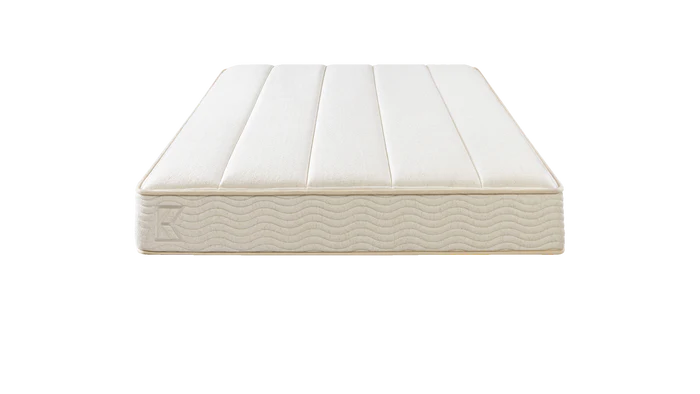
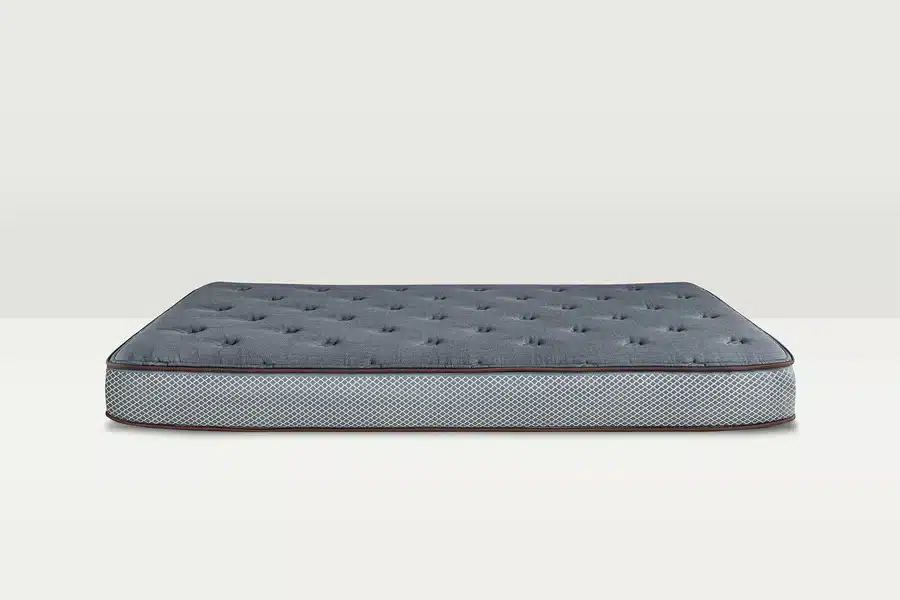
Keetsa Mattresses: Best Eco-Friendly Options for Better Sleep

keetsa mattress

Brand Overview

Keetsa is a mattress company founded in 2007 with a focus on eco-friendly design and affordable luxury. All Keetsa mattresses use CertiPUR-US certified foams (including a proprietary plant-oil-infused BioFoam memory foam) and natural fiber covers (unbleached organic cotton or hemp blends). They eliminate harmful chemicals and use green tea extracts to minimize odors. Keetsa offers a bed-in-a-box convenience – mattresses are compressed for shipping to reduce carbon footprint – and a unique aesthetic (even providing a cup of tea in showrooms). Over the years, Keetsa has built a reputation for non-toxic, sustainable materials and a range of comfort options to suit different sleepers.

Keetsa’s lineup includes both memory foam mattresses and hybrid mattresses (foam with pocketed coils, which Keetsa calls iCoil). The current portfolio has six main models, which have remained consistent in recent years. These models span from firm to ultra-plush, covering a variety of sleep preferences. Keetsa has also retired a couple of specialty models over time (such as a latex hybrid and an air-core mattress), which we’ll note later. Overall, the brand emphasizes quality, durability, and pressure relief, backed by a 12-year warranty on all mattresses. In this review, we’ll examine each Keetsa mattress in depth – comparing firmness, materials, construction, and pricing – and discuss their pros and cons, ideal sleeper types, and how they perform on factors like durability, comfort, motion isolation, edge support, and off-gassing. We’ll also provide buying recommendations for different needs and highlight how Keetsa’s lineup has evolved.

Keetsa Mattress Lineup Overview

Keetsa organizes its mattresses into two series often referred to by their product line names. For simplicity, we can group them as follows:

  • Keetsa Collection (Hybrid iCoil Series) – These are hybrid mattresses that combine individually wrapped coil springs with foam layers. They tend to be more affordable and have cotton fabric covers. The models here are The Keetsa Plus, The Keetsa Pillow Plus, and The Keetsa Cloud. (Despite its name, the Cloud is actually all-foam and coil-free, but it’s often grouped in this collection as a budget option.)
  • Tea Leaf Collection (Premium Series) – These are higher-end models featuring thicker comfort layers and a hemp-blend fabric cover. This series includes Tea Leaf Supreme, Tea Leaf Classic, and Tea Leaf Dream. The Supreme is an all-foam memory foam mattress, while the Classic and Dream are hybrid coil/foam designs. The Tea Leaf models generally use more layers and plush materials, placing them at a higher price point.

Current Keetsa Models: All six current mattresses are summarized below, with key characteristics:

Mattress Model Type & Construction Firmness Height Notable Features Price (Queen)
The Keetsa Plus Hybrid: iCoil® pocket springs + foam Firm (very supportive) 9″ 1″ memory foam + 1″ polyfoam comfort over coils. Basic, firm, and cooling design. ~$800 (budget-friendly)
The Keetsa Pillow Plus Hybrid: iCoil® springs + thick pillow-top foam Medium-Firm (balanced feel) 11″ 3″ pillow-top (memory foam + Comfort Foam), plus extra HD foam layer for durability, over coils. ~$1,000 (mid-range)
The Keetsa Cloud All-Foam: Memory foam mattress (no coils) Firm (foam-firm, minimal sink) 10″ 2.5″ memory foam comfort layer over high-density foam core. Coil-free, motion isolating. ~$1,000 (mid-range)
Tea Leaf Supreme All-Foam: Premium memory foam bed Soft (plush) 12″ 4″ thick memory foam comfort layer over firm supportive foam base. Luxurious, contouring feel. ~$1,600 (premium)
Tea Leaf Classic Hybrid: iCoil® springs + thick foam Firm (luxury firm) 13″ 5″ of memory foam and Comfort Foam over pocket coils. Strong support with a cushioned Euro-top feel. ~$1,700–$2,000 (premium)
Tea Leaf Dream Hybrid: iCoil® springs + extra-thick foam Soft (ultra-plush) 14″ 6″ of memory foam + special Pressure Relief Foam over coils, with foam encasement for edge support. Highest-end, cloud-like plush. $2,500+ (luxury tier)

Pricing note: The above approximate Queen prices provide a sense of relative cost. Keetsa Plus is the most affordable (starting around $700 for a twin), while the Tea Leaf Dream is the most expensive (over $3,000 in larger sizes). The other models fall in between, with the Tea Leaf series commanding a premium for their thick layers and materials. Keetsa often runs promotions or financing options that can soften these price points.

As shown, Keetsa’s current lineup covers a spectrum from firm to soft, and from simple two-layer designs up to multi-layer hybrids. Next, we’ll dive into each model’s detailed review, including construction specifics, firmness feel, pros and cons, and the type of sleeper who will likely find the most comfort in it.

Detailed Reviews of Keetsa Mattress Models

The Keetsa Plus® (Firm Hybrid Mattress)

Overview: The Keetsa Plus is the entry-level model and one of Keetsa’s best sellers. It’s a 9-inch hybrid mattress built with a simple yet effective design: a thin comfort layer atop a supportive pocketed coil core. Specifically, it has 1 inch of memory foam and 1 inch of “Comfort Foam” (a responsive polyfoam) above a layer of individually wrapped iCoil® springs. The cover is made of unbleached organic cotton fabric quilted with fiber padding for breathability. The overall feel is firm – the Plus is actually the firmest mattress Keetsa offers. Despite the thin foam top, the BioFoam memory foam provides some pressure relief while the high-density base foam beneath prevents you from feeling the coils. The coils themselves are independent, reducing motion transfer and allowing airflow. Priced in the lower range (~$800 for a Queen), the Keetsa Plus is an affordable, no-frills mattress that emphasizes support and durability over plushness.

Pros:

  • Robust Support: As a true firm mattress, the Keetsa Plus keeps the spine aligned very well. Its sturdy coil support core and minimal cushioning foam make it excellent for back and stomach sleepers who need extra firmness to prevent sagging at the hips and lumbar area.
  • Cooling and Breathability: With only 2″ of foam and a core of ventilated coils, this mattress sleeps quite cool. Air circulates easily through the coil layer, and the cotton fabric cover and fiberfill help wick away moisture. It’s a good choice for hot sleepers who find all-foam beds too warm.
  • Low Motion Transfer: Despite being a coil mattress, motion isolation is impressively good. Each spring is individually wrapped, so movement is localized. The thin memory foam layer further dampens vibrations. Couples can sleep with minimal disturbance from each other’s movements.
  • Edge Support: The Keetsa Plus has decent edge support for its profile. The firmer feel and supportive coils mean the perimeter doesn’t compress excessively under weight. You can sit or lie near the edge without feeling like you’ll roll off (though edge support is even better in the thicker hybrid models).
  • Easy to Move On: The firmer, “on-top” feel of the Plus makes changing positions or getting in/out of bed easy. You don’t sink in deeply, so there’s good mobility for combination sleepers or those with mobility issues. The responsive Comfort Foam layer adds a touch of bounce.
  • Budget-Friendly Quality: This model delivers solid quality (durable steel coils, high-density foams, certified materials) at a low price point. It’s an excellent value for a guest room, kids/teens, or anyone seeking a simple supportive mattress without spending a lot.

Cons:

  • Too Firm for Some: The flip side of its support is a lack of plush pressure relief. Side sleepers and those who prefer a cushioned feel may find the Plus too firm, especially if you have sharp pressure points at the shoulders or hips. The thin comfort layer just isn’t soft enough to cradle side sleepers comfortably for long.
  • Minimal Contouring: While there is a memory foam layer, it’s only an inch – so you get only light contouring. If you enjoy the deep “hug” of memory foam, the Plus may feel hard. It keeps you more on the surface. Heavier individuals might compress through that thin foam and engage more with the coil layer, potentially feeling pressure.
  • Limited Thickness: At 9″ tall, the Keetsa Plus has a lower profile than most modern mattresses. This doesn’t inherently affect comfort for average-weight sleepers, but a thinner mattress can bottom-out more easily under a very large or heavy body. People over ~230 lbs might find the Plus a bit inadequate in layer thickness, both for comfort and long-term durability.
  • Potential Wear in Foam Layers: With only 2″ of comfort foam in total, those layers bear the brunt of wear and tear. Some owners report body impressions developing in the top foam after several years. The Pillow Plus model (with more foam and a base HD layer) is designed to address this by improving durability. Rotating the mattress periodically can help even out wear on the Plus.
  • Initial Odor: Like all Keetsa beds, the Plus uses memory foam that is shipped vacuum-sealed. There can be a mild off-gassing odor when first unpacked. It’s a “new foam” smell with hints of the green tea infusion. The scent is not harmful and should dissipate within a few days in a well-ventilated room, but sensitive noses might notice it at first.

Best Suited For:

  • Back and Stomach Sleepers – especially those who prefer a firm, supportive feel. The Plus keeps your hips and abdomen well-supported, preventing the back from arching uncomfortably.
  • Budget-Conscious Shoppers – it’s the most affordable Keetsa, delivering quality construction for the price. Ideal if you want a durable mattress without luxury frills.
  • Hot Sleepers – the breathable hybrid design and lack of thick foam layers help it sleep cooler than many memory foam beds.
  • People Seeking Firm/Orthopedic Feel – if you have back pain that responds well to a firm sleeping surface, the Keetsa Plus provides a very uniform, even support (similar in feel to some traditional firm innerspring beds, but with added foam comfort on top).

The Keetsa Pillow Plus® (Medium-Firm Hybrid Mattress)

Overview: The Keetsa Pillow Plus takes the core design of the Plus and adds more cushioning and a “pillow-top” style comfort layer. It’s an 11-inch hybrid, built with the same iCoil pocket spring base but topped by 3 inches of foam (a combination of BioFoam memory foam and poly Comfort Foam) instead of 2. Additionally, it includes a 1-inch high-density foam layer just above the coils for extra support and longevity. This results in a medium-firm feel – noticeably softer and more pressure-relieving than the basic Plus, but still on the supportive side of the spectrum. The Pillow Plus’s cover is also 100% organic cotton with fiberfill quilting, giving it a plush surface feel. This model is designed to appeal to those who want a bit more plushness and contouring while maintaining the benefits of a hybrid. It sits in a middle price tier (~$1,000 Queen), and is often viewed as Keetsa’s “best of both worlds” bed.

Pros:

  • Balanced Comfort and Support: With thicker comfort foams, the Pillow Plus provides a more medium-firm sleeping experience. You get enough cushioning to relieve pressure on shoulders and hips, making it comfortable for side sleepers (particularly those who prefer a medium feel rather than very soft). At the same time, the underlying coil core and the added firm foam layer prevent it from feeling saggy – back sleepers will still get good lumbar support.
  • Improved Pressure Relief: Compared to the Keetsa Plus, this model’s pillow-top significantly increases pressure relief. The 3″ foam top cradles the body more, so you don’t feel the firm coil pushback as sharply. This is a big advantage for those who found the Plus too hard.
  • Durability Enhancements: The inclusion of a 1″ high-density base foam (between the coils and the softer foams) helps extend the life of the mattress. It acts as a buffer that reduces wear on the softer comfort foams by absorbing stress from the springs. Overall, the Pillow Plus tends to resist body impressions and sagging better over time than the thinner Plus.
  • Good for Couples: The Pillow Plus performs well for couples in multiple ways. Motion isolation is very good – the thicker foam absorbs movement, so you feel less of a partner’s tossing. Also, the medium-firm feel and moderate bounce strike a compromise: there’s enough responsiveness for amorous activities or easy movement, but not so much springiness that you’ll be disturbed by every movement. It’s a nice middle ground for partners with different preferences (one wanting a bit soft, one a bit firm).
  • Temperature Control: Like the Plus, this mattress sleeps fairly cool for a foam hybrid. The individually wrapped coils promote airflow. While there is more foam on top (which can retain some heat), many users find the Pillow Plus does not sleep excessively hot – especially with the breathable cotton cover. It’s a comfortable choice if you want memory foam’s pressure relief without the typical “oven” effect.
  • Versatile for Guest Rooms: The crowd-pleasing medium-firm feel means the Pillow Plus can accommodate a wide range of sleepers. If used in a guest bedroom or Airbnb, for example, it’s likely to satisfy most people (barring those who need an extremely soft or extremely firm bed). Its blend of cushioning and support has broad appeal.

Cons:

  • Heavier and Harder to Handle: The extra foam and height make the Pillow Plus heavier and a bit more awkward to move than the slim Keetsa Plus. If you need to rotate or relocate it, it’s a two-person job. Also, bending it for tight staircases or doorways is more challenging (it does ship compressed in a box, but once expanded, it’s quite bulky).
  • Not Plush Enough for Some Side Sleepers: While it’s softer than the Plus, the Pillow Plus is still categorized as medium-firm. Very petite side sleepers or those who strictly want a deep plush feel might still find it a bit too firm. Essentially, it’s cushiony but not “cloud-like.” The Tea Leaf Supreme or Dream would be better for those craving a truly soft bed.
  • Possible Mid-Range Price Hurdle: Priced around the ~$1000 mark for a Queen, it’s significantly more expensive than the Keetsa Plus. Some budget shoppers might question if the added comfort is worth the jump in cost. In the wider market, around $1000 brings many competitors (some with advanced cooling foams or luxury features). While Pillow Plus is well-made, value-conscious buyers should ensure the features align with their needs.
  • Edge Support is Okay, Not Great: The edge support on the Pillow Plus is decent – you can sleep near the edge without much issue – but the thicker soft layer does compress more than in the firmer Plus model. When sitting right on the edge, you might feel a little roll-off if you’re heavier, as the upper foam gives way (the coils underneath still provide support, though). If strong edge stability is a priority (for instance, if you frequently sit on the bed’s edge or need every inch of sleeping surface), the Tea Leaf Classic or Dream, which have dedicated edge reinforcement, might perform better.
  • Break-in Period: With the Pillow Plus’s multi-foam construction, there is a short “break-in” or adjustment period. Initially it might feel firmer until the top layers soften slightly with a few weeks of use. Also, new memory foam can feel different (stiffer or with minor manufacturing odor) right out of the box. This isn’t a major con, but some users report the mattress feels better after about a month of regular sleep as the materials settle.

Best Suited For:

  • Combination Sleepers and Couples: The medium-firm, moderately plush feel works well for people who change positions at night. It’s supportive enough for back sleeping, cushioned enough for side sleeping. Couples with different sleep styles will likely meet in the middle on this bed.
  • Back Sleepers Who Want a Touch of Softness: If you primarily sleep on your back but want a bit more contouring than the very firm Plus, the Pillow Plus offers that extra comfort while still keeping your spine aligned.
  • Side Sleepers (Average Weight): Many side sleepers will enjoy the pillow-top’s pressure relief on shoulders and hips, as long as they like a medium level of firmness. It’s a good compromise if you need some give, but also need support (for example, side sleepers who are heavier or who don’t like ultra-soft beds).
  • Those Upgrading from a Traditional Innerspring: If you’re used to a basic spring mattress and want to move into the foam hybrid world, the Pillow Plus is a friendly step. It maintains a familiar bounce/support from coils but adds a nice cushiony top – a “best of both worlds” introduction to modern mattress comfort.

The Keetsa Cloud® (Firm Memory Foam Mattress)

Overview: The Keetsa Cloud is one of two all-foam mattresses in Keetsa’s lineup and is aptly named for its intent to feel like sleeping on a supportive cloud. It’s a 10-inch memory foam mattress with no springs at all. The construction is simple yet effective: a thick base of high-density support foam, topped with a comfort section of Keetsa’s BioFoam memory foam (about 2.5″ thick). The cover is the same soft, breathable organic cotton knit used in the Keetsa line, with quilted fiberfill for a bit of surface plushness. Despite being a memory foam bed, the Cloud is rated as firm in feel – it has a firmer design than most pure-foam beds, because its comfort layer is not overly thick or soft. This means it doesn’t envelop you completely; instead, it gives a light contour and a firmer pushback underneath. The Cloud is priced in the mid range (around $900–$1,000 for a Queen), making it an attractive option for those who want memory foam’s benefits (motion isolation, pressure relief) without sacrificing a firmer support level.

Pros:

  • Excellent Motion Isolation: As a foam-only mattress, the Keetsa Cloud shines in motion isolation. There are no springs to generate bounce, and memory foam naturally absorbs movement. This bed is virtually silent and will ensure that if one partner moves or gets up, the other is less likely to feel it. It’s a top choice for light sleepers who are easily disturbed.
  • Consistent Full-Body Support: The Cloud’s firm memory foam resists excessive sinking. Back and stomach sleepers will find that it keeps their midsection supported similarly to the Keetsa Plus, but with more uniform pressure distribution. The memory foam spreads weight evenly, which can be beneficial for lumbar support and avoiding concentrated pressure points.
  • Pressure Relief (to a Point): Although firm, the Cloud still provides the hallmark memory foam pressure relief – it contours around curves enough to cushion common pressure spots. Many users report that while it feels initially sturdy, after lying for a bit, the foam softens under you, alleviating tension on the lower back, neck, etc., without feeling mushy overall. This balanced pressure relief can be great for people with back pain who need firm support plus a bit of conforming comfort.
  • No Motion & No Noise: Beyond motion isolation, it’s worth noting there are zero noises (no creaks or squeaks) since there are no coils. If you’re sensitive to sound or have had spring mattresses start to squeak with age, the Cloud’s silence is blissful.
  • Ideal for Allergies and Chemical Sensitivities: With no latex or wool in the construction and all foam being CertiPUR-US certified (low VOC, no formaldehyde, etc.), the Cloud is hypoallergenic. The foam is partially plant-oil-based and infused with green tea extract to neutralize any odor. After the initial airing-out, there should be no noticeable chemical smell. It also contains no fiberglass in the fire barrier (Keetsa uses a special flame-resistant fiber instead), which is a relief for those worried about fiberglass in some foam beds.
  • Minimal Maintenance: Foam beds like the Cloud are single-sided (no flipping needed) and have no sag-prone pillow top, so maintenance is simple. Just rotate it head-to-foot every six months or so to even out wear. There are no coils to worry about breaking, and the risk of sag is primarily tied to foam wear, which is gradual. Many owners report the Cloud holds up well over years of use if cared for properly.

Cons:

  • Lacks Edge Support: A common drawback of all-foam mattresses is weak edge support, and the Cloud is no exception. The sides compress significantly if you sit on the edge, and sleeping right near the edge can make you feel like you might slide off. The foam simply doesn’t have reinforcement around the perimeter. If you routinely utilize the bed’s edges (or have two people sharing a full mattress, for instance), this could be an annoyance. Moving up to one of the hybrids (Classic or Dream) with firmer edges might be better in those cases.
  • Firm Feel May Be Too Hard for Some: “Firm” in a memory foam context still has some give, but if you expect a plush, sinking memory foam experience, the Cloud might disappoint. It’s firmer than many memory foam beds on the market. Side sleepers or those under ~150 lbs could find it doesn’t compress enough to cushion pressure points comfortably. Some users describe it as feeling more like a traditional dense foam mattress rather than a viscoelastic “melt into the bed” feel.
  • Heat Retention: Memory foam is known for trapping heat, and while Keetsa’s BioFoam has some plant oils and is somewhat open-celled, the Cloud can sleep a bit warm for some people. There are no cooling gels or advanced phase-change materials in this model. The breathable cover helps a little, but if you are a very hot sleeper or live in a warm climate with no AC, you might find the Cloud warmer than the coil models. Using a cooling mattress protector or topper could mitigate this.
  • Limited Bounciness/Responsiveness: The Cloud has a slow-response foam feel typical of memory foam. There’s very little bounce. While this is great for motion isolation, it’s not ideal for those who like some springiness in their bed. It can also mean that changing positions requires a bit more effort – you have to “push out” of the imprint your body makes. Combo sleepers who are very active might prefer the quicker response of the hybrids or at least the softer Supreme which allows easier repositioning due to more cushioning.
  • One-Sided Design and Heavy Weight: The Cloud cannot be flipped (the support core must stay on the bottom), and it’s fairly heavy when you try to move it. If you ever need to move house or rearrange, lugging a dense queen-size foam slab can be challenging. Handles are not provided on the cover, so you have to grip the mattress itself. It’s manageable but not as easy as moving a lighter innerspring.

Best Suited For:

  • Back and Stomach Sleepers Who Want Foam: The Cloud is a rarity in that it offers a firmer, flatter support in an all-foam package. If you’re a back or stomach sleeper who loves the idea of memory foam (pressure relief, no motion transfer) but normally finds foam beds too soft, the Cloud could be your answer.
  • Light Sleepers with an Active Partner/Pet: If every tiny movement wakes you, a coil-free bed like the Cloud is ideal. You’ll get maximum motion isolation. It’s also great if you have kids or pets jumping into bed – their impact will be dampened by the foam.
  • People with Lower Back Pain: Often, memory foam can be therapeutic for back pain because it fills in the lumbar region and supports the natural curve. The Cloud’s firm version of memory foam ensures the back is supported while still giving that contouring. Many users with chronic back issues report improvement on a well-aligned, firm foam like this (assuming firm is what their body needs).
  • Those Seeking a Simple, Low-Maintenance Mattress: No springs to break, no pillow tops to fluff – just a straightforward foam block that does its job. If you want a mattress that you can unbox, set on a foundation, and not fuss over, the Cloud fits the bill. The materials are high-quality, so you can expect it to perform consistently over its life with minimal upkeep.

Tea Leaf Supreme® (Soft Memory Foam Mattress)

Overview: The Tea Leaf Supreme is Keetsa’s premium all-foam mattress, offering a deep plush feel for those who love soft memory foam. It is a 12-inch thick mattress constructed with a 4-inch comfort layer of memory foam (double the Cloud’s comfort foam thickness) atop a high-density foam support core. This thick top layer allows for significantly more sink-in and body contouring. The cover on the Tea Leaf Supreme is upgraded to a hemp-blend fabric (a mix of organic hemp and cotton) which is soft yet durable, and naturally antimicrobial. The overall firmness is soft (plush) – the softest in Keetsa’s range. Lying on the Supreme, you will experience a classic “memory foam hug,” as it conforms closely to curves and lets you sink quite a bit. It is designed to relieve pressure excellently, making it ideal for side sleepers or anyone craving a cushiony bed. Of course, with these luxury specs comes a higher price (~$1,500+ Queen). The Supreme is all about luxurious comfort and pressure relief for those who need it, while still maintaining enough support via its dense base.

Pros:

  • Exceptional Pressure Relief: With four inches of premium memory foam up top, the Tea Leaf Supreme melts away pressure points. Side sleepers, in particular, will notice the difference – hips and shoulders can sink deeply into the foam, reducing numbness or soreness. It’s also great for those with joint pain or arthritis; the mattress gently cradles sore joints, providing a weightless, cushioned feeling that can alleviate pain.
  • Luxurious, Deep Contouring Feel: If you enjoy that feeling of being gently “hugged” by your mattress, the Supreme delivers. It contours very closely around your body, creating a nest of comfort. Many describe it as feeling like you’re sleeping on a supportive cloud or a giant pillow. This level of plushness is something you usually only get in high-end foam beds.
  • Ideal for Side and Combo Sleepers: This mattress’s softness excels for side sleepers – it has enough give to keep your spine straight while on your side, allowing your shoulder and arm to sink in comfortably. Combination sleepers who rotate positions (side to back, etc.) will find it easy to change positions despite the foam’s hug; the reason is that beneath the soft top, the base is firm enough to help push you upward slightly when you move. So, you get plush comfort without a completely “stuck in quicksand” feeling.
  • No Partner Disturbance: Like the Cloud, the Supreme’s all-foam design yields virtually zero motion transfer. In fact, because it’s softer, it might absorb motion even more. If one person is a restless sleeper and the other is sensitive to movement, the Supreme can keep the peace. The thick foam also means no noise – it’s one of the quietest, most isolating beds you’ll find.
  • Quality Eco-Friendly Materials: The Tea Leaf Supreme uses some of Keetsa’s best materials. The hemp-blend cover is not only eco-conscious (hemp is a sustainable crop), but also breathable and quite durable. Hemp fibers add strength, so the cover resists wear and pilling. Internally, the CertiPUR-US foams in this model are high-density, which contributes to longevity (and the bed’s weight). There’s a sense of heft and quality when you lie on it – it doesn’t feel cheap in any way. Also, Keetsa’s use of plant oil substitution in the foam and green tea for odor means even a plush foam bed like this won’t have strong chemical odors.
  • Decent Temperature Management for a Plush Foam: Memory foam beds are notorious for heat, but the Supreme’s design mitigates this somewhat. The breathable hemp-cotton cover and the fact that you’re not bottoming out (meaning there’s still airflow around you) help keep it moderate. It is still warmer than a coil mattress, but many users comment that they don’t overheat on the Supreme as much as they expected for such a soft foam bed. For further cooling, Keetsa sells a hemp-blend mattress protector with cooling phase-change material which can pair well if you need it (an option for those who run very hot but want this comfort level).

Cons:

  • Lacking Edge Support (Common in Soft Foam): The Tea Leaf Supreme has poor edge support. The very soft upper layers compress a lot at the edges. If you sit or lie near the edge, you’ll feel yourself dip significantly. This is inherent to many plush foam mattresses – there’s no reinforced perimeter, and softness exaggerates the roll-off sensation. If you must have strong edges (e.g., for mobility or because you share a smaller bed and need every inch of space), this is a notable drawback.
  • Not Suitable for Stomach Sleepers or Some Back Sleepers: The deep softness of the Supreme can spell trouble for stomach sleepers – your hips can sink too far, possibly straining the lower back. Similarly, some back sleepers, especially those above average weight, might find the surface too plush to keep their spine neutrally aligned. The general rule is if you need a firm feel for support or have a heavier body that might sink excessively, the Supreme likely isn’t a good match. It’s tailored more to lighter and medium-weight individuals who sleep on their side or back.
  • Heat Retention for Very Hot Sleepers: Despite improvements, it’s still memory foam and very plush at that. If you live in a hot climate or naturally run very hot at night, the Supreme might sleep a bit too warm for comfort. You sink into it, which means more of your body is encased and fewer surfaces are exposed to air. While many are fine with it, very heat-sensitive folks might need to add cooling bedding or consider a hybrid model instead.
  • Higher Price Point: As one of Keetsa’s premium models, the Supreme is a considerable investment. Its price is significantly higher than the Keetsa line models. While the quality and comfort justify it for many (you are getting a luxury-class memory foam bed), budget shoppers or those uncertain about soft mattresses might hesitate. It’s important to be sure you want a plush memory foam feel before committing, given the cost and the 10% return fee Keetsa charges if you decide to send it back during the trial.
  • Heavy and One-Sided: The Supreme is quite heavy due to all that dense foam. A Queen weighs a lot, and without handles, setup requires two strong people. Once it’s in place, rotating it periodically is still advised, and that too can be a chore. Also, it’s one-sided (no flip), so all wear happens on the top. Over the years, the soft foam could develop impressions – rotating helps, but eventually very soft beds do show wear. The good news is the thick comfort layer means even if it softens a bit more with time, it’s got depth to give before comfort is affected.

Best Suited For:

  • Side Sleepers Seeking Plush Comfort: This is arguably the Keetsa mattress for side sleepers. It allows shoulders and hips to sink deeply and keeps side spinal alignment on point. If you primarily sleep on your side or curl up fetal position, the Supreme will feel incredibly pressure-relieving.
  • Sleepers with Arthritis or Joint Pain: The Supreme’s gentle cradling can be therapeutic for those with painful joints. By minimizing pressure on the body, it can help improve blood flow and reduce pain points. Many people with hip pain, fibromyalgia, or similar issues find relief in such a plush, contouring bed.
  • Lightweight Individuals: People on the lighter side (<~130 lbs) often struggle to get pressure relief on mattresses because they don’t sink in much, especially on medium or firm beds. The Supreme is soft enough that even a lighter person will notice the foam contouring around them. It “activates” even under a smaller frame, providing a cozy embrace that they might not get on a firmer mattress.
  • Those Who Love a Classic Memory Foam Feel: If you are a fan of the slow-sinking, high-density memory foam sensation (think Tempur-Pedic Cloud series or the feeling of being gently swallowed by the bed), the Tea Leaf Supreme delivers that in spades. It feels indulgent and high-end – like a memory foam mattress from the golden era of foam beds, but with eco-friendly touches. It’s perfect for someone who says, “I want to sink into my mattress and feel it hug me.”

Tea Leaf Classic® (Firm Hybrid Mattress)

Overview: The Tea Leaf Classic is Keetsa’s flagship hybrid mattress, pairing thick foam comfort layers with a robust coil support system. It’s a 13-inch mattress built with 5 inches of foam (a combination of memory foam and responsive Comfort Foam) over an 8-inch base of individually wrapped iCoil® springs. Essentially, it takes the Pillow Plus concept and elevates it to a more luxurious level: more foam, more height, and a refined cover made of the hemp-blend fabric (like the Supreme). The firmness level of the Classic is rated firm (or “luxury firm”) – it has a solid, supportive feel, but the thick top layers provide a nice initial cushion, so it’s not as hard as the Keetsa Plus. Think of it as a coil mattress with a generous Euro-top. At a price point in the upper-mid range (~$1,700+ for Queen), the Tea Leaf Classic is aimed at those who want a long-term investment mattress that offers both sturdy support and comfort. It’s often compared to high-end innerspring or hybrid beds in feel, offering a blend of traditional support and modern foam pressure relief.

Pros:

  • Great Support for Back and Stomach Sleepers: With its firmer overall tuning, the Tea Leaf Classic excels at support. The thick coil unit (made of high-quality, heavy-gauge steel coils) provides strong push-back and prevents sagging. Back sleepers will appreciate the consistent support under their lower back, while stomach sleepers get the necessary firmness to keep hips from sinking in. Even heavier individuals (250 lbs and up) report that the Classic holds up well without that “hammocking” effect some hybrids get.
  • Balanced Firmness with Cushioning: Although it’s firm, the 5″ of premium foam on top means you do get a nice cushioning buffer. When you lie down, you first feel the quilted soft cover and memory foam layers which contour lightly around you, then you hit the more resistant support beneath. This layered feel is very balanced – you feel both comfort and support. It’s particularly good for people who want firm support but dislike the rigidity of an extra-hard surface. The Classic manages to be comfortable for extended lying (reducing pressure on the body) while still feeling definitely firm and not “mushy” at all.
  • Strong Edge Support: Among Keetsa’s lineup, the Tea Leaf Classic offers significantly better edge support than the thinner beds. The coil unit inside is reinforced around the edges (and the sheer height of the mattress means there’s more structure to the sides). You can sit on the edge to put on shoes, or lie near the edge, and feel confident – the edge compresses only moderately and remains stable. This is advantageous for couples sharing a smaller bed size or anyone who likes to use the full mattress surface.
  • Suitable for Heavier Sleepers: The combination of a tall coil system and substantial foam density makes the Classic a good match for heavier-weight sleepers (250+ lbs). The mattress can handle the load without bottoming out. The coils provide adaptive support, and the foam on top is high-density enough to resist premature sagging under pressure. Many plus-size users find that the Classic feels both supportive and comfortable, whereas they might sink straight through a softer or thinner mattress.
  • Durability and Longevity: The Tea Leaf Classic is built as a long-term mattress. The quality of materials (sturdy coils, high-density foams, and a durable hemp-blend fabric) suggests it holds up well over time. Keetsa’s 12-year warranty backs it, but realistically with good care, one can expect at least 7-10 years of excellent performance from the Classic. The design has been around for years, and customer feedback often notes that it remains comfortable and supportive even after several years of nightly use.
  • Good Temperature Regulation: Hybrids like the Classic tend to sleep cooler than all-foam beds. The pocket coils allow airflow through the core, preventing heat buildup. While the Classic does have 5″ of foam, it doesn’t tend to overheat thanks to that airflow and the breathable hemp-blend cover. Most people find it neutral in terms of sleeping temperature – not noticeably hot, and the surface foams are far enough from your body (since you don’t sink too deeply) that heat isn’t trapped close to you. If you want further cooling, using cotton or linen sheets will complement its breathability well.

Cons:

  • Firmness Too Much for Strict Side Sleepers: The Classic might be too firm for some users, particularly side sleepers of light to average weight. While the top foam does cushion, it is still fundamentally a firm mattress. Side sleepers might experience some pressure on the shoulder or hip if they’re not heavy enough to compress the foam a lot. Combination sleepers who spend some time on their side might be okay, but if you only sleep on your side and prefer a plush feel, the Supreme or Dream would be better choices.
  • High Profile (Thick Mattress): At 13″ tall, the Tea Leaf Classic is a tall mattress. This means if you pair it with a deep foundation or high bed frame, the bed height could be significant. People with limited mobility or very short stature might find it a little harder to climb in and out of a tall bed. This can be mitigated by using a lower profile foundation or platform. Also, fitted sheets need to be deep-pocket to properly fit a 13″ thickness (most sheet sets these days accommodate that, but it’s something to check).
  • Heavy and Difficult to Move: Similar to other Keetsa hybrids, the Classic is heavy. In fact, given its size and coil unit, it might be the heaviest in the lineup apart from the Dream. Once it’s set up, rotating it (which is recommended a few times a year) is not very easy without help. If you anticipate moving homes often or rearranging furniture, be aware that this mattress is cumbersome to lug around.
  • Pricey Upfront Cost: The Tea Leaf Classic is a significant investment. It’s not as high as the Dream in price, but it’s well above simpler mattresses. If you’re on a tight budget, the cost can be a barrier. Keetsa does offer financing (as low as 0% APR) which can help spread out the cost. It’s also worth comparing to other hybrids in this price bracket; some competitors might offer features like zoned support or cooling gels. The Classic holds its own, but as a buyer, you want to make sure the feel it offers (firm Euro-top style) is exactly what you want for the money.
  • Break-In and Initial Firmness: The Classic can feel extremely firm for the first week or two. There’s a break-in period where the top foam layers soften slightly and your body also adjusts. Early on, some people might find it stiffer than expected. If you buy this mattress, give it a couple of weeks before final judgment – it tends to get more comfortable as the foams lose any “factory fresh” stiffness. Also, flipping a firm mattress from a softer bed can be a stark change; some user reviews mention needing time to get used to how supportive the Classic is.

Best Suited For:

  • Back Sleepers Seeking a Luxury Firm Feel: If you want that hotel-style firm mattress that still has a cushioned pillow-top, the Tea Leaf Classic is perfect. It keeps the back well-supported and feels plush enough on the surface to be comfortable for long periods.
  • Stomach Sleepers (especially moderate to heavier weight): Stomach sleepers usually need a firm bed to prevent lower back strain. The Classic provides that in spades. It’s one of the better choices for stomach sleepers in Keetsa’s range, given how much support it provides under the midsection. The thick construction also means even larger body types won’t cause excessive dip at the pelvis.
  • Couples with Different Preferences: The Classic’s balanced design can satisfy couples where one likes a bit of softness and the other demands firmness. It’s a compromise mattress – a firm core for support-minded sleepers, and enough foam top comfort for pressure-relief-minded sleepers. Also, its good motion isolation and strong edges make it very couple-friendly overall.
  • Plus-Size Sleepers: As noted, people with higher body weight will likely get the best of the Classic. They will compress the foam layers a bit more, which for them translates into just the right amount of conforming, while the strong coil system prevents them from sagging or hitting bottom. The result is a feeling of floating on the mattress with full body support. It’s often hard for heavier sleepers to find a mattress that is both comfortable and supportive long-term, and the Classic is designed to meet that challenge.
  • Those Upgrading from Older Spring Mattresses: If you’re coming from a traditional innerspring (especially an older two-sided flippable one) and want a modern upgrade, the Classic will feel somewhat familiar yet much improved. It still gives that reliable, bouncy support of coils but adds the new-generation foam pressure relief. It can be a great choice for someone who didn’t like all-foam beds and wants to stick with a hybrid or innerspring feel, but at a higher level of comfort.

Tea Leaf Dream® (Ultra-Plush Hybrid Mattress)

Overview: The Tea Leaf Dream is Keetsa’s top-of-the-line mattress – a luxury hybrid designed to be ultra-plush without sacrificing support. It’s the thickest and most feature-rich model, at 14 inches high, built somewhat similarly to the Classic but with enhancements. The Dream has 6 inches of cushioning foams on top of the iCoil® pocket spring base, including a specialized Pressure Relief Foam layer that gives it a unique softness. Around the coil unit, it also has a foam encasement edge support (which is not present in other models, or at least not to the same degree). The cover is the premium hemp-blend fabric, giving a soft and breathable surface. The firmness feel of the Dream is soft/plush – it’s the closest in feel to a high-end pillow-top hotel mattress or even reminiscent of certain euro-top hybrids that used pillow-soft latex or foam. In fact, historically, the Tea Leaf Dream used to incorporate latex in its comfort layers; since 2015, it’s been reformulated to use the Pressure Relief polyfoam instead, achieving a similar plush effect. The Dream is targeted at those who want maximum luxury and comfort, and it comes with a luxury price tag (often $2,500 to $3,000+ for a Queen, depending on sales). Let’s see its strengths:

Pros:

  • Unparalleled Plush Comfort: The Tea Leaf Dream offers a “floating on a fluffy cloud” feeling. With six inches of soft foam layered on top, you sink in more than on any other Keetsa, but you’re still buoyed by support. The new-generation Pressure Relief Foam is engineered to be ultra-soft and adaptive, allowing areas like shoulders to nestle in deeply. Side sleepers will likely find this heavenly – it excels at cushioning all your curves without a hint of pressure. Even compared to the Supreme (which is also soft), the Dream feels plusher at the surface due to the pillow-top style design.
  • Great for Side Sleepers and Those Needing Pressure Relief: This is the best Keetsa mattress for side sleepers who also want the benefits of a hybrid (bounce, airflow). The thick comfort layers and softness mean even if you have pronounced hips or wide shoulders, the mattress accommodates them. Many side sleepers with chronic shoulder pain or hip bursitis, for example, could find relief on the Dream. It’s also forgiving for combination sleepers who favor the side and occasionally back – the surface is so plush that any position gets a cushioning treatment.
  • Surprisingly Strong Support Core: Under the softness, the Dream still has a very robust coil core similar to the Classic’s. This means once you sink through the top layers, you hit solid support. The engineering here aims to give you that immediate plushness but without the long-term pit or sag that purely soft beds can develop. The coils push back appropriately to keep your spine aligned. Many users comment that while it’s soft, they don’t wake up with back pain; on the contrary, they feel supported underneath the pillow-top feel. This makes the Dream stand out among soft beds – you get indulgent comfort and respectable support.
  • Enhanced Edge Support (Foam Encasement): The Dream has reinforced edges thanks to a 3-inch foam encasement wrapping the coil unit. This means that, unlike most super-plush mattresses, you can utilize the full surface. When sitting or lying near the edge, you don’t get that sensation of sliding off; the edge foam holds you up quite well. If you and a partner share a queen size, for example, this allows both to comfortably use the whole mattress width. It also aids in getting in and out of bed on such a high mattress, as the edges won’t collapse drastically.
  • Good Temperature and Airflow for a Plush Bed: Typically, a very soft mattress might sleep hot, but the Dream benefits from being a hybrid with airflow. The coils promote ventilation, and the foams, while thick, are spaced out by quilting and design to avoid one big heat trap. Additionally, because you don’t sink indefinitely (you eventually land on that support), part of your body remains more “on” the mattress than “in” it compared to an all-foam sink. Overall, while not as cool as the thin Keetsa Plus, the Dream sleeps cooler than one might expect for its softness. The natural hemp content in the cover also helps resist humidity and keeps the surface feeling drier and cooler.
  • High-End Build Quality: Everything about the Dream feels premium – from the substantial weight and thickness to the soft-touch cover and finely detailed quilting. Keetsa clearly positions this as their luxury offering, and owners often remark on how well-crafted it appears. Over the years, the Dream has maintained positive feedback for not developing the issues that some plush beds do (like premature sagging), which speaks to the quality of the foams and coils used. If treated well (rotated, proper foundation), the Dream should serve for many years as a top-tier mattress.

Cons:

  • Very Expensive: The obvious downside is cost. The Tea Leaf Dream is by far the most expensive Keetsa model. It competes in price with luxury brands and even some custom or eco-luxury mattresses. Not everyone will have the budget for it, and one must consider if they truly need the extra features it offers over, say, the Classic or Supreme. For some, the marginal comfort gain might not justify double the price. However, for others with specific needs (e.g., need both softness and strong support in one bed) it could be worth it.
  • Might Be Too Soft for Back or Stomach Sleepers: Stomach sleepers should be cautious – the Dream is likely too plush to keep the spine neutral in a prone position. Even some back sleepers might find it a tad soft, especially if they prefer a firm feel normally. The concern is the hips sinking in a bit much, potentially causing slight lumbar hyperextension over time. That being said, back sleepers who like a soft mattress will probably enjoy it as long as they are not extremely heavy. Generally, if you require a firm mattress for comfort or medical reasons, the Dream is not the right choice.
  • Requires Deep Pocket Sheets & Bed Height Consideration: At 14″ plus possibly a box spring/foundation and frame, the top of the mattress can sit quite high. You’ll need to get deep-pocket sheets (15″ or more) to properly fit it. The aesthetic of such a tall mattress is luxurious to some, but impractical to others (especially if you have trouble climbing up or if the bed is for an older person or someone with knee issues). You may need to adjust your bed setup to keep the height manageable.
  • Heavy and Difficult to Move (Even More So): We’ve mentioned weight for other models, but the Dream is the heaviest and bulkiest of them all. It is a monster to maneuver. Once it’s set on your bed frame, you won’t want to move it again. Rotating it is a workout. Deliveries of this mattress can be challenging – if you order it online, be prepared for a very large, heavy box. (As of now, Keetsa doesn’t offer white-glove delivery or old mattress removal, which means setup is typically DIY. Having a friend or two on hand is strongly advised for the Dream.)
  • Potential Body Impressions Over Time: While the materials are high-quality, no very soft mattress is completely immune to body impressions developing. With 6″ of soft foam on top, over years you might see indentations in the areas you sleep, simply because soft foam by nature compresses and “remembers” your shape a bit. Regularly rotating the mattress can minimize this. It hasn’t been a major complaint in general – certainly less so than in many traditional pillow-tops – but it’s a realistic expectation for any plush bed to show some wear in the top layers after long-term use.
  • Limited Availability and Testing: Sometimes the Dream (being a premium product) may not be available to test in all showrooms, and not everyone has a Keetsa store nearby. This means many buyers rely on descriptions and reviews to make a decision. Given its distinctive feel, some customers might find it feels different than imagined (either softer or firmer). Keetsa’s trial policy does allow returns within 90 days, but remember there is a 10% processing fee on returns – a significant sum on a mattress of this price. So, ideally, you want to be as sure as possible before purchasing to avoid that scenario.

Best Suited For:

  • Side Sleepers Desiring Ultimate Plushness: The Dream is tailor-made for side sleepers who want a very soft, pressure-relieving surface. If you’ve found other mattresses still a bit firm on your shoulders, the Dream is likely to solve that. It’s probably one of the best options on the market for a side sleeper in terms of balancing plush comfort with an underlying supportive design.
  • Luxury Shoppers & Master Bedroom Upgrades: If you’re looking to splurge on the best mattress in the lineup for your main bedroom and you enjoy a soft feel, the Dream is the obvious choice. It provides that high-end hotel or resort bed feel at home. Eco-conscious luxury shoppers will appreciate the natural materials (hemp, plant oil foam) combined with opulent comfort.
  • Couples Wanting Both Plush and Support: Often one partner may want very soft and the other is concerned about support. The Dream can satisfy this by offering a plush top that will make the softness-lover happy, while the strong coils and edge support keep the more support-oriented person comfortable with the arrangement. Also, for couples who like to cuddle or spoon, the Dream’s large, even surface without feeling rolls toward the edge is excellent – you can both snuggle in the middle and still be supported.
  • People with Hip or Shoulder Pain: This overlaps with side sleepers, but even some back sleepers or combo sleepers with specific pain points in hips or shoulders might find that the Dream’s extra cushioning reduces pain. For example, someone with arthritic hips who normally sleeps on their back might benefit from the gentler support under the pelvis the Dream gives, compared to a hard bed. Always ensure alignment is good, but the extra comfort can sometimes make a huge difference for chronic pain by reducing pressure-induced aches.
  • Those Who Value Edge-to-Edge Comfort: If you have a habit of migrating to the edge of the bed or you have a larger family (kids or pets sharing space sometimes), the Dream lets you utilize every inch comfortably. Because of its solid edge construction, you won’t notice a big change in feel from center to edge – it’s all consistent, plush comfort. This is great for big families that do weekend “family bed” mornings or just anyone who doesn’t want to feel like the best part of the bed is only in the middle.

Discontinued and Past Keetsa Models

In addition to the current lineup, Keetsa has evolved its offerings over time. It’s useful to know about a couple of discontinued models and changes, as this provides insight into Keetsa’s design philosophy and can help long-time Keetsa owners find comparable current models:

  • The Keetsa Latex: This was a hybrid mattress previously offered by Keetsa (around the early 2010s, officially discontinued in 2015). It featured a layer of all-natural latex foam over the iCoil spring base, with organic cotton and wool in the cover. The Keetsa Latex was quite firm and bouncy (latex is a resilient material), providing a different feel than the memory-foam-focused models. It appealed to those who wanted a more natural material and a firmer, more responsive surface. Keetsa eventually phased it out, likely due to the higher cost of latex and the brand’s stronger focus on memory foam technology. Elements of what the Keetsa Latex provided were integrated into the Tea Leaf Dream for a time – in fact, older versions of the Tea Leaf Dream contained a 3” latex layer in the pillow-top. However, as of 2015, Keetsa removed latex from the Dream’s construction (and from the lineup entirely), opting for their specialized Pressure Relief Foam instead. Current equivalent: If you were a fan of the old Keetsa Latex’s firm support, the closest current model in feel would be the Tea Leaf Classic (for a firmer hybrid experience). For latex-like bounce, you’d have to look outside Keetsa, as none of the current models use latex.
  • Tea Leaf Select: The Tea Leaf Select was an unusual Keetsa model that is no longer sold today. It was unique in that it combined memory foam comfort layers with an air core support system – essentially an adjustable air mattress (similar in concept to Sleep Number beds). Each side of the bed had an individual air chamber (“dual waffle cores”) allowing customized firmness per sleeper, and atop that was memory foam and natural wool fiberfill in the cover for comfort. The Tea Leaf Select was rated as a Soft mattress (when the air was adjusted accordingly) because of its plush top, but one could firm it up by adding air. It came with a 20-year warranty and was one of Keetsa’s higher-end offerings around the late 2000s. Ultimately, Keetsa discontinued the Tea Leaf Select, possibly due to the complexity and higher incidence of issues (air bladders can sometimes leak or lose calibration, etc.). It also didn’t fit as neatly with Keetsa’s simpler bed-in-a-box model, since an air bed is more complex to ship and assemble. Current equivalent: There isn’t a direct analog in Keetsa’s range now – none of the present models have adjustable firmness. If you liked the customizability of the Select, nowadays you’d have to consider external brands that specialize in air-chamber beds for a similar feature. Keetsa’s approach now is to offer a curated range of firmness choices among different models rather than one adjustable bed.
  • Material and Design Tweaks: Keetsa has updated materials over time without always changing model names. For example, in earlier years some Keetsa mattresses used wool padding in the quilted covers as a natural fire barrier and moisture-wicking layer. More recent models have shifted to using a fiber padding made of recycled materials and a carbon-rayon fabric as the flame barrier, eliminating wool (good news for vegans or those with wool allergies). Likewise, as mentioned, the Tea Leaf Dream’s construction changed (latex swapped out for specialized foam). These changes were aimed at improving sustainability, safety, and consistency of feel. So, if you bought a Keetsa model many years ago and buy the “same” named model today, you might notice minor differences due to these refinements. However, Keetsa has tried to keep the overall feel of each model consistent even as components change – for instance, the Dream is still ultra-plush even after removing latex, because the new foams mimic that softness.
  • Warranty Change: Older Keetsa mattresses (like the Tea Leaf Select) had up to 20-year limited warranties. Keetsa later standardized to a 12-year warranty on all models. This is still above the industry norm of 10 years and reflects confidence in their product, but it’s worth noting the reduction. Often, extremely long warranties were more marketing than practical (with lots of fine print). A solid 12-year coverage is generally sufficient and realistic given modern mattress lifespans, and Keetsa continues to offer that on current models.
  • Trial Period and Return Policy: While not a model change, it’s notable that Keetsa’s policies differ from some newer bed-in-a-box brands. They have a 90-night trial (which is a bit shorter than the 100-365 nights some others offer now) and they impose a 10% processing fee on returns (to cover donation/pickup costs). This policy has been consistent for Keetsa for a while, but if you were used to an older era with different terms, it’s good to be aware. This underscores the importance of choosing the right model up front – as the return will cost you a bit.

Trends Over Time: In summary, Keetsa’s lineup has remained relatively stable since the mid-2010s, focusing on the six core models we reviewed. The brand has moved away from niche products (like the air bed or a latex-specific model) to concentrate on perfecting their hybrid and memory foam offerings. Over time they’ve leaned even more into eco-conscious elements: using more sustainable foams, ensuring all fabrics meet Oeko-Tex safety standards, and removing materials (like certain chemical fire retardants, or fiberglass, or even latex and wool) either for safety, ethics, or supply reasons. The result is that today’s Keetsa mattresses are safer and “greener” than ever, without straying from the comfort profiles that made them popular.

Another subtle trend is that Keetsa has stuck to its guns on offering a firmer feel range than many competitors. For instance, even their all-foam Cloud is firm, where many brands would make their foam bed medium. Keetsa clearly defines roles: if you want soft, go to Tea Leaf Supreme or Dream; if you want firm, even the foams are firm. This clarity has helped sleepers choose effectively but is different from brands that often hover around medium for all beds.

Lastly, pricing has crept up over the years, as seen with some models now costing more than their predecessors (inflation and material costs play a role). Yet Keetsa mattresses are still considered a good value when weighing their quality and the fact that they serve many years. They aren’t in the bargain category, but they also often undercut other luxury eco-friendly mattress brands. Buyers can expect seasonal sales (for example, around Black Friday or holiday weekends) where Keetsa might offer a percentage off, which can be a great time to buy given the higher base prices.

Performance Analysis Across Keetsa Mattresses

Beyond individual features, it’s important to compare how Keetsa’s models perform on key factors like durability, motion isolation, edge support, off-gassing, and overall comfort. Here’s an analysis of these aspects and how each model stacks up:

Durability and Longevity

Keetsa mattresses are generally well-regarded for durability. High-density foams and quality coil systems mean that, on average, you can expect 6-8 years of excellent use before any substantial wear (many users get well beyond that, especially for the hybrids). All models come with a 12-year limited warranty, reflecting Keetsa’s confidence in their build.

  • Foam Density & Wear: The BioFoam memory foam used in Keetsa beds is high-density (the exact numbers aren’t published, but user experience indicates slow formation of body impressions). The more foam a mattress has, the more potential for softening over time. That means the Tea Leaf Supreme and Dream, with their thick plush layers, might show impressions a bit sooner than something like the Keetsa Plus which has only 2″ of foam. However, those impressions in plush models are often a cosmetic issue and don’t immediately impact comfort if the foam quality is high. To prolong life, rotating the mattress head-to-foot every 3-6 months (especially in the first couple years) is recommended so that you don’t sleep in the exact same spot every night.
  • Coil Systems: The iCoil pocket springs used in Keetsa hybrids are made of tempered steel and individually wrapped. These coils are durable and unlikely to break or sag unless under extreme conditions. Unlike interconnected innersprings, a pocket coil system doesn’t have a domino failure – even if one coil were to fail (very rare), it wouldn’t affect the whole bed significantly. The coil count in these mattresses is sufficient to distribute weight evenly (for example, hundreds of coils in a queen size), contributing to longevity. Over time, coils can lose a bit of tension, but typically the foam above shows age sooner than the springs will.
  • Cover and Stitching: The covers on Keetsa beds are well-made. The hemp-blend fabric on Tea Leaf models is particularly tough and less prone to ripping or pilling compared to pure cotton knits. It’s also naturally resistant to mildew. The fact that Keetsa covers aren’t removable (they’re fixed) means you should use a mattress protector to keep them clean and stain-free, which indirectly helps durability (sweat and spills can degrade foam if they get through). But the stitching and handles (if any) are solid. We haven’t noted issues like seams coming apart in reviews.
  • Summary of Each Model:
    • Keetsa Plus: Very durable in the support sense (coils hold up, minimal foam to sag). The thin comfort layers could compress slightly over time, but often this just makes the already firm bed a touch more comfortable. Expect a long life, especially if used by a single sleeper or lighter individual.
    • Pillow Plus: Added HD foam layer helps keep it durable. Should last a long time; any body indentations likely minor if rotated.
    • Cloud: As a firmer foam mattress, it will keep shape well. Memory foam can soften with years, but because it starts firm, it tends to remain supportive longer instead of turning mushy.
    • Supreme: Lots of soft foam – likely to show some wear in the form of indents after several years, but usually still comfy. Because it’s entirely foam, when it does reach end of life, it’s often due to foam softening. With good care, you should get a solid lifespan, but perhaps a bit less than the hybrids.
    • Classic: Very durable; foam and coils both of high quality. Many owners use it for 8-10+ years. Rotating is important due to thick foam top – but it’s built to last.
    • Dream: Also very durable, and the foam encasement prevents edge collapse over time. Expect similar lifespan to Classic, though the ultra-soft top foam will require diligence with rotation to avoid deep body impressions over time.

In general, Keetsa mattresses maintain their comfort for many years, and if any issues arise, they tend to be gradual (slight softening or impression) rather than sudden failures. Using the proper foundation (a rigid, even surface with good center support for larger sizes) is key – an inadequate frame can cause any mattress to sag. Keetsa sells a steel frame/base that works well, or you can use any quality box spring or platform that doesn’t flex.

Motion Isolation

Motion isolation refers to how well a mattress keeps movement on one side from being felt on the other. This is crucial for couples or if you have kids/pets jumping in and out.

  • All-Foam Models (Cloud & Supreme): Excellent motion isolation. These mattresses absorb movement almost completely. If one person gets out of bed or tosses around, the other will feel virtually nothing. Memory foam is one of the best materials for dampening motion, and both the Cloud and Supreme excel in this regard. They are on par with, if not better than, other memory foam beds in their class for keeping things still.
  • Hybrid Models (Plus, Pillow Plus, Classic, Dream): Thanks to the pocketed coils, all Keetsa hybrids do a good to very good job with motion isolation. Individually wrapped coils move independently, so the ripple effect you’d get on a traditional spring mattress is eliminated. Additionally, the foam layers on top help absorb whatever slight motion might transfer through the coils. Among the hybrids, the thicker the foam layer, the better the motion isolation tends to be. So:
    • Keetsa Plus: Good isolation, especially for a firm coil bed. You might feel a little bounce if a partner moves vigorously (since only 2″ of foam), but it’s minimal. For most normal sleep movements, it’s sufficiently isolated.
    • Pillow Plus: Very good – with 3″ of foam and medium-firm feel, most couples find no issue. Perhaps a tiny jiggle if someone plops into bed, but overall couples praise it.
    • Classic: Very good – the weight of the mattress itself (heavy foams, heavy coils) keeps it stable, plus lots of foam buffer. Motion isolation in the Classic competes with some all-foam beds. You can turn over and likely not wake your partner.
    • Dream: Also very good – even though it’s plush, or perhaps because it’s plush, it soaks up motion. The edge support foam encasement also helps by stabilizing the perimeter when someone gets in/out. On such a large, cushioned surface, two people can move relatively freely without disturbing each other much.
  • Comparative Notes: None of the Keetsa models are problematic for motion transfer – even the bounciest (Keetsa Plus) is far better than a bonnell spring or linked coil mattress. If motion isolation is your top priority (say, you’re an extremely light sleeper or your partner works night shifts), the Cloud or Supreme would be your absolute best bets since they’re nearly motionless. But even the hybrids should satisfy the majority of couples.

Edge Support

Edge support is how well the mattress holds up at the edges without collapsing. It matters if you sit on the side of the bed often, or if you lie right at the edge (perhaps due to sharing space). Poor edge support can make a bed feel smaller and can also be a safety/mobility issue for some.

  • Keetsa Plus & Pillow Plus: Moderate edge support. These mattresses have foam encased coils, but due to their thinner profile, the edges have less material to work with. On the Plus, because it’s firm, you actually get a decent edge feel when lying down (the firmness keeps you from rolling off easily). Sitting on the very edge of the Plus, you’ll compress it a fair amount since it’s only 9″ thick, but it’s not likely to completely fold under you. The Pillow Plus, being a bit softer on top, will compress more at the edge when sitting, but lying near the edge is generally fine – the medium-firm feel and coil support holds you up to a reasonable degree. Overall, these are okay if you occasionally use the edge, but if you consistently sit on the edge (e.g., to get dressed every day) you might notice the wear faster here.
  • The Cloud & Supreme: Fair to Weak edge support. As pure foam beds, neither has reinforced edges. When you sit on a foam mattress edge, especially one as soft as the Supreme, you will squish it down. The Cloud, being firmer, handles edge sitting a bit better than the Supreme, but still you’ll sink more than on a hybrid. For sleeping, edge support isn’t as critical on foam beds unless you really push to the extreme side, because foam beds tend to let you lie flat up to a point then drop-off – and on the Supreme, you might feel that drop-off due to softness if you’re too close. In practice, many foam mattress users just learn not to sleep on the extreme edge. If you need strong edge support, an all-foam bed usually isn’t the first choice, and that holds here too.
  • Tea Leaf Classic: Strong edge support. The Classic stands out for allowing you to use the whole mattress area. The coils inside likely include firmer edge coils or at least the structure is robust at the perimeter. Many people report feeling very secure sitting or sleeping at the edge of the Classic – no excessive sinking or sliding off. This is great for couples (no one feels they’re about to roll off if they get pushed toward the edge). It also means the Classic is easier to get in/out of for those who may need to sit first then swing their legs up.
  • Tea Leaf Dream: Excellent edge support. With a dedicated foam encasement enclosing its coil unit, the Dream has the best edge support of all Keetsa models. Foam encasement is a technique often used in luxury hybrids and even in high-end traditional mattresses, where a stiff foam border is added to strengthen edges. On the Dream, this means you can sit on the edge and it feels more like sitting on a sturdy piece of furniture – the compression is minimal given how plush the rest of the bed is. For sleeping, you can sprawl to the very side and still feel consistent support.
  • Conclusion: If you highly value edge support (for instance, if you have mobility concerns or you want to ensure the mattress feels as large as possible for two people), the Tea Leaf Classic and Dream are the top choices. The Plus and Pillow Plus are decent, probably sufficient for most, but not remarkable. The all-foam models come up short in this category due to the nature of foam.

Off-Gassing and Initial Odor

“Off-gassing” refers to the release of volatile organic compounds (VOCs) that can cause that “new mattress smell.” Since Keetsa uses memory foam and ships mattresses compressed, it’s normal to expect some odor upon unboxing.

Here’s what to expect and how Keetsa addresses this:

  • CertiPUR-US Certified Foams: All foam in Keetsa beds meets CertiPUR-US standards, meaning it’s low in VOCs and made without harmful chemicals (like formaldehyde, heavy metals, PBDE flame retardants, etc.). This significantly limits any dangerous off-gassing. What smell you get is typically the mild odor of new polyfoam and the green tea extract.
  • Green Tea Infusion: Keetsa infuses its memory foam with Evergreen™ (green tea extract) which serves to naturally neutralize odors. Many users note that the mattress has a faint green tea or fresh scent out of the box, which is quite different from the strong chemical smell some memory foam beds have. This is a clever approach: instead of an overpowering chemical odor, you get a much milder, almost herbal note that fades quickly.
  • What You’ll Notice: When you first unwrap a Keetsa (especially the foam-heavy models), you’ll likely catch a whiff of a sweet or slightly plastic-like scent mixed with a tea-like smell. It’s not usually pungent or irritating; most describe it as “new foam smell” that’s not offensive. For some it’s barely noticeable, for others with sensitive noses it’s definitely present the first day or two.
  • Dissipation: In general, the odor dissipates within a few days. Keetsa recommends letting the mattress air out in a well-ventilated room. If possible, open a window and leave the mattress uncovered for the first 24-48 hours to let it breathe. The smell should significantly diminish by day 3 or 4, and after a week it should be virtually gone. The timeline can be faster for the hybrids (Plus, Classic, etc.) because coils don’t smell and there’s less foam, whereas the Supreme or Cloud might need the full few days to be completely neutral.
  • No Toxic Fumes: Importantly, any off-gassing from Keetsa mattresses is not harmful – it’s just the scent of new materials. Since there are no toxic flame retardants or high VOC foams, you’re not inhaling dangerous chemicals. It’s more akin to that “new car smell” of new upholstery and plastics, which fades.
  • Tips: If you’re very sensitive, you could unzip the outer cover (if you’re careful; officially they’re not meant to be removed, but you can sometimes open a corner) and let the inner foam get more air. Using baking soda on the surface and then vacuuming it can also help absorb odors. But with Keetsa, this usually isn’t necessary; simply air-out and time does the trick. Also, using a breathable mattress protector from day one can trap a bit of smell initially, so it might be good to wait until odor dissipates before fully encasing the bed.

Overall, Keetsa handles off-gassing well thanks to its material choices. Compared to some memory foam mattresses that can take your breath away when opened, Keetsa’s smell is milder and more short-lived. Many eco-conscious buyers specifically choose Keetsa to avoid nasty chemical odors and they’re typically pleased on this front.

Overall Comfort and Firmness Spectrum

While each model has its unique feel (as described in detail above), it’s useful to see the big picture of comfort options Keetsa provides:

  • On the firmest end, we have the Keetsa Plus (firm hybrid) and the Keetsa Cloud (firm all-foam). They feel different (one is springy-firm, one is memory-firm), but both are solid choices if you need a firm mattress. The Plus gives a bit more bounce and cooler feel; the Cloud gives more contouring and motion isolation.
  • Moving slightly less firm, the Tea Leaf Classic is firm but with more cushion – often termed “luxury firm.” It’s a nice midpoint for those who want firmness with comfort. One could put the Classic at a 7-8/10 on the firmness scale (with 10 being hardest), the Plus around 8-9/10, and the Cloud around 7.5-8/10 (firm for foam).
  • The Keetsa Pillow Plus hits around a true medium-firm (~6.5/10). It’s the balance option – not too hard, not too soft, medium-firm support with a cushioned top. If unsure what firmness you like, Pillow Plus is a safe, middle-ground bet and adaptive to many.
  • The Tea Leaf Supreme is on the softer side (~4/10, with 1 being marshmallow soft). It’s plush, memory-foam slow-response comfort. It’s the go-to for soft-bed lovers who still want an all-foam experience.
  • The Tea Leaf Dream is soft as well, but perhaps a tad firmer than Supreme depending on how you perceive coil support (maybe ~4-5/10 feel, because you do feel some buoyancy from coils). It’s incredibly plush at the surface, but because it’s so substantial, some folks actually feel more “floating” on the Dream than “enveloped,” which can make it feel slightly more supportive than the fully sinking feel of the Supreme. Either way, both Supreme and Dream are clearly the softest in the lineup.

Comfort (Subjective): Comfort also involves other factors like responsiveness (how quickly the bed adjusts to movements), bounce, noise, etc. On those:

  • Responsiveness & Bounce: The hybrids (especially Plus, Pillow Plus, Classic) have decent responsiveness – they react quickly to movement due to coils and responsive poly foams. The Dream, while soft, has some bounce courtesy of the spring core (so it’s not as slow as an all-foam in response). The memory foam beds (Cloud, Supreme) have slower response; they contour gradually and you don’t feel much bounce (very little if any in Supreme).
  • Noise: All Keetsa mattresses are virtually noiseless except maybe a subtle spring noise if you really jump on the hybrids (and even that is rare because the coils are pocketed fabric-encased, which muffles sound). They don’t have the creaking of old innersprings or the rustle of cheap coils. So, creaking box springs or bed frames would be more of a cause of noise than the mattress itself.
  • Breaking In: It’s noted that several models – particularly those on the firmer end (Plus, Classic, Cloud) – may feel stiffer at first and then “break-in” slightly with use. This is normal as foams go through an initial settling. It’s advised to try the mattress for a few weeks, as initial discomfort often eases. Keetsa’s 90-night trial ensures you have time for this adjustment. Conversely, very soft models like Supreme might feel softer after break-in (as the cell structure opens up with air), but the change is generally subtle.

Recommendations for Different Sleepers and Buyer Profiles

Every sleeper has unique needs and preferences. Here are tailored recommendations from the Keetsa lineup for various profiles and priorities:

  • Side Sleepers: Best Picks: Tea Leaf Supreme or Tea Leaf Dream. Side sleepers typically need extra pressure relief at the shoulders and hips. The Supreme (plush all-foam) will contour deeply to those areas, ideal for light to average-weight side sleepers. The Dream (plush hybrid) is excellent for average to heavier side sleepers or anyone who wants a softer feel with a bit more support. Both allow side sleepers to maintain spinal alignment without jamming the shoulder. If you’re a side sleeper who likes only a medium feel, the Pillow Plus could also work, but generally, the softer models shine for side posture.
  • Back Sleepers: Best Picks: Tea Leaf Classic or Keetsa Plus/Pillow Plus (depending on firmness preference). Back sleepers need support for the lumbar curve and a balance of comfort. The Classic offers a luxury firm feel that many back sleepers love – it fills in the lower back gently but keeps the spine straight. If you prefer really firm, the Keetsa Plus will keep you flat (perhaps too flat for some – better for those who truly crave firmness). If you want a tad more give, the Pillow Plus medium-firm is also a solid choice for back sleeping comfort. Back sleepers often enjoy the Cloud too if they like memory foam, as it’s firm enough to hold them up while contouring; so Cloud is a secondary recommendation for back sleepers who specifically want foam.
  • Stomach Sleepers: Best Picks: Keetsa Plus or Tea Leaf Classic. Stomach sleepers usually require the firmest surface to prevent their hips from sinking and causing an overarching of the back. The Keetsa Plus is the firmest mattress here and does a great job for stomach sleepers, especially lighter individuals. For those who want a bit more cushion or who are heavier, the Tea Leaf Classic provides firm support with a touch of comfort – ensuring the torso doesn’t dip too much. Stomach sleepers should generally avoid the very soft models (Supreme, Dream) – those could lead to back strain. The Cloud can work for stomach sleepers if they like foam, but some stomach sleepers might find even the Cloud’s contour too enveloping, so it depends on personal comfort.
  • Combination Sleepers (Mixed Positions): Best Picks: Keetsa Pillow Plus or Tea Leaf Classic. If you shift between positions, you want a mattress that is versatile: medium to medium-firm range, responsive enough to change positions easily, and comfortable in multiple postures. The Pillow Plus hits those marks – it’s not too firm for side, not too soft for back, and you can move on it with relative ease. The Tea Leaf Classic, if you lean more towards back/stomach but occasionally go side, will accommodate that occasional side sleeping due to its foam top, while still being easy to move on. Another decent option for combo sleepers who prefer softer is the Tea Leaf Supreme, since combo sleepers often enjoy its ease of repositioning (surprisingly good for a soft foam), but only if they don’t spend a lot of time on stomach. So choose Supreme if your combo is side/back; choose Pillow Plus or Classic if your combo includes stomach.
  • Couples with Different Preferences: Best Picks: Tea Leaf Classic or Tea Leaf Dream. When two people have divergent needs (say one likes firm, one likes soft), a compromise mattress is needed. The Classic is a great middle-ground – firm support that can satisfy the one who needs it, but a cushioned top that the softer-preference person can live with. Additionally, its great motion isolation and edge support are tailor-made for couples. The Dream, while plush, has such robust support underneath that couples of different sizes both find something to like – plus it’s just a very luxurious experience that often wins people over. If one partner is very light and one very heavy, the Dream might work well, as the heavy partner gets support from coils and the light partner isn’t overpowered by firmness. Also, any of the hybrids in general are good for sex (more bounce and edge-to-edge use), with the Classic and Dream being top-tier.
  • Heavyweight Sleepers (250+ lbs): Best Picks: Tea Leaf Classic or Tea Leaf Dream. Heavier individuals need thicker mattresses with strong support cores. The Classic’s firm hybrid design will resist sagging and provide consistent support for a larger body, and its foam is substantial enough to offer comfort without bottoming out. The Dream can also be a good match because its coils are robust and it has that foam encasement – it’s built to a high spec. Despite being soft on top, the Dream’s support layer can handle weight (just ensure the softness is to your liking – heavier folks might actually find the Dream more medium, which can work well). The key is the mattress should be rotated more frequently to avoid impressions. Also, heavier sleepers might want to avoid the all-foam Supreme – not because it can’t handle the weight, but because they might sink in too much and not get enough support; the Cloud could feel comfortable for some heavy back sleepers, but generally hybrids are preferable for longevity and support in this case.
  • Lightweight Sleepers (<130 lbs): Best Picks: Tea Leaf Supreme or Keetsa Pillow Plus. Lighter individuals often find mattresses feel firmer than heavier folks do (they don’t compress the layers as much). So they tend to do well with softer options. The Supreme will allow a petite person to actually experience pressure relief and contour – something a firmer bed wouldn’t give them at all. If they prefer not super soft, the Pillow Plus’s medium-firm might feel more like firm to a very light person, which could actually hit a comfortable “medium” for them. Also, a light person could even enjoy the Dream if they love softness, but they might not compress it enough to fully enjoy the coil support interplay – still, it’s an option if budget allows. Cloud and Plus may feel quite hard to a lightweight sleeper – not usually recommended unless that individual specifically likes an extra-hard bed.
  • Eco-Conscious Shoppers: Best Picks: *Any Keetsa model, based on firmness need – with a slight edge to those using more natural fibers like Tea Leaf series. If your priority is an environmentally friendly and non-toxic mattress, Keetsa as a brand is a strong candidate as-is. All models use BioFoam (reducing petrochemical content by replacing 12% with castor bean oil), which is a modest but meaningful eco-step. They all have OEKO-TEX 100 certified covers, meaning no harmful substances. The use of organic cotton in Keetsa line covers and hemp-blend in Tea Leaf covers caters to natural material enthusiasts. Additionally, Keetsa compresses its mattresses to reduce shipping volume (lowering transportation emissions), and the coils are made of recyclable steel. If we have to pick, the Tea Leaf Classic or Supreme/Dream might appeal slightly more to eco-shoppers because of the hemp in the cover and a bit more natural content. However, none of the current Keetsa mattresses are 100% natural (they are not latex or wool filled anymore), so if someone wants an all-organic mattress (with latex, wool, etc.), they may need to look at other brands. Still, Keetsa strikes a good balance: you get many eco-friendly aspects in a modern foam/coil design without paying astronomically like some organic brands. For an eco-conscious person on a budget, the Keetsa Plus or Pillow Plus gives you non-toxic foams and organic cotton at a reasonable price.
  • Budget-Conscious Consumers: Best Picks: Keetsa Plus or Keetsa Cloud. These are the least expensive models in the lineup (Plus being the absolute cheapest). If you need to keep costs low, the Plus offers the essential Keetsa quality in a stripped-down form – you still get the certified foams and a good build, just without extra frills and thickness. It’s arguably one of the best value firm hybrids on the market given its sub-$800 (queen) price in an era of $1000+ beds. The Cloud is also relatively affordable for a memory foam bed that’s CertiPUR and has the brand backing; it often comes in under $1000 for a queen, which is competitive with many online foam beds but with Keetsa’s eco and quality advantages. The Pillow Plus, while a bit more, can be a value choice if you catch a sale – it’s mid-priced but sometimes you can get it closer to $900-$1000 which is great for a hybrid pillowtop. Budget shoppers should also watch Keetsa’s Clearance section or holiday sales. Sometimes discontinued floor models or returned (refurbished) mattresses might be available at a discount in showrooms, and the brand occasionally offers promo codes (like 10-15% off during promotions).
  • People with Back Pain: Best Picks: Tea Leaf Classic or Keetsa Cloud/Pillow Plus (depending on type of pain). Back pain sufferers are often advised to get a mattress that is medium-firm to firm for proper support, but also one that contours enough to keep the spine’s natural curvature. The Tea Leaf Classic is a top recommendation here – it has that orthopedic-level support with just enough foam to ease pressure. Many users with chronic back issues have found relief on it, as noted in some reviews. The Keetsa Cloud can also be good for back pain, particularly lower back pain, because it’s firm memory foam that fills in the lumbar area nicely – people who find coil beds too stiff on their back might prefer the Cloud’s slight give. The Pillow Plus is another one to consider if your back pain is moderate and you want a not-too-firm, not-too-soft solution; its medium-firm nature and extra foam can cushion an achy back while still supporting. It’s generally wise for those with back pain to avoid extremes – so the very soft Dream or Supreme could aggravate pain if they allow too much sink, and the very hard Plus could be too rigid for some spines (unless you know you need an extra-firm surface). Often, back pain can be reduced by a mattress that supports the natural S-curve of the spine – the Classic does this well for back sleepers, and the Cloud does it for those who like foam. Additionally, rotating the mattress and keeping it in good shape is key, since even a small sag can trigger back issues.
  • People with Shoulder/Hip Pain (Arthritis, Bursitis): Best Picks: Tea Leaf Supreme or Tea Leaf Dream. For pain in the joints like shoulders or hips, a pressure-relieving plush surface is important, particularly if you’re a side sleeper. The Supreme’s thick memory foam can really relieve pressure on joints by distributing weight and eliminating harsh contact points. The Dream similarly provides a pillowy cradle for sore shoulders/hips. If you have something like arthritis, you might appreciate that the Dream’s surface feels almost weightless when you lie down, as it conforms around those joints. The Supreme, being memory foam, can also help by maintaining constant support without pushing back too much. These soft beds can do wonders for comfort if you can sleep with their softness (ensuring alignment is still okay). If you need a compromise due to alignment, sometimes adding a soft topper to a firmer bed can also help – but in Keetsa’s range, the built-in plush models exist for this reason.
  • Hot Sleepers: Best Picks: Keetsa Plus or Tea Leaf Classic (and generally the hybrids over the foam models). If you tend to overheat at night, the mattresses with coil springs will give better airflow. The Keetsa Plus, having minimal foam, will retain the least heat and allow maximum ventilation. It also doesn’t hug the body, so more of your surface area is exposed to air. The Classic, while having more foam, still usually sleeps cool for most people due to the coils and the fact you don’t sink excessively. The Pillow Plus is another decent option since it’s not overly enveloping and has airflow. On the other hand, the Cloud and Supreme, being all-foam, will sleep warmer – not all people find them hot, but if you’re a known hot sleeper, it’s a consideration. The Dream, though plush, might sleep a bit cooler than the Supreme simply by virtue of coils, but it’s still a plush bed (and lots of foam can trap heat). If you do go with a foam model and are a hot sleeper, invest in breathable cotton or bamboo linens, and consider a cooling mattress protector or a gel memory foam topper that can help. Keetsa’s design already avoids some heat issues with cotton and hemp covers, but personal comfort will vary.
  • Those Sensitive to Chemicals/Allergens: Best Picks: Any current Keetsa, with maybe Tea Leaf Supreme or Classic slightly favored for natural covers. Keetsa mattresses are all fiberglass-free, formaldehyde-free, low VOC, and use no chemical adhesives between layers (they often use water-based adhesives sparingly). If you have sensitivities, Keetsa is a solid brand choice. There are no innerspring mattresses with polyurethane foams that are completely hypoallergenic, but Keetsa makes an effort (e.g., using castor oil to reduce petrochemicals, using green tea to combat odors, having removable off-gassing before it reaches you). The cotton and hemp covers are also naturally hypoallergenic and resist dust mites better than some synthetic fabrics. If you have a latex allergy, you can rest easy – Keetsa removed latex from their beds, so none of the current models contain latex foam. If you have a wool allergy, Keetsa also doesn’t use wool now. So actually, these beds are pretty clear of common allergens. Just be sure to keep the mattress clean and use a dust-mite-proof cover if you have serious dust allergies (since any mattress can accumulate dust mites over time without protection).
  • People Who Want Adjustable Base Compatibility: Best Picks: Keetsa Cloud or Tea Leaf Supreme (and possibly others with note). If you plan to use an adjustable bed base that lifts head/feet, the all-foam models like the Cloud and Supreme are naturally very flexible and will work great on an adjustable frame. The hybrids (Plus, Pillow Plus, Classic, Dream) can also typically work on an adjustable base, but with some caveats: their coil units can flex, but because they are thicker (especially Classic and Dream), they might not bend as readily or could put more strain on the base’s motors. However, many users do put hybrids on adjustables nowadays. The Plus and Pillow Plus at 9-11″ should be fine on most quality adjustable bases (the thinner the mattress, generally the better it conforms to the base shape). The Classic at 13″ and Dream at 14″ will work but expect a larger “bridge” when bent (and ensure your base is rated to handle a heavy mattress plus sleeper weight). If an adjustable bed is central to you, you might lean toward Cloud/Supreme for simplicity.
  • Kids/Teens or Guest Room Use: Best Picks: Keetsa Plus or Keetsa Pillow Plus. For a growing child or a teen, the Plus in a Twin or Full size is a durable and supportive choice that will likely outlast their time at home. It’s firm, which is generally good for spinal development and it’s not too expensive. If the child or teen prefers something softer, the Pillow Plus provides a nicer cushion and could be more comfortable, though at higher cost. For guest rooms, the Pillow Plus is a winner because it will appeal to a wide range of guests. If budget is tight for the guest room, the Plus or Cloud (for a foam option) are both good as well. Cloud could be good for an elderly guest who might need the pressure relief and doesn’t mind the firm memory foam feel, whereas Plus would be good for, say, a young adult guest or anyone fine with firm. The Supreme or Dream are probably overkill for a guest room unless you really want to pamper your guests or use it for other family occasionally – plus, some guests who like firm beds might not enjoy a super soft bed like Supreme/Dream, so medium options are safer.

In closing, Keetsa’s range is versatile enough that almost every type of sleeper can find a match. The key is to align your personal preferences and needs (firmness, sleeping position, any pain points, budget, etc.) with the model that best fits that profile. This comprehensive review has broken down each model and who it suits, so you can make an informed decision. When in doubt, if you have the opportunity, visiting a Keetsa showroom to feel the beds or ordering swatches of their foam (some companies offer this) could help – but if not, the guidance above should serve as a reliable roadmap to your ideal Keetsa mattress.

SleepDog RV Mattress Review and Buyer’s Guide

sleep dog

SleepDog RV Mattresses: Comprehensive Review of All Models

Introduction to SleepDog RV Mattresses

When it comes to enhancing comfort while on the road, SleepDog offers a distinctive line of RV and truck mattresses designed to provide home-like comfort in a compact setting. As a proud division of the BedInABox/Carpenter Co. family, SleepDog specializes in 100% American-made memory foam mattresses that cater to common RV and semi-truck berth sizes. This article presents a comprehensive review of all SleepDog RV mattress models, evaluating their comfort, construction, durability, sizing, temperature regulation, price points, customer service, and real owner feedback. We’ll also explore how these mattresses stack up against key competitors, including Tochta, DynastyMattress, and Serenia.

SleepDog Mattress Lineup Overview

SleepDog currently offers three main RV mattress models, each catering to different preferences and sleeping styles:

SleepDog 7” Memory Foam Mattress (Original)

The SleepDog 7” is a versatile medium-firm mattress made of dual-layer foam. This model has become a favorite for many users, providing a balance of comfort and support that suits various sleeping positions. With its relatively slim profile, it’s ideal for tight spaces, making it a great fit for many RV layouts. Older versions of this mattress were offered in 6 and 8 thicknesses, which have since been phased out in favor of the well-regarded 7 design.

BigDawg 9” Double-Sided Mattress

The BigDawg is a plush 9-inch thick mattress characterized by its flippability and dual firmness design. One side features a pillow-top style quilted foam layer for a softer feel, while the reverse side offers firmer support. This model was developed to provide users with options for their comfort needs—instead of buying two separate mattresses, a simple flip can yield a different sleeping experience.

“Original RV” 11” Mattress

Targeting those who desire extra luxury while traveling, the Original RV 11” is the thickest model in SleepDog’s offerings. Designed specifically for RV use, it’s constructed with additional foam layering to provide a superior sleep experience. Available in RV-specific sizes, this mattress provides the cushioning akin to a residential bed and comes with the longest warranty in the lineup, making it ideal for RV owners looking for ultimate comfort.

Summary Comparison of Current SleepDog Models

| Model | Thickness | Construction | Feel (Firmness) | Key Features |
|——————–|———–|——————————————————-|——————|——————————————————————————-|
| SleepDog 7” | 7 inches | 2” CoolRest™ gel memory foam + 5” SureAlign™ support foam | Medium-Firm (7/10) | Slim profile, versatile all-foam construction, suitable for back/stomach sleepers |
| BigDawg 9” | 9 inches | Flippable: 2” quilted foam pillow-top + 2” CoolRest™ gel foam + 5” support foam | Dual-Sided: Medium-Soft (~4/10) / Firm (~7/10) | Provides two firmness options in one mattress; ideal for side sleepers seeking extra cushioning |
| Original RV 11” | 11 inches | 3” CoolRest™ gel memory foam + 8” SureAlign™ support foam | Medium-Firm (6-7/10) | Luxurious foam build for RVs; caters to combination sleepers with excellent pressure relief |

Discontinued Models

In the past, SleepDog offered additional thickness options, including 6 and 8 versions of the original mattress and a 10 pillow-top model. However, these have been consolidated into the standardized 7 and 9 models. The introduction of the 11 mattress adds variety to cater to those desiring superior comfort.

In-Depth Look at Comfort and Sleep Quality

Overall Comfort

SleepDog mattresses are frequently praised for elevating sleep experiences while on the road. All models boast memory foam layers that contour to body curves, aiding in pressure point relief—an integral feature for long days spent driving. User feedback highlights improved sleep quality and diminished back pain after switching to a SleepDog mattress, particularly compared to the often flimsy OEM RV or truck mattresses. SleepDog mattresses deliver that distinct “memory foam feel,” gently cradling the body and minimizing pressure points without bouncing or springing back.

Analyzing Each Model’s Comfort Attributes

SleepDog 7” (Original)

The medium-firm SleepDog 7” has garnered favorable reviews for its blend of support and cushioning, making it an excellent choice for back and stomach sleepers. The 2” layer of gel memory foam provides ample cushioning while maintaining a generally firmer feel. Thanks to its high-density foam base, this mattress prevents the dreaded “bottoming out” effect often encountered with thinner models.

However, side sleepers or those who prefer a softer surface may find the 7” model a bit too firm for prolonged comfort. With a thickness that limits pressure relief, sleepers in these categories might appreciate moving up to the next model.

BigDawg 9” Comfort

Designed to offer versatility, the BigDawg mattress excels in comfort for all sleeping styles. The plush side features a quilted foam layer that provides a soft and inviting surface, rated around 4-5/10 on the firmness scale. This is noticeably appreciated by side sleepers or those with joint pain, who benefit from the mattress’s ability to disperse pressure effectively.

The firmer side of the BigDawg mattress lends itself to increased support, accommodating back and stomach sleepers as well as heavier individuals who need additional firmness. This dual-sided approach ensures that couples with different preferences can enjoy a mutually agreeable sleep experience.

Original RV 11” Comfort

The 11-inch Original RV mattress provides a plush sleeping surface, rated around 6-7/10 on the firmness scale. Featuring an additional 3 inches of premium memory foam, this model offers deep cushioning and contours around the body, providing a luxurious feel similar to high-end residential beds. Combination sleepers will find this option particularly appealing, as it offers flexibility for various positions without sacrificing support.

While the 11” model enhances comfort, its thickness may pose clearance issues in certain RV setups. If space allows, however, this is arguably the most luxurious RV mattress option in SleepDog’s lineup.

Motion Isolation and Edge Support

One remarkable feature across all SleepDog mattresses is their strong motion isolation. Thanks to the memory foam construction, motion transfer is greatly minimized, making it beneficial for couples or those sharing a confined space like an RV or truck bunk. Users frequently express appreciation for the lack of disturbance from movement, allowing for an undisturbed night’s sleep.

In terms of edge support, the SleepDog mattresses perform adequately but are similar to many memory foam models. Saddle compression occurs when sitting or lying on the edge, which may result in a diminished sleeping surface. This characteristic is especially relevant for those who often utilize the sides of their mattress for activities like putting on shoes.

Construction and Materials

SleepDog mattresses prioritize quality by employing high-density foam and modern construction techniques.

Core Material Components

CoolRest™ Gel Memory Foam

The proprietary CoolRest memory foam acts as the main comfort layer across all SleepDog models. Infused with gel particles, this foam enhances cooling properties while contouring to body shapes. As a medium-to-high density material, it’s engineered to provide comfort while resisting premature degradation.

SureAlign™ High-Density Support Foam

All SleepDog models are supported by the SureAlign foam core, a high-density polyurethane base foam. This foam aims to retain shape and longevity, ensuring that the mattress supports the body without significant sagging. Its thickness varies across models but typically offers substantial support for long-term use.

Cover Materials

The BigDawg model features a quilted pillow-top cover, enhancing its plush feel. Other models utilize a standard breathable knit fabric designed for easy maintenance and airflow.

Certifications and Manufacturing

All SleepDog foams are CertiPUR-US® certified, thus meeting stringent environmental safety standards regarding harmful chemicals. The mattresses are manufactured in the USA, allowing for better quality control compared to imported alternatives.

Compression and Shipping

SleepDog mattresses are vacuum-compressed and rolled for shipping convenience. Most users report minimal odor upon unboxing, aligning with its green materials approach.

Durability and Longevity

Foam Density and Expected Lifespan

Durability is a key consideration when investing in an RV mattress. SleepDog mattresses feature a foam density of 3 lb for memory foam and approximately 1.8 lb for base foam, which implies they can withstand years of use without significant degradation. User feedback indicates that many have maintained their supportive characteristics over multiple years, even with consistent use in challenging environments.

Wear and Tear Insights

Customers highlight rotating the BigDawg mattress periodically as a way to prolong its life; this simple act can help the mattress recover and distribute wear evenly. Users report minimal sagging or indentations, emphasizing the effectiveness of SleepDog’s robust materials.

Size and RV Fit Compatibility

A significant challenge in selecting an RV mattress is ensuring proper sizing. SleepDog addresses this by offering a multitude of options tailored for both trucks and RVs:

RV Queen (60” x 75”): A popular fit for many mid-sized RVs.
RV King (72” x 75”): Wider than a queen, suitable for larger setups.
Standard Queen (60” x 80”): Offered in select models for those with larger RV spaces.
Truck Sleeper Sizes: Specialized dimensions available for semi-truck specifications.

Thickness Considerations for RV Installations

In addition to providing standard RV sizes, SleepDog’s mattresses encompass varying thicknesses that fit common RV configurations. The 7” model delivers a low profile, ideal for platforms with limited headspace. The 9” model fits well in most setups, while the 11” is best suited for units that accommodate height.

Temperature Regulation and Motion Isolation

Temperature Management

One common concern with memory foam mattresses is heat retention. SleepDog’s use of CoolRest gel-infused foam helps to counteract this issue, providing a more temperature-regulated sleeping surface. Users have reported experiences of cooler sleep than expected, particularly during warmer nights.

Motion Isolation

The adaptive nature of memory foam allows SleepDog mattresses to absorb movement effectively. This makes them an excellent choice for travelers who share sleeping spaces in RVs or trucks. The foam dampens vibrations, contributing to restful nights, even during travel.

Price Range and Value for Money

SleepDog positions itself as a mid-range brand within the RV mattress market. Prices encompass a spectrum based on model and size—offering quality at competitive rates.

Pricing Overview

SleepDog 7”: Ranges from approximately $300-$600 depending on size.
BigDawg 9”: Generally priced around $500-$800.
Original RV 11”: Offers a premium experience at $750-$1000.

Value Proposition

While SleepDog is not the cheapest option available, it provides considerable value through quality materials, extensive sizing options, and reliable customer service. Comparatively, low-cost alternatives often sacrifice durability and comfort.

Customer Service, Warranty, and Return Policy

SleepDog stands out with its consumer-friendly approach, offering a 120-night sleep trial and warranties ranging from 10 years to 20 years, depending on the model. The return policy allows customers to return their mattress for a full refund if it doesn’t meet expectations.

Customer Service Feedback

Customers report positive experiences with SleepDog’s responsive customer service, which assists with sizing inquiries and potential issues post-purchase. The assurance of a risk-free trial significantly enhances buyer confidence.

Real Customer Reviews and Satisfaction

Customer Sentiment

SleepDog has garnered positive reviews, reflecting high satisfaction levels among users. Recurring themes highlight improved sleep quality, effective pressure relief, and superior construction quality.

Areas for Improvement

While overall sentiment is largely positive, some reviewers have noted the need for improved edge support and expressed that certain models feel firmer than anticipated. However, such opinions tend to be in the minority.

Comparing SleepDog to Competitors

SleepDog vs. Tochta

While SleepDog offers streamlined sizing, Tochta shines in customization, allowing for tailored mattress dimensions and firmness levels. This makes Tochta ideal for users with specific requirements, while SleepDog provides excellent value for standard RV needs.

SleepDog vs. DynastyMattress

DynastyMattress may appeal to those on a budget but may lack the same longevity and comfort as SleepDog mattresses. SleepDog consistently excels in both quality and support, ensuring a better long-term investment.

SleepDog vs. Serenia Sleep

Serenia targets a lower price point, making it accessible for casual RV usage; however, it lacks the supportive features and premium materials characteristic of SleepDog mattresses, making SleepDog a worthwhile splurge for frequent travelers.

Conclusion

In summary, SleepDog RV mattresses represent a commendable choice for anyone prioritizing comfort on the road. Featuring quality materials and tailored sizing for RV applications, SleepDog’s range offers flexibility to suit various sleeping preferences. Users have reported notable improvements in sleep quality, alongside a commitment to durability and customer satisfaction.

Whether opting for the basic 7”, the versatile BigDawg 9”, or the luxurious Original RV 11”, SleepDog’s mattresses cater effectively to the needs of RV and truck owners alike. They strike a notable balance between price and quality, ensuring travelers can enjoy restful sleep while away from home. With a strong reputation built on real user feedback, competitive pricing, and ample support, SleepDog stands as a top contender in the RV mattress market, ensuring that every journey is met with comfort and satisfaction.

Chattam & Wells: Luxury Mattresses You Can’t Afford to Miss

chattam and wells review
Chattam & Wells Luxury Mattresses: Complete Brand Guide, Models, Pricing & Competitor Comparison (2025)

Chattam & Wells Luxury Mattresses

Complete Brand Guide, Models, Pricing & Competitor Comparison (2025)

Company History

Chattam & Wells is a luxury mattress brand created by Spring Air International in the early 1990s. Positioned as their premium offering, Chattam & Wells was designed to evoke old-world craftsmanship and British heritage (despite being an American brand). The name itself was crafted to sound distinguished and convey a sense of tradition and quality.

Key Historical Milestones

  • Established in the early 1990s as Spring Air's luxury division
  • Underwent a significant relaunch around 2016-2017 to reinvigorate the brand
  • Spring Air International, the parent company, has been in business since 1926
  • The brand is marketed as "The Dukes of Mattresses" with a royal, luxury aesthetic

The company's marketing emphasizes handcrafted quality, premium materials, and traditional manufacturing techniques blended with modern sleep technology. Their mattresses are positioned in the luxury segment of the market, competing with brands like Stearns & Foster and Aireloom.

Mattress Models and Collections

Chattam & Wells offers several mattress collections, typically structured in a good-better-best lineup:

Estate Collection

The entry-level luxury line in the Chattam & Wells portfolio.

Heritage Collection

The mid-tier luxury offering with enhanced features and premium materials.

Hamilton Court Collection

The flagship, ultra-premium collection representing their highest level of luxury.

Special Collections

Occasionally, Chattam & Wells releases special edition or limited mattress models with unique features or materials.

Mattress Specifications

Chattam & Wells mattresses share several distinctive construction elements:

Common Features Across Collections

  • Hand-tufting: Traditional diamond tufting technique that secures layers without adhesives
  • Natural materials: Emphasis on wool, cotton, silk, cashmere, and natural latex
  • Pocketed coil systems: Individual coils wrapped in fabric for motion isolation
  • Edge support: Reinforced perimeters for usable edge space
  • Belgian damask covers: Luxury fabrics for the mattress exterior
  • Hand side-stitching: Traditional technique for durability and edge support

Specific Construction Details

1. Comfort Layers

  • Natural Talalay and/or Dunlop latex
  • Gel-infused memory foam in some models
  • Natural fiber padding (wool, cotton, cashmere)
  • Microcoils in premium models for additional contouring

2. Support Systems

  • Pocketed coil counts ranging from 900-2000+ depending on the model
  • Zoned support configurations in higher-end models
  • Multi-gauge coil designs for targeted support

3. Materials

  • Certified organic materials in select models
  • CertiPUR-US® certified foams
  • Fire barriers made from natural materials rather than chemical treatments

4. Height Profiles

  • Mattress heights typically range from 13" to 16+" depending on model
  • Box spring/foundation adds approximately 8-9" of additional height

Price Range

Chattam & Wells positions itself firmly in the luxury market with corresponding pricing:

Collection Queen Size Price Range
Estate $2,000 - $3,000
Heritage $3,000 - $5,000
Hamilton Court $5,000 - $8,000+

Note: Exact pricing varies by retailer, region, and ongoing promotions. Some ultra-premium models can exceed $10,000 for king sizes with additional features.

Availability and Retail Approach

Unlike direct-to-consumer bed-in-a-box brands, Chattam & Wells follows a traditional retail distribution model:

  • Sold through authorized mattress retailers and department stores
  • Available for in-store testing in showrooms
  • Not typically sold online directly to consumers
  • White glove delivery service standard with purchase

Warranty and Support

Chattam & Wells offers premium warranty coverage reflecting their luxury positioning:

  • 10-25 year limited warranties depending on model
  • Warranties typically cover manufacturing defects and abnormal sagging
  • Some models include body impression coverage for indentations greater than a specified depth (typically 1.5")
  • White glove delivery and old mattress removal usually included

Comparative Analysis: Chattam & Wells vs. Competitors

vs. Mass Market Brands (Sealy, Simmons, Serta)

  • Price point: Significantly higher
  • Materials: More natural fibers, higher quality foams and coils
  • Construction: More hand-crafted elements, less automation
  • Target market: Luxury consumer vs. mass market

vs. Luxury Competitors

  • Stearns & Foster: Similar price points; Chattam & Wells typically uses more natural materials while S&F emphasizes engineered components
  • Aireloom: Comparable luxury positioning; Aireloom often emphasizes their patented "Aireloom Lift" while Chattam & Wells focuses on traditional craftsmanship
  • Kluft: Kluft generally positions slightly higher in price with even more premium materials

vs. Direct-to-Consumer Brands

  • Price: Chattam & Wells is typically 2-4x more expensive than brands like Saatva, Avocado, and Winkbed
  • Distribution: Traditional retail vs. online
  • Trial period: In-store testing vs. in-home trials
  • Marketing approach: Heritage and craftsmanship vs. value and convenience

Sleep Feel and Performance

Chattam & Wells mattresses generally offer:

  • Medium to medium-firm feel: Most models fall in the 5-7 range on the 10-point firmness scale
  • Balanced pressure relief: Not as conforming as memory foam, but offers good pressure distribution
  • Traditional innerspring feel: Responsive and supportive, but with added plushness
  • Motion isolation: Better than traditional innersprings due to pocketed coils, but less isolation than all-foam designs
  • Temperature regulation: Generally good cooling properties due to natural fibers and coil airflow
  • Edge support: Excellent compared to most competitors due to hand side-stitching and reinforced perimeters

Customer Perception and Reviews

Based on available reviews and industry feedback:

Strengths frequently cited:

  • Exceptional durability and longevity
  • Premium materials and craftsmanship
  • Balanced comfort that appeals to various sleep positions
  • Strong edge support
  • Temperature neutrality

Concerns sometimes mentioned:

  • Very high price point compared to many alternatives
  • Limited availability for testing in some regions
  • Heavier and more difficult to move than many modern alternatives
  • Break-in period required for some models

Ideal Customer Profile

Chattam & Wells mattresses typically appeal to:

  • Luxury consumers willing to invest significantly in sleep quality
  • Traditional shoppers who prefer established retail experiences over online purchasing
  • Sleepers who appreciate classic innerspring feel with premium comfort layers
  • Those seeking durability and willing to pay premium for longer-lasting products
  • Customers who value natural materials and traditional craftsmanship

Final Assessment

Chattam & Wells occupies a well-defined niche in the luxury mattress market, offering traditionally crafted, high-end products through a conventional retail model. Their primary value proposition centers on craftsmanship, premium materials, and heritage – differentiating them from both mass-market brands and direct-to-consumer disruptors.

For consumers with the budget for luxury bedding who prefer traditional innerspring construction enhanced with premium comfort materials, Chattam & Wells represents a legitimate option worthy of consideration, particularly for those who value in-person testing and established retail relationships.

© 2025 Luxury Mattress Guide | Chattam & Wells Brand Profile

chattam and wells
Luxury Mattress Comparison: Chattam & Wells vs Competitors

Luxury Mattress Comparison Matrix: Chattam & Wells vs. Competitors

Brand Comparison Overview

Feature Chattam & Wells Stearns & Foster Aireloom Kluft Hastens Duxiana Savoir Beds
Price Range (Queen) $2,000-$8,000+ $1,800-$6,000 $3,000-$10,000+ $4,000-$20,000+ $12,000-$200,000+ $8,000-$16,000+ $10,000-$100,000+
Ownership Spring Air International Tempur Sealy E.S. Kluft & Company E.S. Kluft & Company Family-owned (Swedish) The DUX Group (Swedish) Privately owned (British)
Year Established Early 1990s 1846 1940s 2004 (Revival of vintage brand) 1852 1926 1905
Manufacturing Location USA USA USA USA Sweden Sweden UK
Retail Availability Authorized retailers Wide retail distribution Luxury retailers Ultra-luxury retailers Branded stores & select retailers Branded stores & select retailers By appointment
Online Purchase Limited Yes Limited Very limited No No No

Construction & Materials

Feature Chattam & Wells Stearns & Foster Aireloom Kluft Hastens Duxiana Savoir Beds
Core Support System Pocketed coils (900-2000+) IntelliCoil Advanced (nested coil design) Pocket coils with zoned support Pocket coils (up to 2000+) Layered horsetail hair, wool, cotton, flax & pocket springs Pascal system (interchangeable spring cassettes) Nested pocket springs & horsetail hair
Comfort Layers Natural latex, wool, cotton, cashmere Memory foam, gel foam, premium fibers Patented "Aireloom Lift" design with latex & premium fibers Cashmere, silk, wool, Talalay latex Natural layers (horsehair, cotton, wool) Natural latex Loose curled horsehair, wool, cashmere
Tufting Method Hand-tufted Machine-tufted (some hand-tufted in top models) Hand-tufted Hand-tufted Hand-tufted Not typically tufted Hand-tufted
Edge Support Hand side-stitching & reinforced borders PrecisionEdge System Reinforced perimeter Hand side-stitching & reinforced perimeter Side-stitched by hand Reinforced perimeter Hand side-stitching
Cover Material Belgian damask Premium damask Premium stretch knit & damask Silk-infused damask Cotton & wool checkered pattern Premium cotton Custom design options
Natural Materials % 50-70% 30-50% 60-75% 70-85% 90-100% 70-80% 90-100%
Toxic Chemical Use Minimal (natural fire barriers) Standard (flame retardants) Minimal Minimal None Minimal None

Customization & Sleep Experience

Feature Chattam & Wells Stearns & Foster Aireloom Kluft Hastens Duxiana Savoir Beds
Firmness Options Limited (3-4 options) Multiple (4-5 options) Multiple (5+ options) Multiple (4-5 options) Custom Custom components Fully custom
Two-Sided Flippable Some models No Some models Most models Yes Yes Yes
Split Options Available Available Available Available Available Standard Available
Motion Isolation Very good Good Very good Excellent Good Very good Excellent
Temperature Regulation Very good Good Very good Excellent Excellent Very good Excellent
Pressure Relief High Medium-high High Very high Very high High Very high
Expected Lifespan 12-15 years 10-12 years 12-15 years 15-20 years 25-50+ years 20-25 years 25-50+ years

Business Policies & Service

Feature Chattam & Wells Stearns & Foster Aireloom Kluft Hastens Duxiana Savoir Beds
Warranty Length 10-25 years 10 years 10-25 years Up to 25 years 25 years 20 years Lifetime
Sleep Trial Retailer dependent 120 nights (via retailers) Retailer dependent Retailer dependent In-store testing only In-store testing only In-store testing only
Delivery Method White glove White glove White glove White glove White glove White glove White glove
Delivery Cost Often included Often included Often included Included Included Included Included
Mattress Recycling Available Available Available Included Included Included Included
Cleaning Services Not offered Not offered Not offered Available Available & recommended Available Available & recommended

Brand Differentiation & Target Market

Feature Chattam & Wells Stearns & Foster Aireloom Kluft Hastens Duxiana Savoir Beds
Key Differentiator Luxury materials with traditional craftsmanship Engineered luxury at accessible price points Patented "Aireloom Lift" feeling Ultra-premium materials & exceptional craftsmanship Heritage Swedish craftsmanship with all-natural materials Ergonomic design with interchangeable components Bespoke creation with royal heritage
Marketing Focus Handcrafted luxury Technical innovation California luxury & feel Understated ultra-luxury Natural materials & sustainability Ergonomics & sleep health Artisanal craftsmanship & heritage
Celebrity Endorsements Minimal Yes Yes Minimal Strong (royalty, celebrities) Minimal Strong (royalty, celebrities)
Target Demographic Upper-middle to wealthy Upper-middle class Wealthy Very wealthy Ultra-wealthy Very wealthy Ultra-wealthy
Design Aesthetic Traditional luxury Modern luxury California luxury Subtle luxury Iconic checkered pattern Minimalist Scandinavian Classic British luxury

Customer Perception & Brand Reputation

Feature Chattam & Wells Stearns & Foster Aireloom Kluft Hastens Duxiana Savoir Beds
Brand Recognition Moderate High Moderate-high Moderate High in luxury circles Moderate High in ultra-luxury circles
Luxury Perception High Medium-high Very high Very high Ultra-luxury Very high Ultra-luxury
Value Perception Medium Medium-high Medium Medium Low (extreme price) Medium Low (extreme price)
Craftsmanship Reputation Very good Good Very good Excellent

Human Touch vs. Osaki – Which is Best?

osaki massage chair

If you’re on the hunt for the ultimate massage chair, chances are you’ve come across Human Touch and Osaki—two of the biggest names in the game. Both brands promise to melt away stress, ease those nagging aches, and make you feel like royalty in your own home. But which one actually delivers the best bang for your buck?

Let’s break it down: the most popular Human Touch models, how they stack up against Osaki, and why Osaki might just be the better choice for serious massage lovers.


Human Touch Massage Chairs: High-Tech Meets Luxury

Human Touch has been around for over 40 years, perfecting the art of relaxation. Their chairs don’t just feel amazing—they also look sleek and stylish, often blending seamlessly into modern home decor. But how do they perform?

Most Popular Human Touch Models

  • Super Novo – This is Human Touch’s flagship beast, packed with 4D massage rollers, Alexa voice control, dual lumbar heat, and zero-gravity reclining. If you want a high-end massage chair that can practically read your mind, this is it. Expect to pay around $10,000 for the privilege.

  • Novo XT – A slightly toned-down (and more affordable) version of the Super Novo, but still packed with 35 auto-wellness programs and an L-track system that works your spine, glutes, and hamstrings.

  • Sana – A solid mid-range option that delivers a deep, invigorating massage without the sky-high price tag. Perfect for post-workout recovery.

  • ZeroG 5.0 – If you love zero-gravity recliners, this one adds massage capabilities with calf and foot rollers for a soothing leg treatment. Great for those who want something compact but effective.

  • Gravis ZG – This one is all about heat therapy and ultimate comfort. It’s more of a luxury recliner that happens to give you a solid massage—ideal for home or office use.

What Human Touch Does Well

✔️ Super smooth massage technology – Their FlexGlide® system avoids that awkward “pinching” feeling some chairs give you.
✔️ Beautiful design – Many models don’t look like typical massage chairs, making them great for home decor.
✔️ Excellent build quality – Durable, well-engineered, and backed by solid warranties.
✔️ Therapeutic benefits – Recommended by chiropractors, with warming heat zones and CirQlation® calf massage for better blood flow.

Where Human Touch Falls Short

Fewer customization options – Some models lack body scanning or intensity adjustments, meaning they might not fit your exact needs.
Pricier than competitors – You might be paying more for the aesthetics rather than cutting-edge tech.
Limited programs – While their chairs feel amazing, they sometimes lack variety in massage styles.


Osaki Massage Chairs: Feature-Packed and Wallet-Friendly

Osaki has been making serious waves in the massage chair world by delivering high-tech features at unbeatable prices. While they may not have Human Touch’s design elegance, they pack in more massage power for less money.

Why Osaki Stands Out

  • Super feature-packed – Even their budget-friendly models come with body scanning, foot rollers, Bluetooth speakers, and air compression massage.
  • More intensity options – Many Osaki chairs let you adjust massage strength, so whether you want a gentle rub or deep tissue work, you’re covered.
  • Better value for the price – You’ll find more 4D roller systems, heated airbags, and customized programs at lower price points compared to Human Touch.
  • Tons of variety – They have way more models than Human Touch, so you can find something tailored to your body type, massage preference, and budget.

Where Osaki Wins Over Human Touch

💰 More features for less money – You can get a fully-loaded 3D/4D massage chair for half the price of a comparable Human Touch model.
🦵 More customization – Adjustable massage intensity, zero-gravity recline settings, and multiple massage techniques.
🤖 Better technologyAI voice control, touchscreen remotes, and even health sensors on some models.
👣 Superior foot massage – Osaki’s foot rollers are next-level, providing deep relief that Human Touch sometimes lacks.

Where Osaki Could Improve

⚠️ Not as “pretty” – Some models look bulky and tech-heavy, which might not blend well into a stylish home.
⚠️ Customer service varies – While they offer great warranties, support experiences can depend on where you buy.
⚠️ Can be more intense than expected – If you prefer a gentler massage, you may need to adjust the intensity settings.


Human Touch vs. Osaki: Price Comparison

FeatureHuman Touch (Avg. Price)Osaki (Avg. Price)
Entry-Level Chairs$1,500 – $3,500$1,999 – $3,500
Mid-Range Chairs$3,500 – $7,500$3,000 – $6,500
High-End Chairs$7,500 – $10,000+$6,500 – $9,500

🔹 Bottom line? Osaki usually packs in more technology for the price, while Human Touch focuses more on design, comfort, and long-term durability.


Final Verdict: Which One Should You Buy?

Go with Human Touch if…

✅ You want a massage chair that doubles as stylish furniture.
✅ You prefer a super smooth, human-like massage over intense deep tissue.
✅ You value top-notch build quality and long warranties.
✅ You don’t need a million features—just an effective, relaxing massage.

Go with Osaki if…

✅ You want the most high-tech features for your money.
✅ You love intense, deep tissue massages with full-body coverage.
✅ You want body scanning and precise customization.
✅ You’re looking for the best overall value without sacrificing quality.


The Winner?

🎉 If you want luxury, comfort, and a refined massage experience, Human Touch wins.
🎉 If you want maximum features, deep tissue intensity, and better value, Osaki takes the crown.

At the end of the day, both brands are fantastic—but if you want more bang for your buck, Osaki is hard to beat. Ready to kick back and relax? The perfect massage chair is waiting for you. 🚀

Model Benefits Price
Osaki OS-4000T Body Scanning, Zero Gravity, Foot Rollers $2,499 - $2,799
Osaki OS-Pro Admiral 3D Massage, Heated Lumbar, Bluetooth $3,999 - $4,499
Osaki OS-Pro Maestro 4D Massage, SL-Track, Air Compression $7,999 - $8,999
Osaki OS-Champ Affordable, Full-Body Air Massage, 18 Programs $1,999 - $2,499
Osaki OS-Pro First Class 4D Massage, Foot/Knee Therapy, AI Features $6,499 - $7,499
Osaki OS-4D DuoMax Dual 4D Rollers, AI Health Detection, Voice Control $8,999 - $9,499

San Diego bedding

San Diego bedding

Discover the best bedding stores in San Diego where comfort meets style! From luxurious sheets at Brooklinen to budget-friendly finds at Walmart, you’ll find everything you need for a dreamy night’s sleep right here.

Best Massage Chair Features: What to Look For

Best massage chair features

Discover the key features that transform a massage chair into your personal oasis of relaxation and health right at home. From soothing heat therapy to advanced body scanning technology, learn how to elevate your comfort and reclaim your well-being with the perfect chair tailored just for you!

;