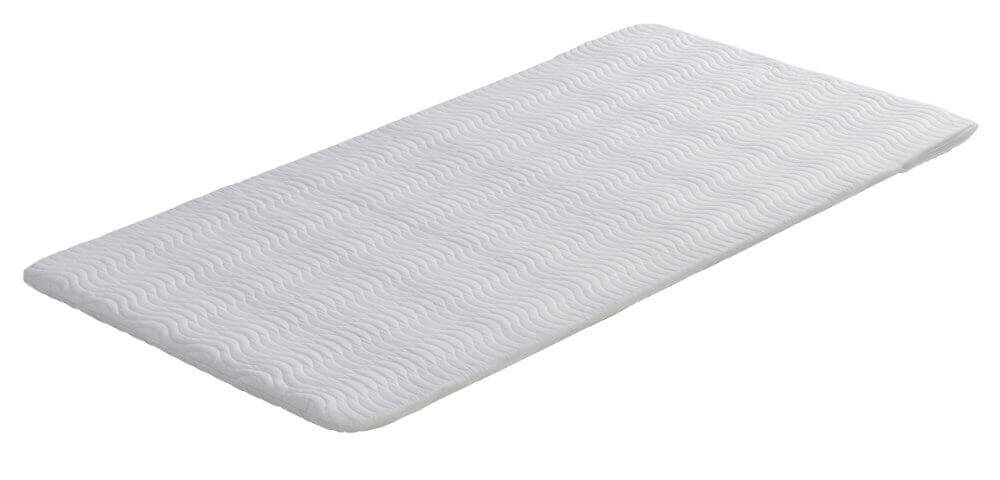
Yawnder reviews · Original 2016 firsthand account · Updated October 2026
My verdict
I bought the twin Signature Sleep bunkie board to lower my son’s bed. Assembly was straightforward, and I liked the quieter, lower-profile result. The snug fit was the main difficulty: getting the covered frame seated in the bed took more effort than putting the board together.
My original firsthand review
My original observations and photos are preserved below. Prices, ordering terms and quoted specifications describe the product at the time of that review.
What is a bunkie board? A bunkie board is simply a solid, firm base to properly support a mattress. Many people still own a steel bed frame without slats. These frames were designed for a box spring to go on top of them. However if you have a newer mattress, they are not compatible with an old box spring and need a firm surface. A bunkie board is an inxepensive and simple solution for a newer bed without having to buy a new box spring. Usually bunkie boards are used if you want a lower profile and don't want the extra height that a box spring provides.
I purchased a bunkie board for my 5 year old son's room because the existing setup with a box spring made the bed a little too high. He sometimes falls out of bed so a lower profile setup would make things safer.
Often readers ask me to recommend a bunkie board or box spring and I wanted to test some out first hand before making any recommendations. If you look on Amazon you will find that the Signature Sleep brand gets good reviews so I decided to try out their bunkie board.
Ordering
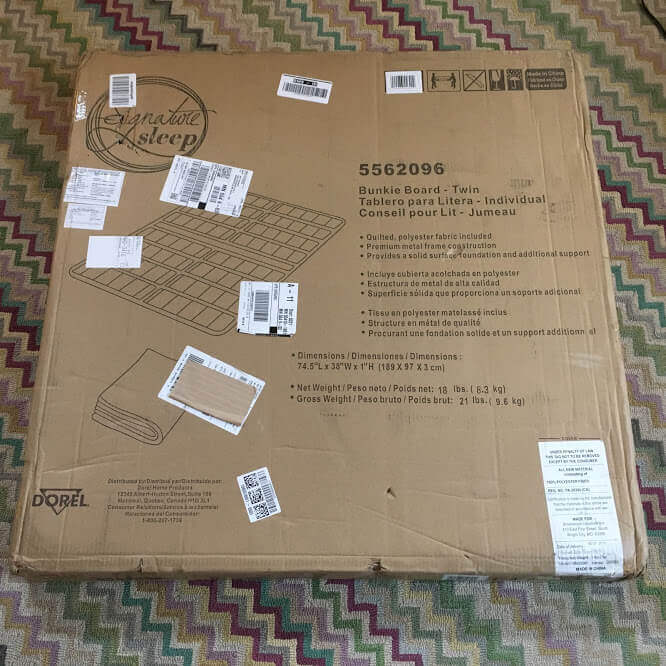
You can buy the Signature Sleep bunkie board directly from Amazon. It qualifies for Amazon Prime shipping so will arrive in 2 days. The twin size comes in a box like this:
The frame comes in 2 pieces that slide into each other. Inside of the frame is the padded cover that you slide on.
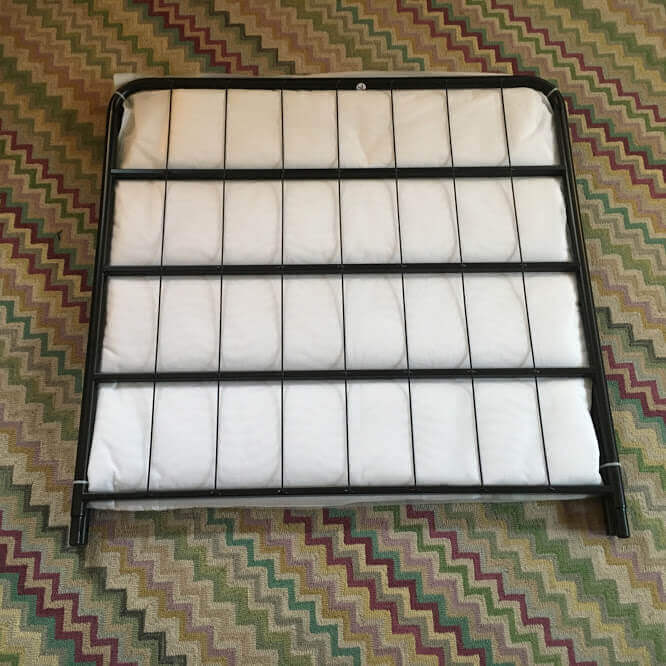

Installation requires two bolts to screw each side together. An allen wrench is also included

The cover has two zippers and it slips over the frame. It was surprisingly easy to get this on.
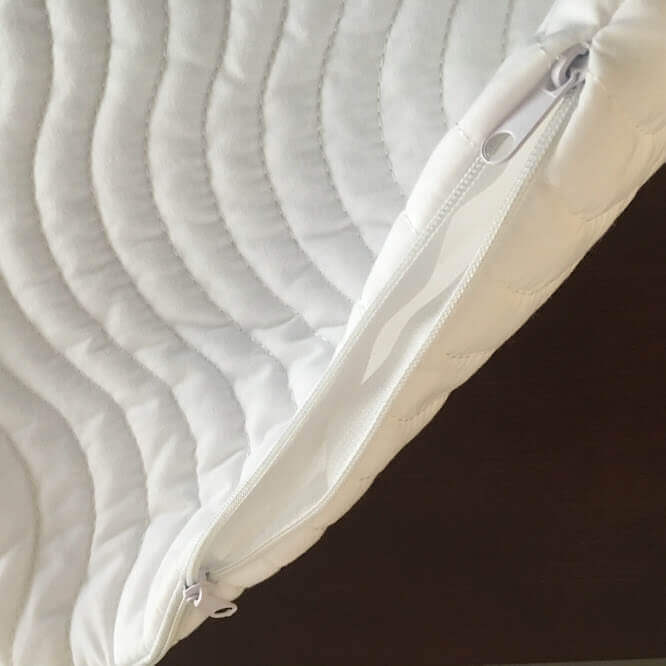
Here's what the bunkie board looks like fully put together.

The next step was getting it on my son's bed. Here's what the bed looked like before the bunkie board with a traditional box spring. This box spring is at least 30 years old which affected the performance of the mattress.
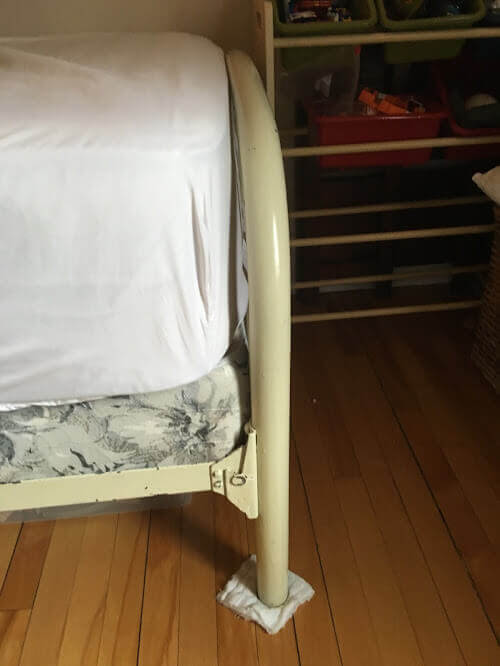
When I put the bunkie board on the bed, it didn't fall into place easily. I had to stand on one side to squeeze it into place. I'm not sure if this was due to the fact that the cover added some extra width or it was designed that way so it wouldn't move around and make noise. Regardless, I was able to make it fit and it made the bed more secure.

Finally, this is what it looks like with the new bunkie board on the bed. It now has a lower profile and just looks nicer. I didn't notice any creaking or noises and appreciate the cloth cover that prevents any metal on metal noises.

A few last things to note about this product. According to the manufacturer, Signature Sleep, the weight limit for this is 225 lbs.
I'm happy with this purchase and would certainly recommend it to people looking to replace an older box spring or just give their bed a lower profile. A bunkie board is also a nice alternative to wooden slats. at $90 it's a good price for a sturdy product.
You can purchase it direct from Amazon.
Disclosure: We aim to highlight products and services you might find interesting, and if you buy them, we may get a small share of the revenue.
Questions about this review
What did I like about the finished setup?
The bed had a lower profile, and I did not notice creaking. I appreciated the cloth cover between metal surfaces.
What should I check before buying?
Measure the inside of your bed frame and check the exact board dimensions, support requirements and weight rating. My original twin model listed a 225-pound limit; do not apply that figure to a different model or size.
Should I force a tight board into a frame?
My original account records the difficulty I had. Check the dimensions and installation instructions before applying force; a poor fit is a reason to stop and confirm compatibility.
Review by Ben Trapskin. Yawnder may earn a commission from qualifying purchases.