

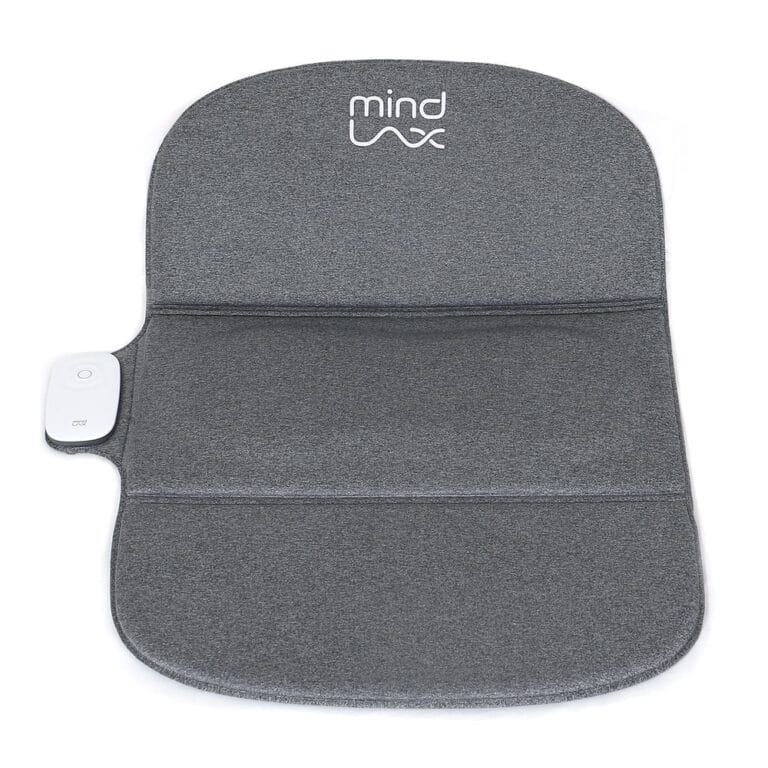
MindLax Sleeping Mat Review (2025)
Tested by Yawnder | 2-Year Long-Term Analysis
Overview: A New Era of Sleep Tech
The MindLax Sleeping Mat represents a leap forward in non-drug sleep aids. It isn't just a yoga mat; it's a "Multi-Frequency Waveguide" system designed for bio-hackers, insomniacs, and anyone struggling to switch off their brain at night.
By placing it under your sheets (or lying directly on it), the device uses a combination of sound and tactile vibration to physically guide your nervous system into a deep state of relaxation, effectively "entraining" your brain for sleep.
🕵️ 2 Years Later: Does It Still Work?
Most sleep gadgets end up in a drawer after a month. I have kept the MindLax in my rotation for over 700 nights. Here is the brutal truth about long-term ownership:
1. The "Pavlovian" Effect is Real
The biggest benefit I found wasn't the first week—it was month six. My brain has literally been trained to associate the specific vibration frequency with sleep. Now, within 5 minutes of turning it on, I feel a physiological "drop" in heart rate. It works faster now than when I bought it.
2. Durability Check
I have folded this thing up into a suitcase at least 20 times for travel. The connections are solid, the mesh hasn't ripped, and the electronics still fire perfectly. It is built to last.
3. Comfort Adjustment
Pro Tip: Don't sleep directly on it. After a few months, I realized I could feel the "grid" of the mat a little too much. I now place it under my mattress protector but on top of the mattress. The vibrations penetrate perfectly, but I can't feel the texture of the device anymore.
4. Do I use it every night?
Honestly? No. I use it on "High Cortisol" nights—when I'm stressed about business or my mind is racing. On those nights, it is a lifesaver. On normal nights, I don't need it. It’s a tool, not a crutch.
🤓 The Geeky Stuff: How It Hacks Your Nervous System
The MindLax isn't just playing white noise; it is targeting your Parasympathetic Nervous System (the "Rest and Digest" mode) using three distinct technologies:
1. MWS Waveguide System (Vibration)
This patented technology sends gentle, low-frequency vibrations through your body (20-60 Hz). These vibrations are synchronized with the audio, creating a physical sensation of grounding that has been clinically shown to lower cortisol (stress) levels.
2. Binaural Beats (Audio)
Using the companion app, the device plays two slightly different sound frequencies in each ear. Your brain perceives the difference (the "beat") and naturally synchronizes its own electrical pulses to match. This process helps shift your brain from a high-alert Beta state to a relaxed Alpha or Theta state.
Quick Specs
| Feature | Details |
|---|---|
| Price | $499.00 (Standard) |
| Technology | MWS Waveguide + Binaural Beats |
| Portability | Tri-Fold Design |
| App Integration | Yes (iOS & Android) |
| Trial Period | Available via Heyup Tryouts (Limited) |
MindLax vs. The Alternatives
If the $499 price tag gives you pause, here is how it compares to other sleep gadgets:
Vs. Dodow Sleep Aid (~$60)
The Dodow uses a projected light on the ceiling to guide your breathing. It is purely a visual/meditative aid. While effective for some, it lacks the physical vibration and brainwave entrainment of the MindLax.
Vs. HoMedics Sound Spa (~$25)
This is a standard white noise machine. It masks external noise (like traffic) but does nothing to actively stimulate your nervous system. MindLax is an active therapy; HoMedics is passive masking.
Pros & Cons
✅ The Good
- Synergy Effect: Physical vibration + Audio works better than audio alone.
- Non-Invasive: No pills, no masks, no wires attached to your head.
- Travel Ready: I've taken it to 10+ cities; it's a hotel essential.
❌ The Bad
- Price: At $499, it is a significant investment for a sleep aid.
- Tactile Feel: Can feel "lumpy" if not placed under a protector.
- Wires: It does need to be plugged in (power bank recommended).
