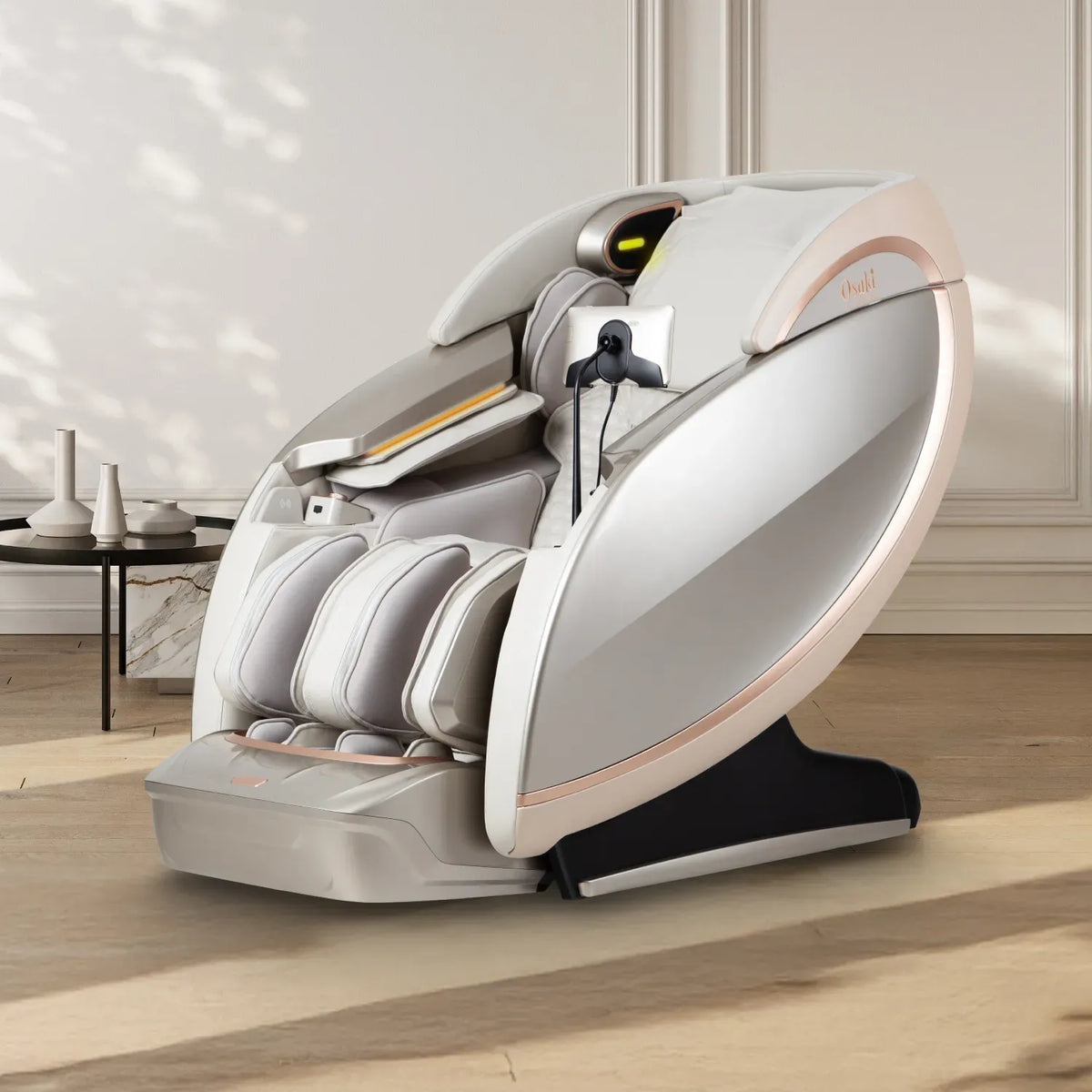
Quick answer: An S-track usually follows the curve of the back from the neck toward the lower back. An L-track extends the roller path beneath the seat, often reaching the glutes and sometimes the upper thighs. An SL-track combines a curved back section with an extended lower path. Exact coverage, pressure and features vary by model.
Track shape describes where the rollers travel; it does not by itself determine massage intensity, price, the number of programs or whether a chair will fit your body. Yawnder sells massage chairs, so we have a retail interest in linked products. This guide compares features and does not claim a controlled head-to-head test of every chair.
S-track vs. L-track vs. SL-track
| Track | Typical roller path | What to check |
|---|---|---|
| S-track | Follows the curved back area, generally from neck or shoulders toward the lower back. | Whether the rollers reach your shoulders and lower back comfortably. |
| L-track | Continues below the back and under the seat, extending coverage to the glutes and potentially upper thighs. | Actual endpoint and whether you like pressure beneath the seat. |
| SL-track | Generally combines a curved back path with an extended lower track. | Manufacturer’s description, actual coverage and recline or stretch behavior. |
Manufacturers use these labels differently; a long track does not mean the same roller mechanism massages every part of the body. Foot rollers and airbags, if included, are separate components. For example, Osaki describes its Sapphire 4D+ as having an extended SL-track alongside separate foot and calf features. That is an illustration of one model, not a claim that every SL-track chair offers the same coverage.
Track shape is different from 2D, 3D and 4D
Track: the route the roller assembly follows. Roller mechanism: how the rollers move and how their depth, speed or rhythm may be adjusted. Brands use 2D, 3D and 4D terms differently, so compare the actual settings rather than assuming a universal definition.
An L- or SL-track can have sophisticated programs, and an S-track is not automatically more customizable. The old assumption that L-track chairs always cost more or require more space is also unreliable: compare the specifications and delivered prices of individual models.
Other features to compare include body scanning, adjustable shoulder position, heat, airbags, calf and foot rollers, reclining, automatic programs and manual controls. A body scan may help position rollers but cannot guarantee a comfortable fit for everyone. Read our 2D, 3D and 4D guide for a closer look.
How to assess fit, space and delivery
- Try the shoulder and neck position. Check whether the scan places the rollers where they feel comfortable and whether adjustments reach your height.
- Test the seat and calves. Sit through more than a short demo. Compare seat width, leg length, footrest adjustment and pressure beneath the glutes.
- Compare intensity. Start gently, adjust the settings and check whether the chair can be both gentle and strong enough for your preferences.
- Measure the room. Use the manufacturer’s upright and fully reclined dimensions, wall clearance and footrest extension. “Space-saving” does not mean no clearance is required.
- Plan delivery. Verify boxed dimensions, weight, doorways, stairs, assembly and the availability and cost of white-glove service.
- Read the terms. Confirm return eligibility, warranty parts and labor, service location and who arranges repairs before ordering.
Yawnder’s massage chairs are sold under specific return terms, which may differ from a mattress trial. Check the current product and store policy before purchase.
Which track should you choose?
Start with an S-track if your priority is roller work across the neck and back and you do not need rollers under the seat. Consider L- or SL-track if you want the rollers to continue toward the glutes. In either case, the right chair is the one that fits your height and provides pressure you enjoy.
See how this applies to a real shortlist: Our Ogawa Active XL 3D review discusses roller reach and the manufacturer’s differing fit specifications. The Highpointe vs. Belmont comparison helps separate roller controls from the chair’s other fit and feature differences.
Explore our massage chair reviews and buying guide and current chair selection. To try available chairs, see our Encinitas showroom information and call ahead about specific models.
If you have an injury, are pregnant, have a medical device, or have a condition that may be affected by massage or heat, check with your clinician and follow the manufacturer’s safety instructions before use. A chair is not a medical treatment.
Frequently asked questions
Does an L-track massage the hamstrings?
Some tracks extend toward the upper thighs, but reach depends on the model and your body. Ask where the rollers stop and try the chair.
Is SL-track the same as L-track?
Manufacturers often use SL to describe a curved back track that extends beneath the seat. Terminology varies, so check the diagram and specifications.
Is 4D the same as an L-track?
No. 4D describes the massage mechanism’s movement or controls, while track labels describe its path. The two features can appear together.
Which track is better for lower-back pain?
Neither is a proven treatment. A comfortable chair may feel relaxing, but persistent or worsening pain deserves professional assessment.
Is a longer track always better?
No. More coverage can be useful, but fit, intensity, reliability, available space and budget matter just as much.
Final take: Choose the coverage you want, then judge the complete chair by how it fits and feels.
Explore model recommendations, fit, features and current buying considerations.
Explore the best massage chair guide