

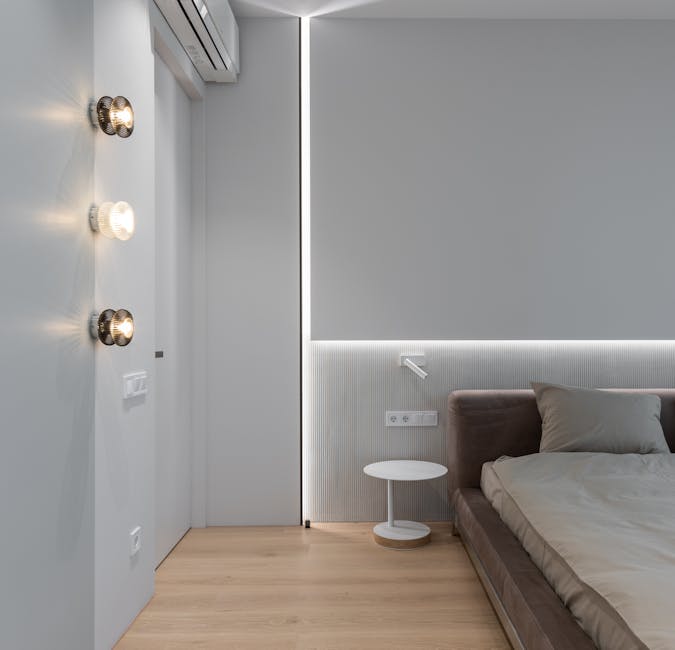
Guide to shikibutons, futons, and tatami friendly floor sleep
A Comprehensive Guide To The Best Japanese Floor Mattress Brands
Japanese floor mattresses give you a very different kind of sleep. Instead of sinking into a thick western bed, you lie closer to the floor on a firm, supportive futon that can be folded and stored away during the day. In this guide I walk through the best Japanese floor mattress brands, how they feel, who they work for, and what to look for before you buy.
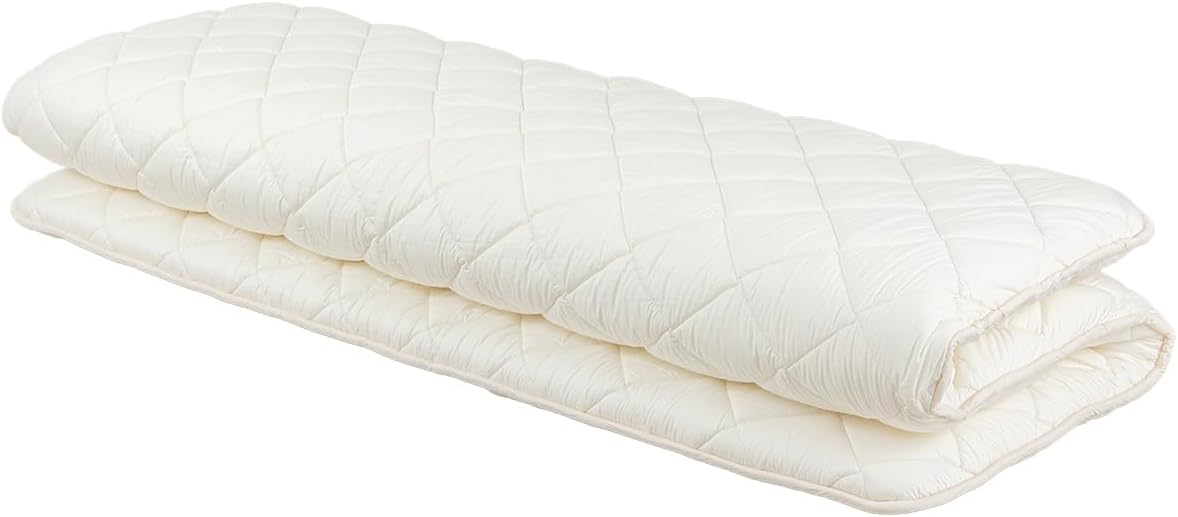
This guide covers authentic shikibutons made for floor sleep including FULI, J Life, EMOOR and other top futon brands plus more modern foldable floor mattress options like Aircliff.
Bottom line
A good Japanese floor mattress gives you firm, even support, better posture, and a big space saving win if you live in a smaller home. For a traditional feel and natural materials, brands like FULI, J Life International and EMOOR stand out. For more modern, multi layer floor mattresses you can roll up and stash in a closet, options from Aircliff, Luxton Home and D and D Futon Furniture are worth a serious look.
Check FULI futonsTest results and overall impressions
Scores are based on common traits of high quality shikibutons and futon style floor mattresses: how firm they are, how they roll or fold, how they hold up with nightly use, and feedback from long term floor sleepers.
Feel and firmness
Most true Japanese floor mattresses are firm, flat, and only a few inches thick. Instead of sinking several inches, you feel gently cushioned on top of a supportive base. This is what helps posture and keeps your spine closer to a natural position.
Many people moving from a soft western bed will find the first few nights on a shikibuton noticeably firmer. If you are very sensitive at the hips or shoulders you can pair the futon with a tatami mat or a thin topper to soften the surface while keeping that stable base underneath.
If you want a more forgiving feel, look at multi layer futons that blend cotton, polyester, or foam cores. Brands like EMOOR, FULI, and some Luxton Home and Aircliff models lean into a more balanced medium firm feel instead of an ultra firm pad.
Cooling
Because Japanese floor mattresses are thin and usually made with breathable cotton layers, they tend to sleep cooler than thick western foam mattresses. You are closer to the floor, which can also help pull heat away from your body.
Natural cotton batting and covers do a good job of managing moisture and humidity when you air the futon out regularly. Synthetic blends can still work well but pay attention to whether the brand recommends frequent airing or sun drying. If you live in a very humid climate, pairing your futon with tatami mats or a slatted base helps airflow even more.
Motion isolation
A thin cotton futon on the floor has very little bounce, which means motion does not travel far. Couples who are used to feeling every move on a spring mattress are often surprised by how stable a shikibuton feels when it is laid flat on the floor or on tatami.
If you share the futon and move around a lot, look for multi layer models with a slightly thicker core. These do a better job of spreading out movement without feeling squishy.
Edge support
Traditional Japanese floor mattresses do not have dedicated edge support the way a western mattress and box spring do. Since they lie flat on the floor, there is no frame to sag over and no edge coils to reinforce.
You can still sit near the edge without feeling like you will slide off, but it will not feel like the rigid ledge of a thick hybrid mattress. If edge sitting is important, consider a slightly thicker futon or use a low platform bed that adds structure around the perimeter.
Pressure relief
Floor mattresses are designed first for alignment and posture, then for cushioning. A good futon will spread your body weight evenly and avoid sharp pressure at the shoulders and hips, but it will never feel like a deep memory foam bed.
Back sleepers usually adapt fastest and often report the biggest improvement in lower back comfort. Side sleepers may need a short adjustment period or a thin topper to soften the shoulder area. Many long term floor sleepers say that once they adjust, they wake up with less stiffness and fewer pressure related aches.
Best Japanese floor mattress brands
Below are the core brands I like to point people toward when they want an authentic or authentic style Japanese floor mattress. Some are made in Japan, others copy the format with slightly more western style materials and sizing.
FULI
FULI specializes in authentic Japanese futons made for floor sleeping. Their futons are typically thin, firm, and easy to fold or roll, while still offering a comfortable sleeping surface. They work especially well on tatami mats and are a strong choice if you want something close to what you would find in a Japanese home.
If you want a futon that feels traditional but is still easy to live with in a western bedroom, FULI is a very safe starting point.
J Life International
J Life International focuses on traditional shikibutons that pair well with tatami mats. Their floor mattresses use natural cotton batting and come in several thickness options so you can choose a firmer three inch build or a slightly plusher four inch version. The feel is classic Japanese floor sleep, with a focus on posture and minimal sink.
EMOOR
EMOOR blends traditional futon design with a more modern, multi layer construction. Many of their futons combine cotton with polyester or foam cores to maintain support while taking a little edge off the firmness. Their Classe line is popular for people who want a compact futon that can handle nightly use without flattening out quickly.
Futon Beds From Japan
Futon Beds From Japan focuses on futons crafted in Japan using natural cotton and traditional methods. These futons are often shipped as sets that include both the mattress and a kake futon style comforter. If you want as much authenticity as possible and do not mind import logistics, they are worth a look.
The Futon Shop
The Futon Shop offers organic and natural material futons made in the United States. You can find futons built with organic cotton, wool, and latex, many of which can be used either on the floor or on a futon frame. They are a nice bridge for shoppers who want clean materials and a handmade feel in a more familiar shopping experience.
More popular brands and alternatives
Beyond the classic names above, there are several widely available brands that bring the Japanese floor mattress idea to a wider audience with more sizes, colors, and price points.
Aircliff
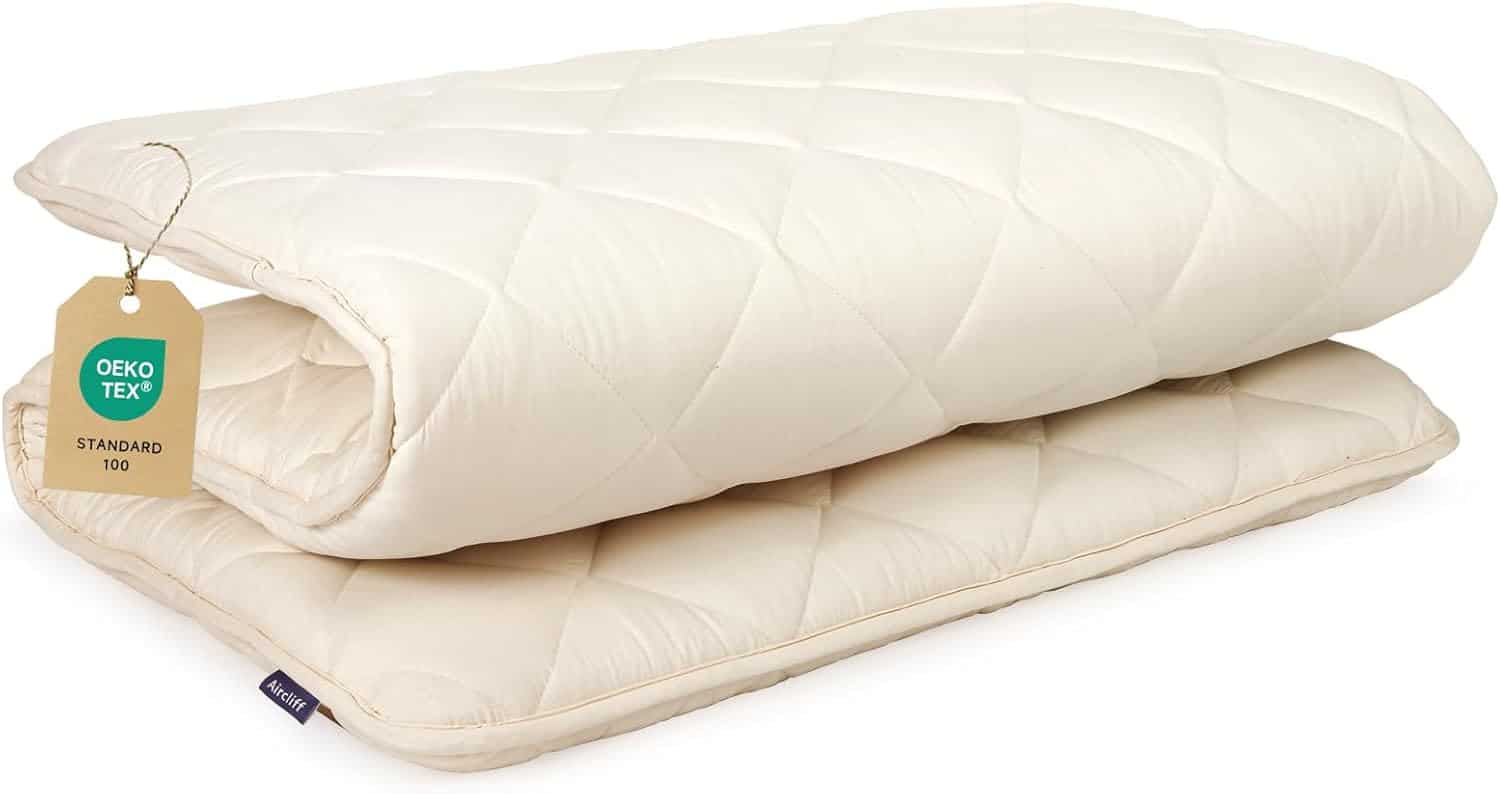
Aircliff makes a modern Japanese style floor mattress that is thicker than a traditional shikibuton but still rolls or folds for storage. It is a good option if you like the idea of floor sleeping but want more cushioning than a very thin cotton pad. The design works well for guest rooms, studio apartments, or anyone who wants a low profile bed that does not dominate the space.
Luxton Home
Luxton Home makes shiki style futons that use cotton rich fills with a slightly thicker profile. These are good if you want something closer to a medium firm feel and plan to sleep directly on the floor without a tatami mat underneath.
D and D Futon Furniture
D and D Futon Furniture offers rollable floor mattresses in larger western sizes that mimic Japanese futons but are often used as guest beds or meditation mats. They typically blend cotton with a small amount of foam for comfort and are designed to roll and tie up for easy storage.
Colorful Mart
Colorful Mart futon mats focus on bright colors and soft microfiber fills. They feel more like cushioned pads than traditional shikibutons, but they are useful for people who want a floor sleeping setup that also doubles as a lounge mat or day bed pad.
Oriental Furniture
Oriental Furniture sells futon mattresses and tatami style pieces that often pair well with minimalist interiors. Their futon options lean toward firm support with traditional styling, which makes them a fit for people who want a clean, simple look in a guest room or studio.
Maxyoyo and JR and L
Brands like Maxyoyo and JR and L focus heavily on thick foldable mats in many sizes and colors. They are less traditional but very practical for dorms, gaming rooms, or guest spaces where you want something easy to roll out at night and roll up during the day.
Who a Japanese floor mattress is for
- People who want a firmer sleep surface and better posture without a tall bed frame.
- Minimalists and small space dwellers who need a mattress that folds or rolls away during the day.
- Back sleepers and many side sleepers who are willing to give their body a short adjustment period.
- Anyone interested in a more traditional Japanese style sleep setup with tatami mats and low bedding.
If you need a plush, pillow top feel or cannot tolerate firm surfaces, a full time floor mattress may not be ideal. You might be better off using a futon as an occasional guest bed or pairing it with a softer topper.
Price and value
Japanese floor mattresses cover a wide price range. Basic cotton futon mats from value brands often start under one hundred dollars in a twin size. Mid range futons from EMOOR, FULI and Luxton Home usually land in the low to mid hundreds depending on thickness and size. Premium futons from J Life or organic builds from The Futon Shop cost more but use higher grade materials and are built for nightly use.
More modern roll up floor mattresses like Aircliff usually sit in that same mid range zone, trading a little traditional authenticity for extra cushioning and convenience.
A good rule of thumb is to invest more if you plan to sleep on the futon every night, and spend less if it will mostly be used for guests, yoga, or occasional naps.
How I choose and compare brands
When I look at Japanese floor mattress brands I care about a few main things. First is how closely the mattress follows traditional shikibuton design in terms of thickness, firmness, and materials. Second is how it performs for real posture and pressure relief, especially for people moving from a western mattress. Third is practicality, including how easily it folds or rolls, how heavy it is, and how simple it is to air out and care for.
I also look at long term user feedback on flattening and durability and pay attention to whether the brand is up front about materials and care instructions. If a futon needs frequent sunning or a breathable base to avoid moisture build up, that should be clear before you buy.
FAQ
What is a Japanese floor mattress called?
The mattress itself is usually called a shikibuton or shiki futon. It is the padded piece you lie on. Many people also pair it with a kake futon style duvet that goes on top for warmth.
Are Japanese floor mattresses good for your back?
Many people find that a firm futon on the floor helps their back because it keeps the spine closer to a neutral position and avoids deep sagging. That said, not every body is the same. If you have existing back issues it is worth talking with a medical professional before making a big change, and you may want to start with short naps or partial nights while your body adapts.
Can you sleep on a Japanese futon every night?
Yes, many people use a shikibuton as their full time bed. The key is choosing a futon that is designed for nightly use, keeping it dry and well aired, and pairing it with tatami mats or a slatted base if you live in a damp climate. Very cheap futon pads may flatten out faster with constant use, so pay attention to build quality.
Do you need tatami mats under a floor mattress?
You do not have to use tatami, but it improves the experience. Tatami adds a little extra give under the futon, helps air move underneath, and protects both the mattress and your floor. If you are on concrete or a very hard surface, tatami or at least a rug or thin base is a good idea.
How thick should a Japanese floor mattress be?
Most traditional shikibutons are around two and a half to four inches thick. Thinner futons feel firmer and are easier to fold and store, while thicker ones offer more cushioning but are bulkier. If you are heavier or side sleep a lot, aim toward the thicker end or pair a thinner futon with a topper.
How do you clean and care for a Japanese futon?
The classic routine is to air the futon out regularly, either by hanging it outside in the sun or standing it up near an open window. This helps release moisture and keeps the fill fluffy. Many people also use a removable cover that can go in the wash. Avoid trapping moisture between the futon and a solid surface and follow the brand’s specific guidance on cleaning.
What is the difference between a Japanese futon and a western futon mattress?
A Japanese futon is usually thinner, firmer, and meant to lie directly on the floor or on tatami. A western futon mattress is often thicker and paired with a folding frame that doubles as a sofa. Some western brands now sell thinner rollable futons that copy the Japanese format, but the traditional version is still more compact and minimal.
